Inspiring Smiles Forever

Inspiring Smiles Forever
Look to these pages for the latest from the studio and the boat yard. This is a simple web site with no cookies or security hosted by Go Daddy. Trust they will let you have fun browsing.
Complete Works, Portraits, Landscapes, Still Lifes, Sculpture, Lego Artist...
Click To Sign up for auction notices or check past auction sales at EBTH
Have any Tom Lohre painting on Prints, Greeting Cards, Throw Pillows, Duvet Covers, Shower Curtains, Tote Bags, iPhone Cases, T-Shirts, Round Beach Towels, Towels (Beach & Bath), Yoga Mats, Spiral Notebooks, Fleece Blankets, Portable Batteries Chargers, Carry-all Pouches, Weekender Tote Bags, Coffee Mugs, Tapestries, Face Masks, Jigsaw Puzzles, Stickers and Oraments via Fine Art America
If you don't see your favorite painting request it to be offered.
Post comments on Facebook https://www.facebook.com/tom.lohre/
Online Clifton Chronicle The local publication Tom was the editor for ten years.
Voyages
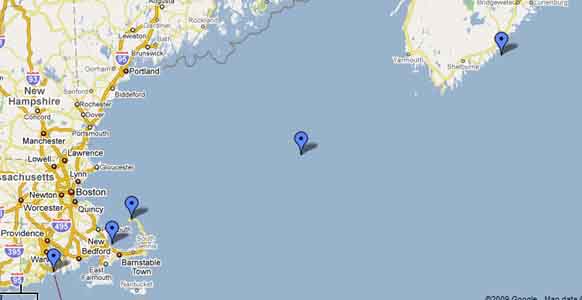
2009 Three mile harbor, East Hampton, N.Y. -> Baltimore, Ireland 36 Pearson
2600nm Watch-leader
2015 Saint John's, Newfoundland -> Oban, Scotland 42 Westsail 2800nm
Watch-leader
2016 Cascais, Portugal -> Marigot, Saint Martin 42 Westsail 2800nm Watch-leader
2018 Cascais, Portugal -> Patchogue, N.Y. 42 Westsail 4200nm Watch-leader
2020 Patchogue, N.Y. -> Patchogue, N.Y. 42 Westsail 780nm Watch-leader
2023 May to August: Port Clinton, Ohio, Lake Erie to Kotha, Finland: 4,425nm,
Captain
2024 June to August: Kotha, Finland to Greiswald, Germany: 740 nm, Captain
2025 July: Greiswald, Germany to Lowestoft, Engand 500 nm, Captain
Upcoming Voyages
2026 May: Lowestof, England to Horta, Azores 1000 nm, Captain
2027 May: Horta, Azores to Cheaspeake Bay, USA, Captain
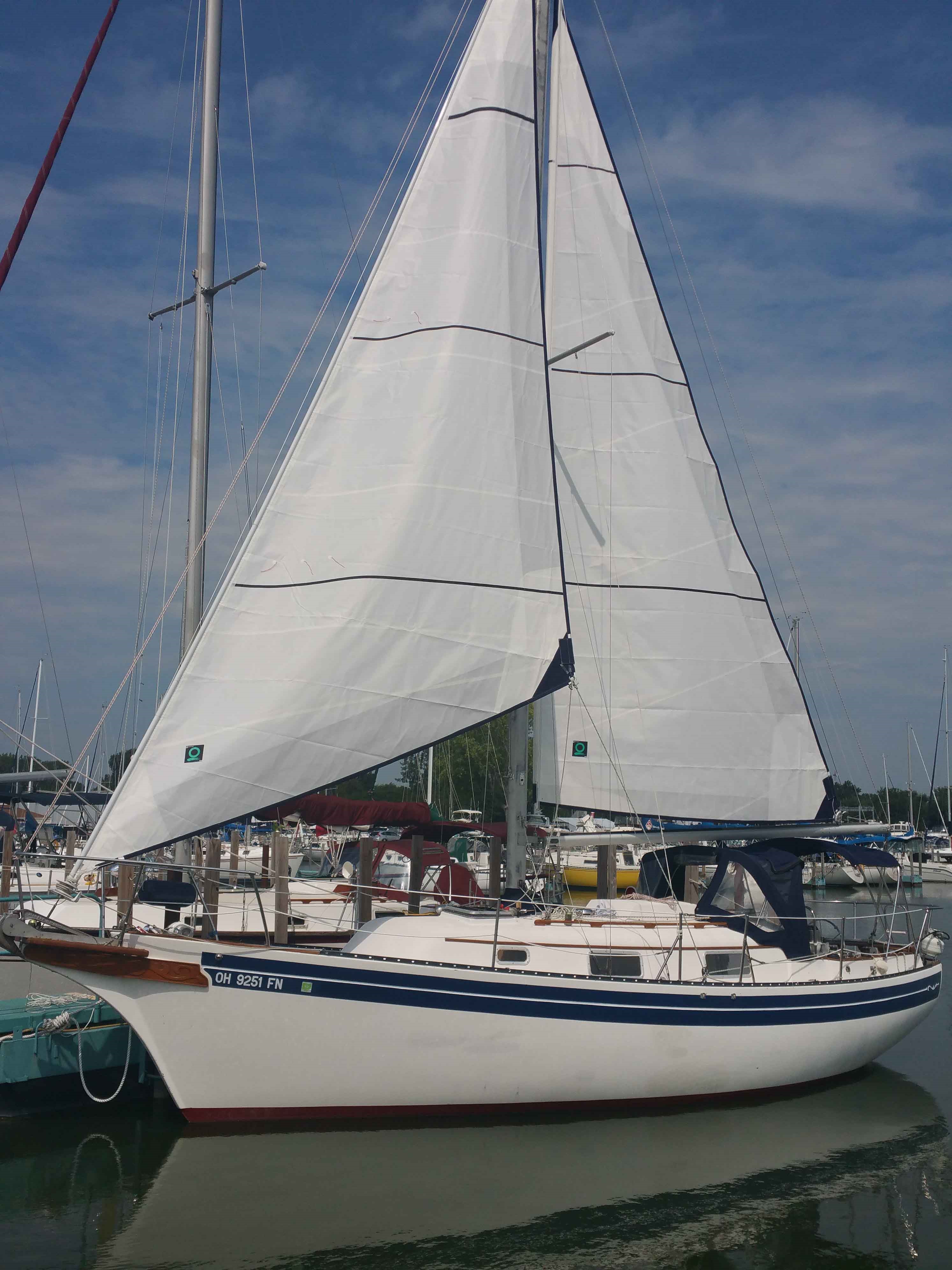
Clio Update
Planning the next leg of the voyage back. This one from Lowestof UK to the Azores. It's a 1500 nm and if we are lucky can traverse the English Channel with favorable winds we'll get back out into the Atlantic for the 1000nm to Horta. . Studying the wind now and virtually laid up at Cuxhaven, Germany after going through the Kiel Canal, since May 25th. Maybe the jet stream will change and we can get back underway June 11!
US S/V Clio's Facebook page
Post comments on Facebook https://www.facebook.com/groups/230980633127879
Stories of the sailors who used no instruments.
Polynesian voyagers used wave & star guides made out of bamboo, rocks &
shells
https://tomlohre.com/Navigators.pdf
Stanley Creamer, who sailed around the world without compass, sextant, clock,
radio, had star and sea charts. He looked up to see what star was right above
to know his location.

The ship's come in, the Bayfield flags! After 7 years rebuilding a 32' Bayfield, much of the time was doing research. The online Bayfield site was the best. Later a Facebook page came online and both of them are great resources to learn and teach. These flags were made for Canadian group but are now not needed so the owner gave them to the IO group to help raise funds to pay for the site which it about $250 a year. Selling them for $70 each.
Bayfield Group
https://groups.io/g/bayfieldyachts
Bayfield (and Gozzard) Owners' Facebook Group
https://www.facebook.com/groups/206853486030606
Our Yanmar Manual
Looks like we'll be doing all the much needed maintenance while in Azores. Been sorely lacking attention to our engine, now with 750 hours.
https://tomlohre.com/Yanmar_3YM30_Service_Manual.pdf

US S/V Clio Bayfield sailing July 2025 Greifswald, Germany to Lowestoft, UK 500 nm.
https://tomlohre.com/NorthSea.pdf

June 2024 Sail from Finland to Germany 13meg PDF
https://tomlohre.com/Baltic.pdf
Includes lots of preparation material created while sailing the route three times virtually using SailAway, a vitural sailing program that uses real time weather with complete charts and bouys.
Raw Video from the voyage with slides.
https://youtu.be/8_x9-ER_LjE?si=u1wLWpPpJFRnbxRI
Keilan Portrait
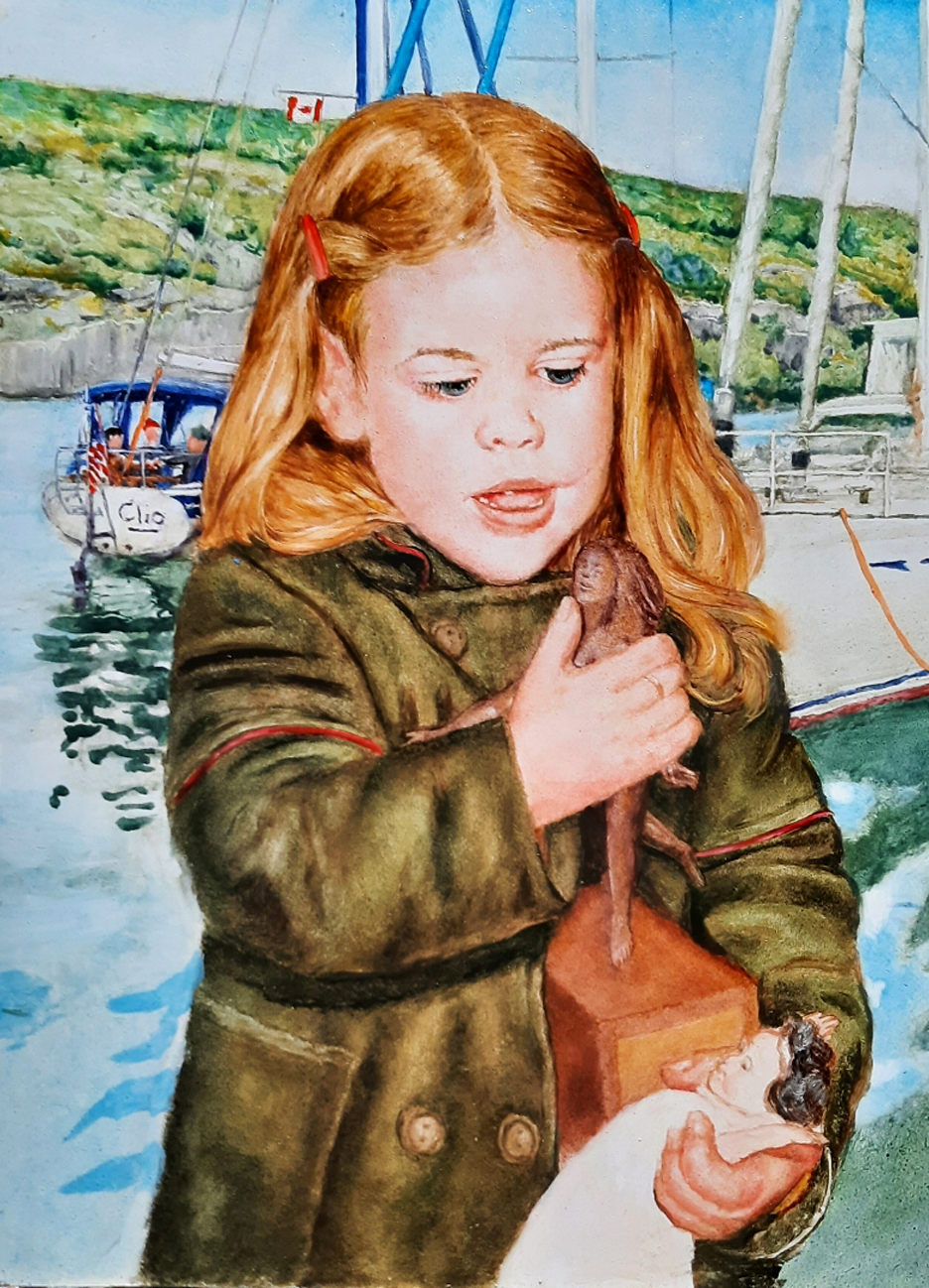
Keilan holding her Dad’s 1978 ACTRA award, Oil on metal, 12” x 16”, December 28, 2023
A gift to Jim Winter, fellow sailor, who helped Tom, Chuck & Willard get Clio, a 32' sailboat, ready for the next 37 days, 2173nm, non-stop, to Kristiansand, Norway. Jim drove us to over ten shops plus offering showers and washing machine. Jim showed the crew all the haunts while he and Tom caught up with all things sailing. Tom had met Jim in 2019 while shipping with Captain Eric Forsyth on Fiona. They both stood on Queen's Dock waiting for Fiona, 42' Westsail, to arrive while monitoring the VHF. Eric called the harbor master on VHF saying he needed fuel, 80° off the rhum line, under sail. They sailed into Queen's Harbor to a berth Tom had prepared after moving various crafts around. Clio arrived after the same leg Fiona had made except Eric had head winds all the way from P-Town. Clio had the same conditions but did not use fuel since they were on their way to Europe from Boston. It took Clio 13 days until they decided to put into Saint John's to get, "A few things!". Just by chance, Jim picked up the landline house phone, the only number Tom had. Jim & Sharon extended great honor on the crew with a fine meal at his home complete with showers! Jim, a radio broadcaster, won an ACTRA, a Canadian award for television/radio excellence. He won it in 1978 for a radio piece he did called 'Birthed Swiler'. The painting is derived from a photo snapped by a newspaper reporter at the Saint Johns airport as Jim arrived back from the ceremonies. Tom added the background of Saint John's Harbor with sailboat Clio third out on a raft.
Audio of Birthed Swiler
https://tomlohre.com/BerthedSwiler.mp3
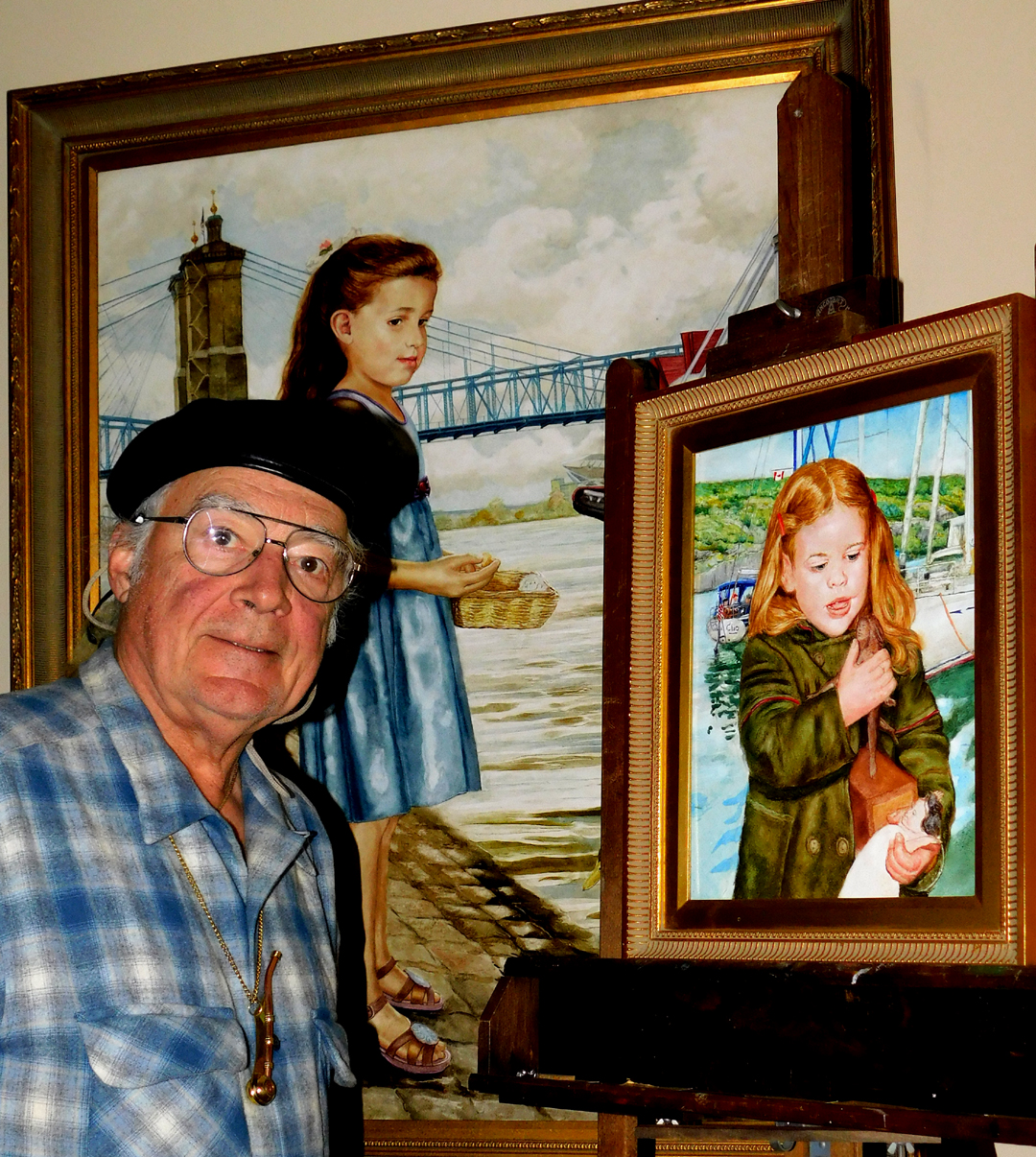
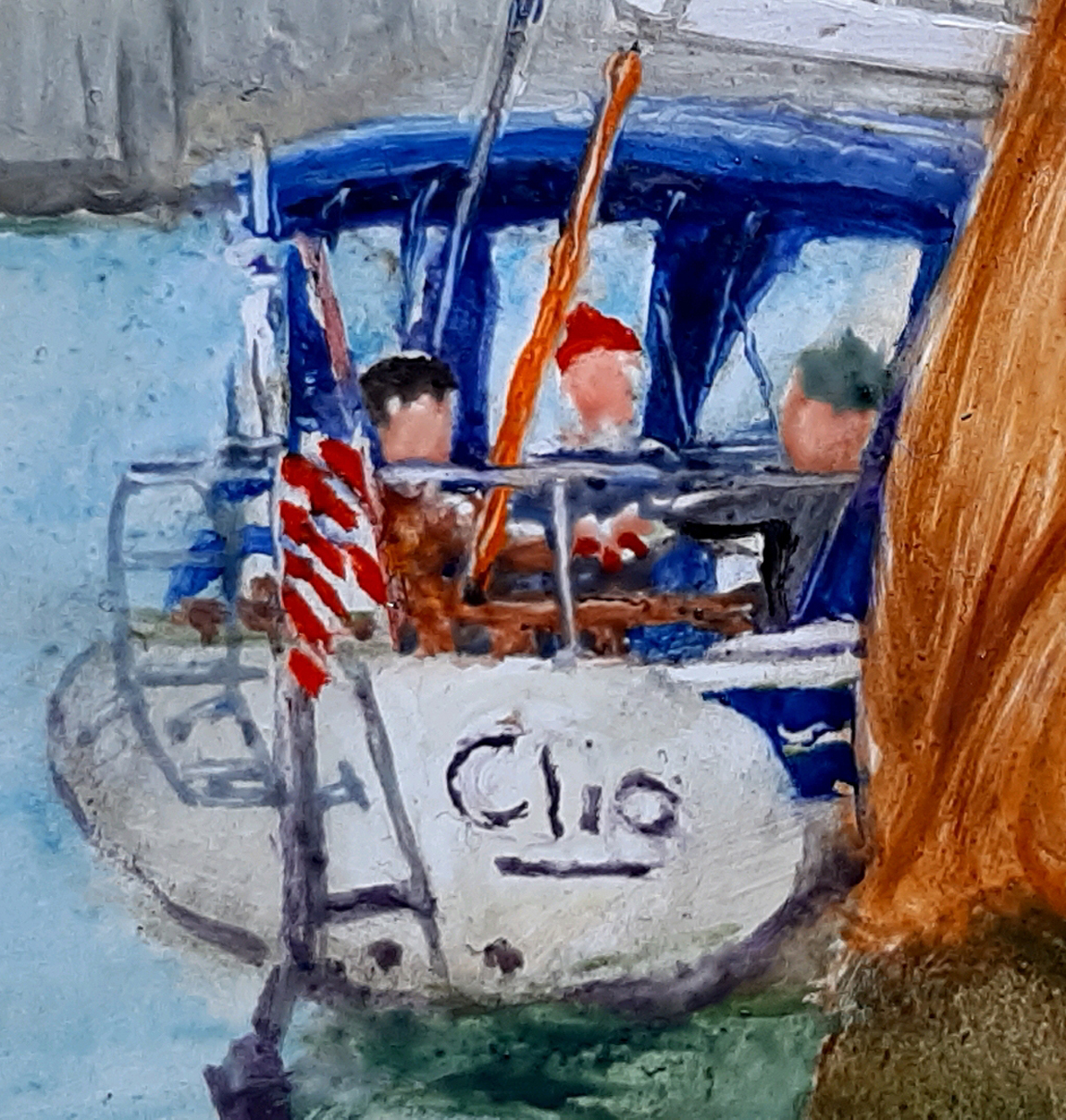
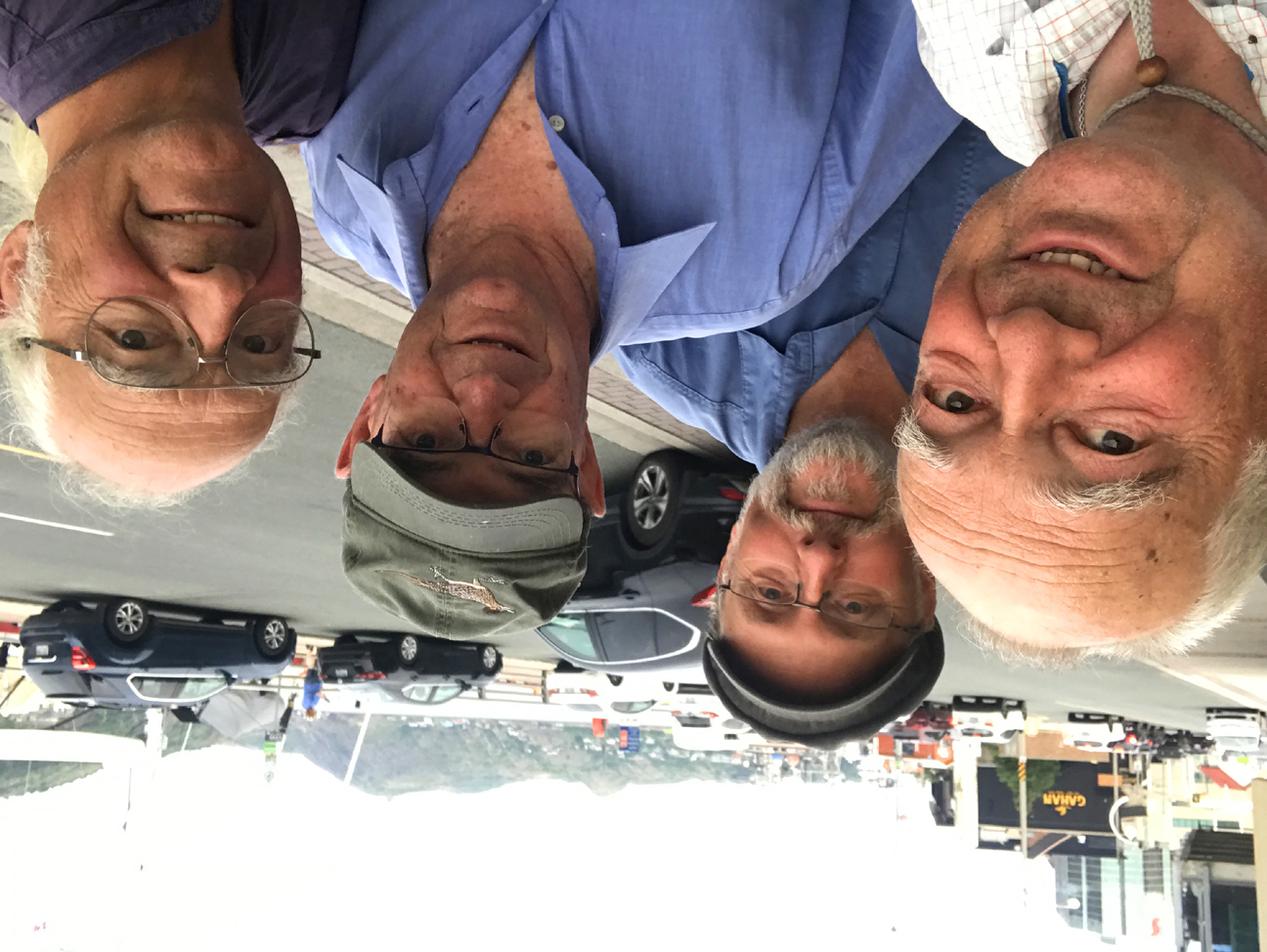
Chuck, Willard, Jim Winter and Tom in Saint John's. Jim was instrumental in getting everthing done for Clio! Thank you Jim and Sharron. May Keilan's painting be a thank you from all the sailor's you have helped.
https://tomlohre.com/Keilan.pdf
Painting's progress, correspondence and comments
"Boy it really takes forever to paint one of these. Then I start eating:( getting a little tipsy usually gives the courage to correct what needs to be, courage to slash and burn. It's all wet. You surgically remove paint and apply the correct color. Since it's all transparent, it's a methodical process. But the result gives me great pleasure."
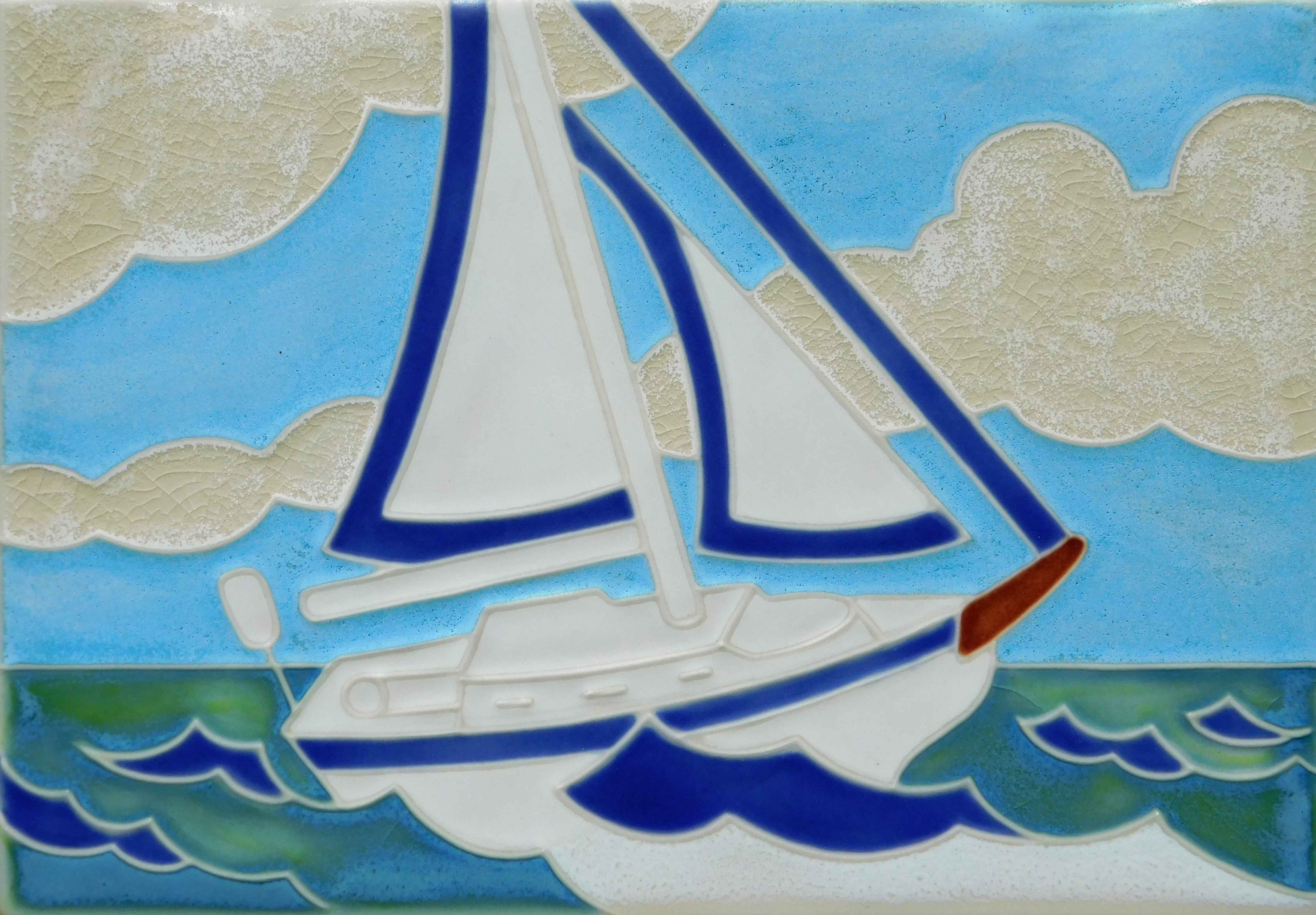
Rookwood Tile, 6' x 9", Commissioned by Willard, Design by Tom Lohre, You can purchase a myriad of things with this image on it by clicking on the link below. From beach towels to phone cases, on demand printing is the wave of the future. The owner, a wonderful classicist, knows how to enjoy life. A perfect example is his commissioning this tile of the boat from the world famous Rookwood Company, Cincinnati, Ohio. The joke is; This is the first thing that gets taken from the sinking boat. Just like the other works of Tom's being the the first things taken from a burning home.
https://pixels.com/featured/clio-tom-lohre.html?newartwork=true
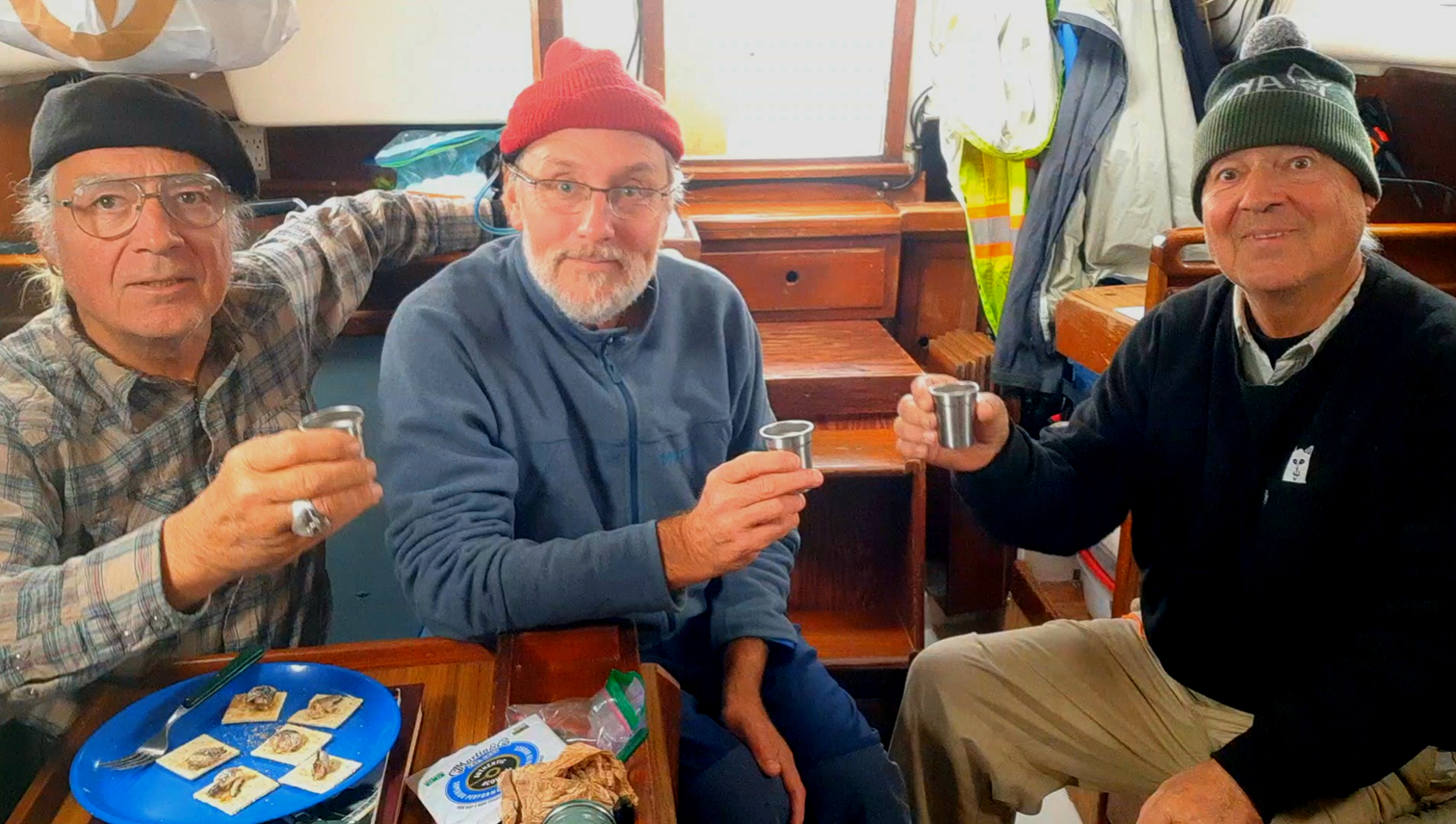
The crew: Tom, captain, Willard, owner, cook and 2nd mate, Chuck, 1st mate. Celebrating Captain Eric who passed away while we were in the North Alantic. Tom went on three Alantic crossings with Captain Eric Forysth and Chuck and Tom were crew on his 2019 Maine sail. Visit his Facebook Page and website:
https://www.facebook.com/yachtfiona
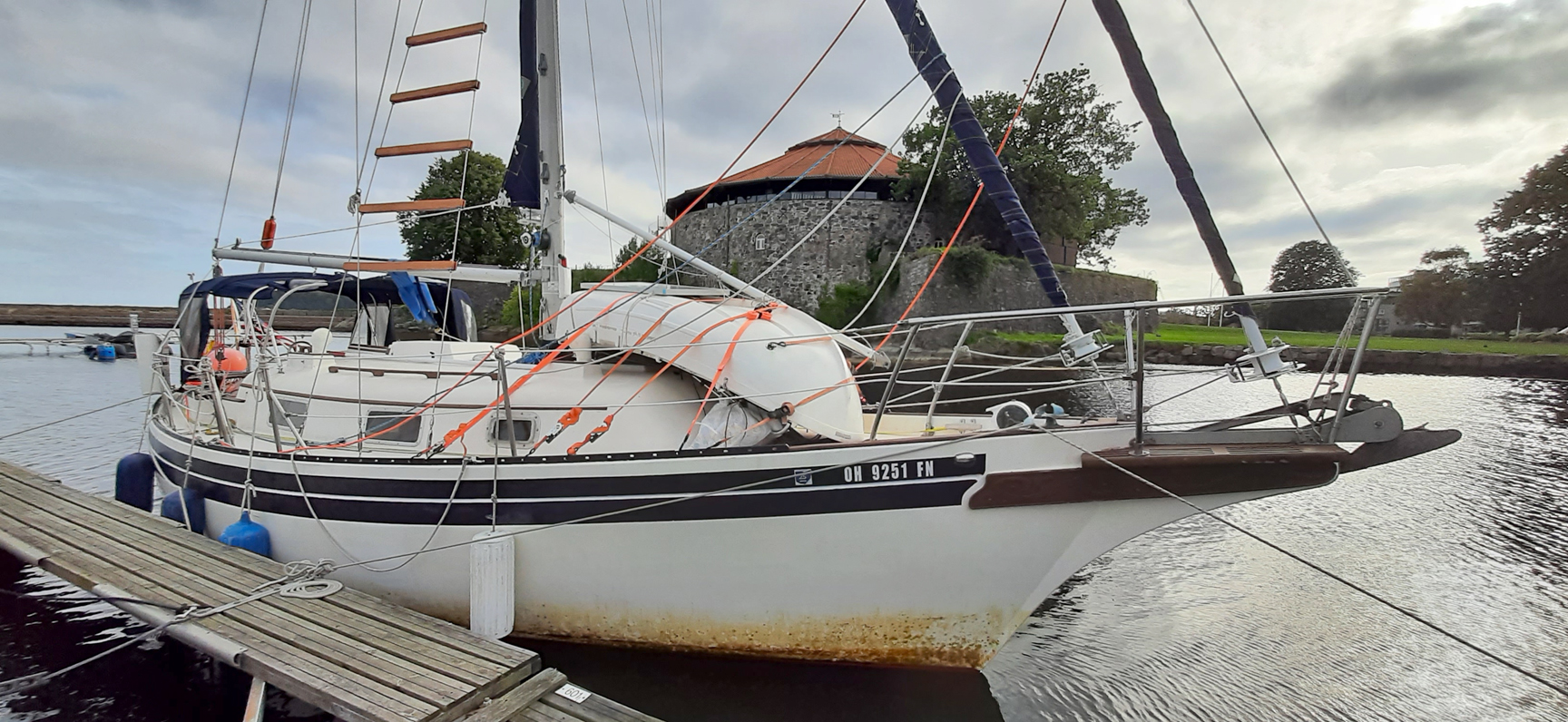
Herl's Marina, Catawba Island, Port Clinton, Ohio, Lake Erie
Kristiansand, Norway after 37 days from Saint John's, Newfoundland
Chuck's Blog
https://green-cincinnati.com/sailing-32-bayfield-clio-from-port-clinton-ohio-to-helsinki-finland/
Chuck's book about the sailing adventure. A hilarious and revealing conversation between Chuck and AI avatar Thalia during the entire voyage.
Buy it on Amazon
https://www.amazon.com/dp/B0CN3VZ7TP
Online PDF
https://acrobat.adobe.com/link/review?uri=urn:aaid:scds:US:ca287180-d036-3901-8c42-c931e2f68596
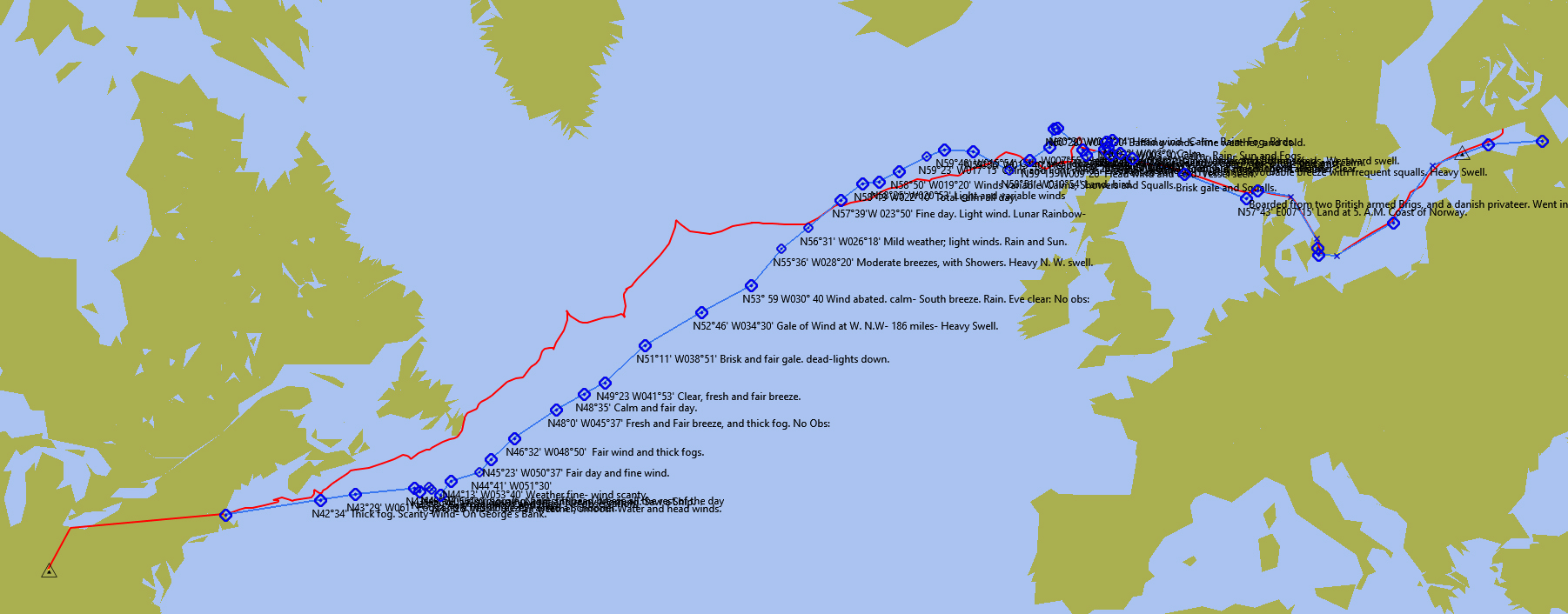
4,744 nautical miles logged by Clio from Port Clinton, Lake Erie, Ohio to Kotha, Finland.
Following John Quincy Adams' route to Russia in 1809 as the first ambassador to Russia. Initially Adams expected to go straight to Saint Petersburg but a storm took them into Kristiansand, Norway. There he discovered injustices being done to American sailors and then made an additional stop in Helsingor, Demark to petition the government. Boat owner, Willard, Russian Phd. history professor, is writing a book about Adams' journey. Willard, with nautical history on both sides of his family, met Tom 15 years ago and started getting his sea legs back. Tom, with 4 Atlantic crossings under his belt, took Willard under his tutelage to teach him while they went from one small sailboat to another settling on a 32' Bayfield sailboat to rebuild for the voyage taking 7 years installing a new engine, self-steering, electronics, etc. Willard received his captain's credentials from the US Coast Guard. Tom has a masters credentials from the Coast Guard.
On April 19, 2024 at the Clifton Recreation Center, 320 McAlpin Ave, Cincinnati, Ohio, United States, Tom, Chuck And Willard hosted an in-person and Zoom presentation of their 4,744 nautical mile voyage.
“Three Men in a Tub: Spam, the Pee Bottle, and Other Tales of Derring-Do on the High Seas from Lake Erie to Finland”
In the summer and fall of 2023 three Cliftonites crossed the Atlantic in a sailboat.
The Craft: Clio of Cincinnati, a 32’ Bayfield, Sailed from Port Clinton, Ohio, to the Russian border near Kotka, Finland.
The Crew:
Owner: Willard Sunderland, PhD Russian history professor at the University of
Cincinnati, who dreamed of recreating John Quincy Adams’ voyage as the
first ambassador to Russia in 1809 aboard the Horace.
Captain: Tom Lohre, an experienced ocean sailor and neighbor to Will, who volunteered
to teach him to sail and worked with him to refurbish Clio for the journey.
First Mate: Chuck Lohre, who retired in 2019 and volunteered to assist the journey.
Clio Goes To Russia, hour long version of the voyage
Thank you Chuck Lohre for supplying the meat of the footage. Thank you Willard Sunderland for your dream and making it happen. A 15 year effort including 7 years rebuilding, finishing off with 4,744nm four month voyage with few stops. 800 nautical miles from Port Clinton, Ohio on Lake Erie to Boston just to begin the real voyage: Following the route of John Quincy Adams on the Horace on his way to Saint Petersburg, Russia as the first ambassador to Russia in 1809. More like a delivery where you are underway all the time. Not the normal sailboat cruising where you have a pleasant day sail tucking into a beautiful harbor every evening.
Extended Directors Cut of Clio goes to Russia, 11 minute slide show
We are back from our 4.744 nautical mile voyage from Lake Erie to the border
of Russia. It took 5 months and a great toll on Chuck, my identical twin, and
the owner. Being their first crossing, they did not know what to expect. This
was my fifth crossing, first as captain.
It took 37 days to cross from Saint John's Newfoundland to Kristiansand, Norway.
Way too long for a first voyage but we were on a mission for the owner to follow
the route of John Quincy Adams the first ambassador to Russia in 1809.
The owner got me started on this project 15 years ago when he discovered I had
crossed the Atlantic in 2009. He, being a PhD. A Russian history professor originally
wanted to sail into Saint Petersburg but that is on hold. In fact the boat has
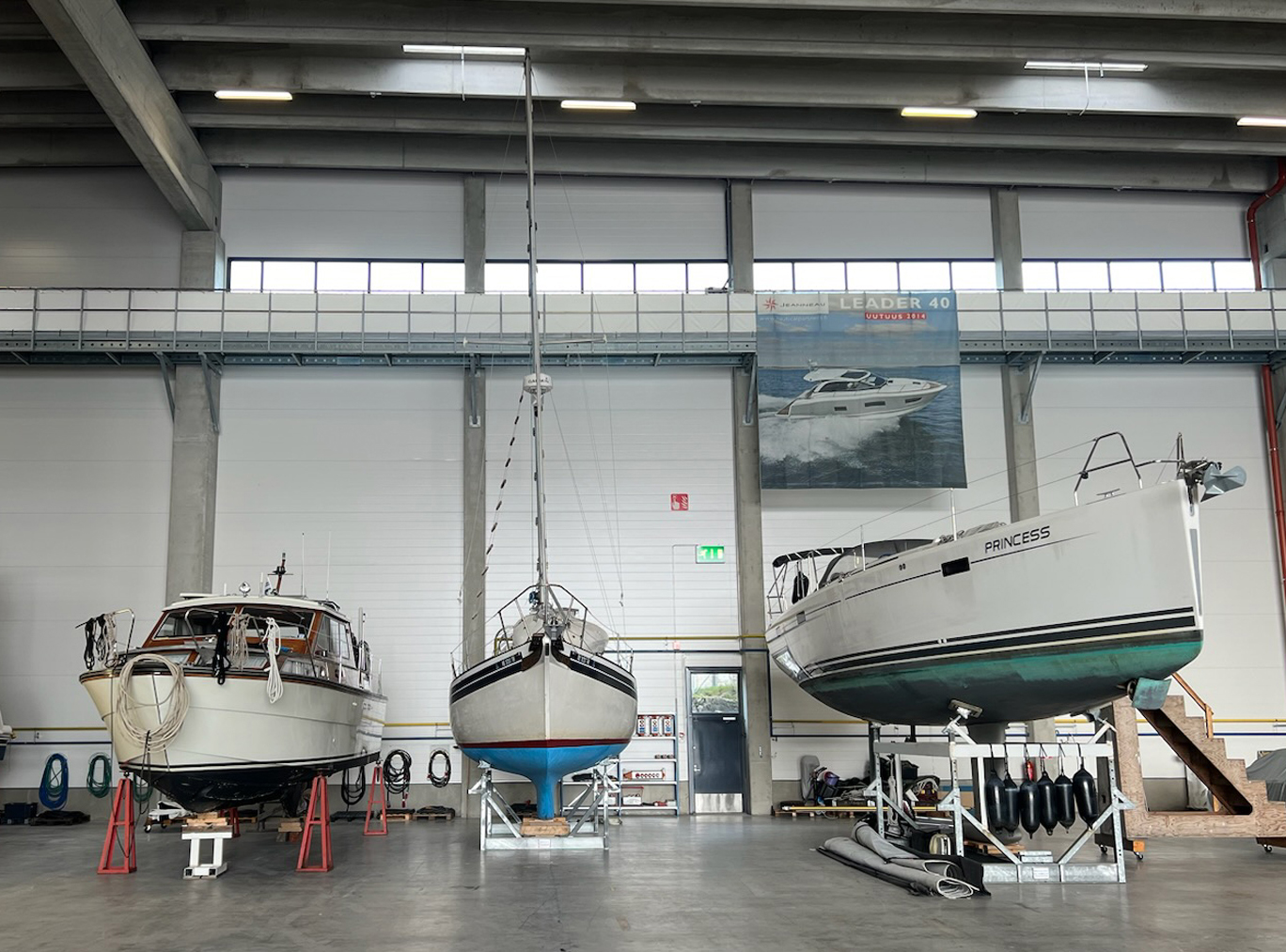
been mothballed in a gigantic super yacht building made for Russian oligarchs
in Kotha, Finland. Maybe once the war is over, he can sail it into Saint Petersburg.
Clio Goes to Russian Border from Lake Erie, fast paced 6 minute slide show of the voyage
About taking a rebuilt 32' 1976 sailboat from Port Clinton, Ohio on Lake Erie to within 30 miles of the Russian boarder in 4 months, June to September 2023.
Willard Sunderland WVXU Interview
https://www.wvxu.org/search?q=Willard+Sunderland#nt=navsearch
A scholar takes a trip across the ocean — and down memory lane —
to celebrate John Quincy Adams
Adams, a lover of the seas and skies, spoke at the cornerstone laying of the
Cincinnati Observatory 180 years ago.
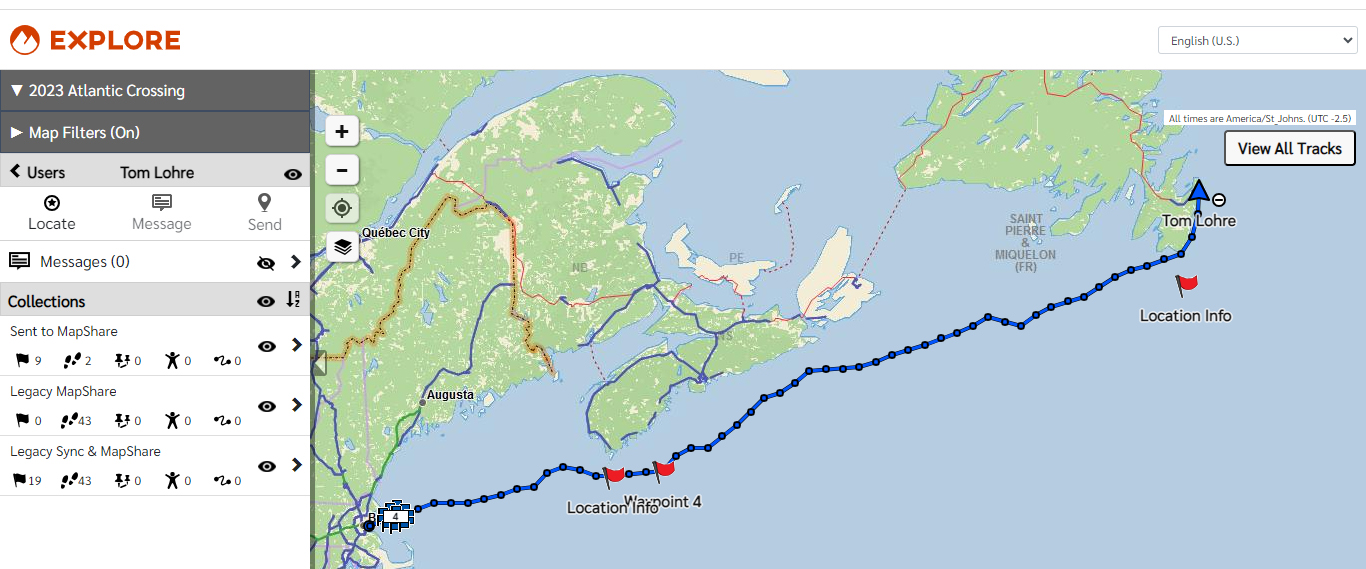
This is the definitive track of the trip. Created by the Garmin InReach device that is on all the time sending signals via satellite every 4 hours.
https://share.garmin.com/TomLohre
Tom's Voyage Blogs
It’s been a big and various trip: Lake Erie, Erie Canal, Hudson River, Long Island Sound, New England and now the North Atlantic. Each leg honed different skills and now for the offshore skill. 4-hour watches, simple meals, rollercoaster type motion. Planning about 23 days but prepared for 35 days. Found out crew needs to be thick skined, have a long fuse, optimistic outlook, no relatives (we vilolated this one), easily amused, different approaches to conflict resolvement, and agreed on a style of command. We had a great crew.. Chuck as 1st mate is a perfect foil to Tom’s gruff manner. Willard as 2nd mate, cook and owner on a rapid learning curve. After 15 years of planning, 7 years rebuilding the boat, we’re all tired of building and now look forward to cruising.
https://tomlohre.com/Sept7to26.pdf
September 7 to 26, Kristansand, Norway to Kotha, Finland
Made it and nobody got hurt except feelings all over but we are all committed
to bringing her back as crew.
The hard labor and tremendous time spent on equipment refit paid off. The return
will be easier because we know the day by day on board and will make small but
very important tweaks.
It may take a month and a half to move Clio to Falmouth, England. Then the next
year from Falmouth, England into the Larentine Channel to the Saint Lawrence
Seaway to Lake Erie.
The boat may stay in the customs shed in Kotha, Finland until till Russia opens
up because the time Clio is in the customs shed she is not counted against the
18 month EU residenency rule.
https://tomlohre.com/July31Sept7.pdf
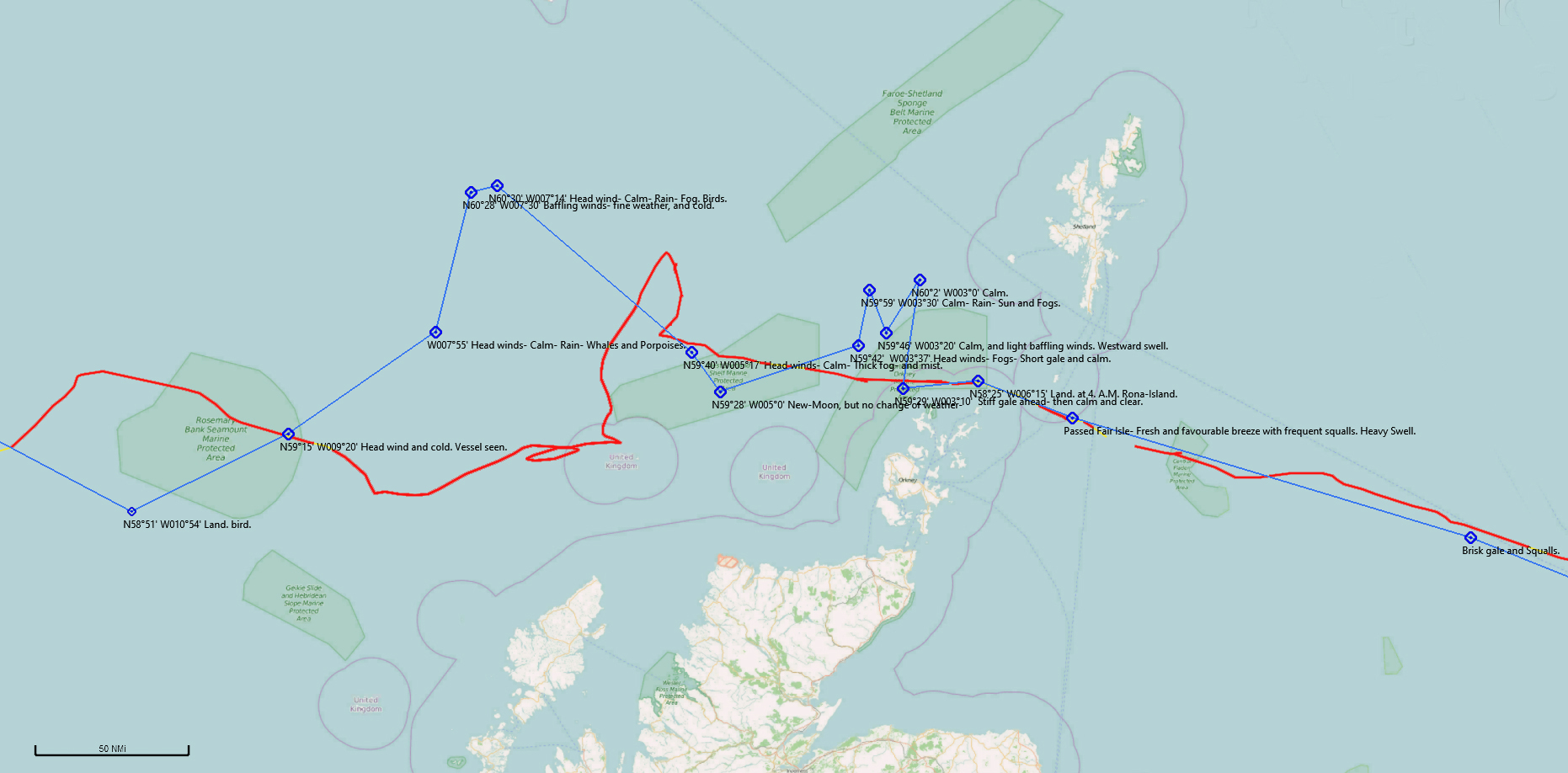
Rounding the top of Scotland proved difficult to both ships. Head winds and lulls prolonged their voyages.
July 31 to September 10 Saint John’s, Newfoundland to Kristansand, Norway
First day on land since July 31. 37 days, 2,400nm, 1000 crashes of the hull against 12ft seas. Endless circle of 4 hour watches with 2 two hour watches to make your next watch the one earlier. Crew learned a lot about running Clio. Each with his achievements and foibles. I learned to accept the crew I have and not the crew I wanted. 7 years of rebuilding a 1976 stout, blue water 32' boat only to wait to experience how she handled big water offshore for three days of 24/7 10ft waves and 22 knot winds. I was used to the pounding on other boats but to experience it for the first time on Clio was something we could not trial. She came through excellent. I have the hairs standing up on my body saying this though my heart was calm and steady laying in my bunk listening and feeling Clio take a regular gale beating for 72 hours.
On his return, Tom is working on a painting, gift to Jim Winter, a fellow sailor, who helped immensely in Saint Johns, Newfoundland while we prepared for our crossing. Jim, a radio broadcaster, won an ACTRA, a Canadian award for television/radio excellence. He won it in 1978 for a radio piece he did called 'Birthed Swiler'. The painting is derived from a photo snapped by a newspaper reporter at the Saint Johns airport as Jim arrived back from the ceremonies. It shows his 4 year old daughter clutching the award that looks like a dolly.
Audio of Birthed Swiler
https://tomlohre.com/BerthedSwiler.mp3
https://tomlohre.com/July14to30.pdf
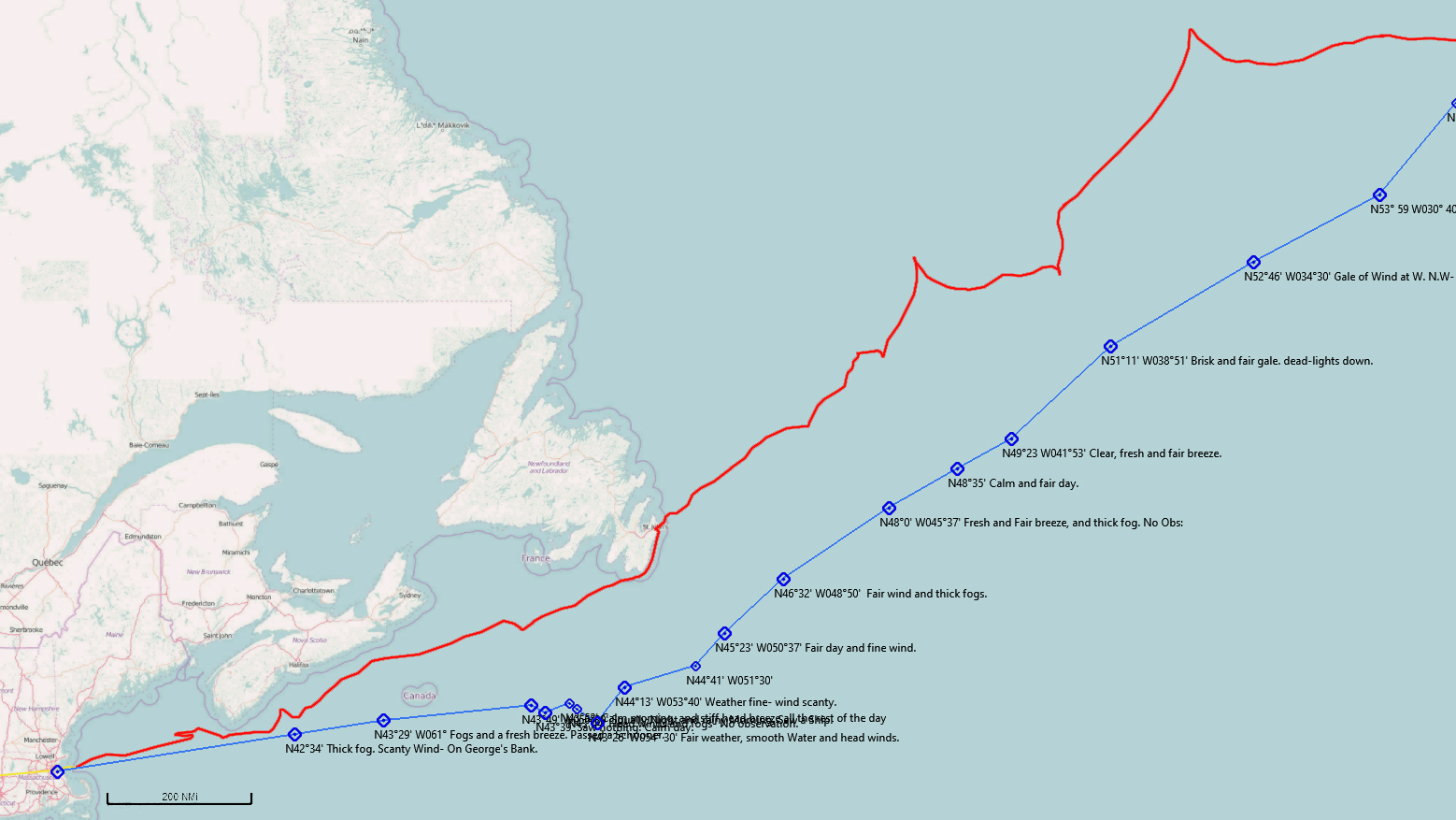
Both ship encountered difficulty in staying on course. Adams took 78 days. Clio took 80 days both going at the same time of year. Adams, a master diariest, noted the weather and position. Read his one liners here:
https://www.masshist.org/jqadiaries/php/doc?id=jqad23_220
July 14 to 30 Boston to Saint John's, Newfoundland
The passage took 13 days. We’ll be getting about 120nm a day. Using .4 gallons an hour when motoring but there will be no motoring on the next leg until we get within three hundred miles from land. The North Atlantic passage could take the whole month of August.
https://tomlohre.com/June27July14.pdf
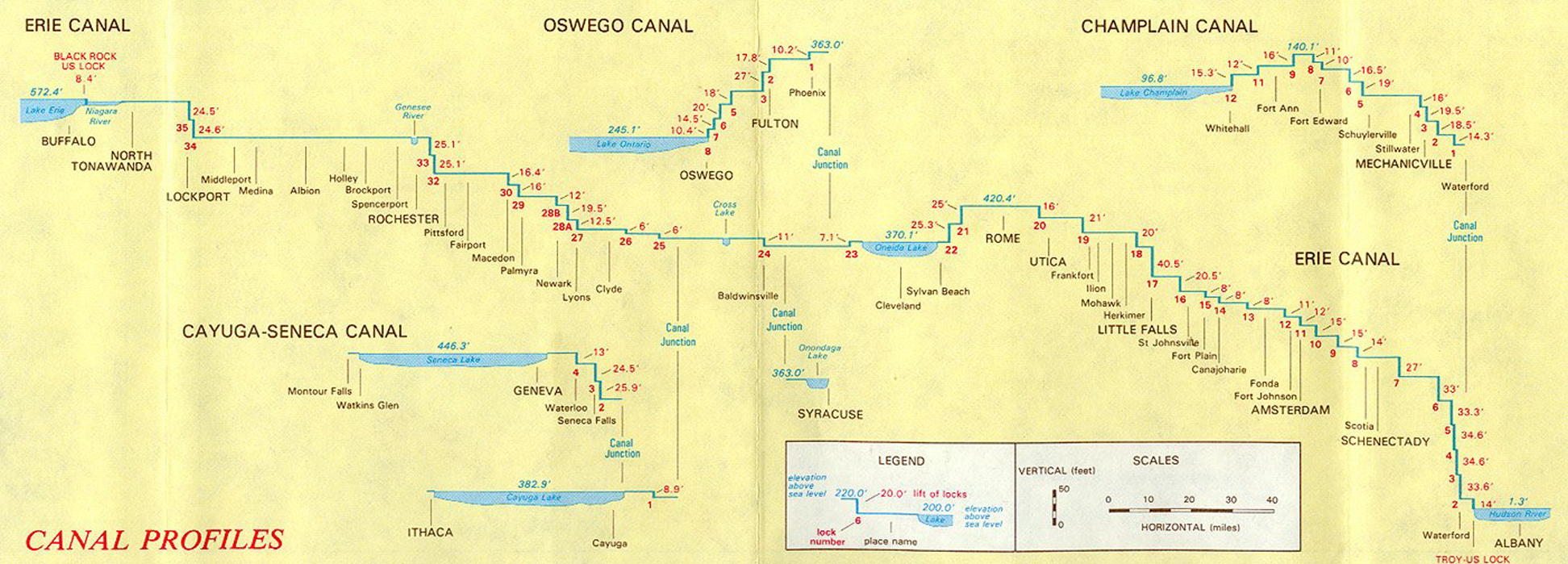
Erie Canal
We made it through the Canal. A wonderful trip through the canal. Brings back memories of many locks during childhood on the Ohio and Kentucky Rivers. Now salt water!
https://tomlohre.com/June9to26.pdf
Another month at the marina but we're ready!
PDF Blog from May 6 to June 8, 2023
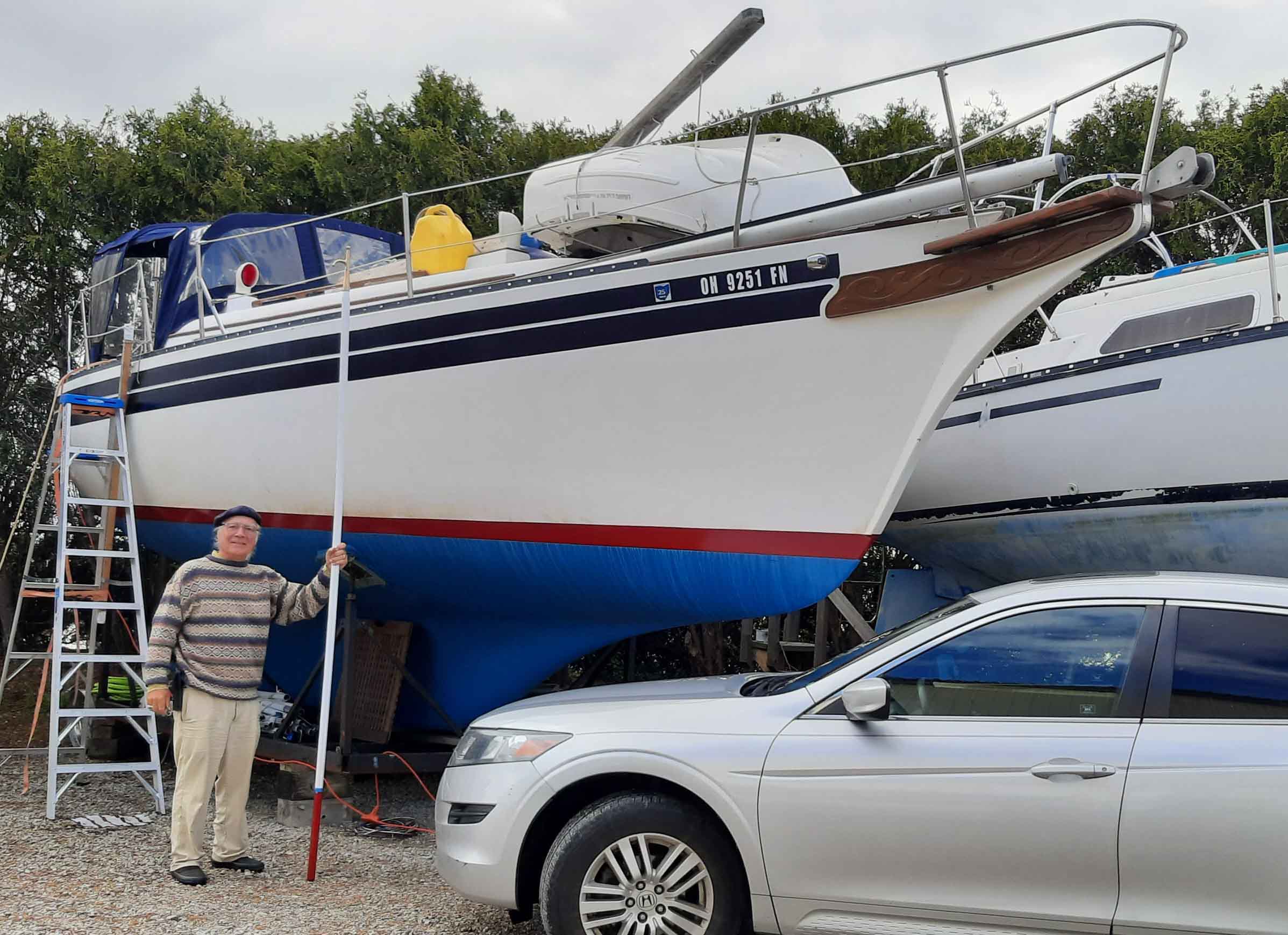
Tuesday, April 25, 2023 starts Tom's two week stay in the yard finishing the mast rebuild and prepare the boat for launching in May. Irene came for the first week. It was just the two of us!
Two week stay at the marina with Clio on the hard
PDF Blog from April 23 to May 5, 2023
Sea trials
PDF Blog from July 3, 2022 to April 23, 2023
Clio launched after two and a half years on the hard
PDF Blog Saturday, Sept 4, 2021 to Tuesday, June 14, 2022
For 3 years during the time of the voyage Tom would record a virtual trip to Russia following the weather and contacting harbors along the way.
https://tomlohre.com/VirtualRussia2.pdf
Post comments on Facebook https://www.facebook.com/groups/230980633127879
Jeff Wilson’s Song "Sailing to Saint Petersburg"
Taking advantage of the great acoustics of the Off Ludlow Gallery, Jeff penned a ditty.
Sailing to Saint Petersburg
Intro
I'd like to dedicate this song to all those folks that are sailing a sailboat
over to Russia. Sometime in the not too distant future. Don’t got to set
a date. I 'm sure you'll get there.
Sailing to Saint Petersburg
Peter the Great was a great big guy.
Peter the Great was a great big guy.
They say he stood about, seven foot high. Peter the Great was, great big guy.
He could march down any street.
Yeh, he could march down any street.
All the strength of his two feet. He could march down... any old street.
He was not afraid of war.
No, he was not afraid of war.
Half the time he was flat out poor. Because he was not, afraid of war.
Staying up until five a.m.
Staying up till 5 a.m.
Vodka couldn’t rum and gin. Next time I arrive back, right back at it again.
Harmonica
We ain't seen the likes of him. We ain’t seen the likes of him.
Never and never and never, forever again. No we ain't seen the likes of him.
Harmonica
End
There we go. Send that to Russia. Make that kinda like our peace offering. You know what I’m saying.
Jeff Wilson
"Heave Away My Johnnies"
Song from John Huston's film "Moby Dick". Video from silent screen adaptation of Moby Dick staring John Barrymore. https://youtu.be/N7-f7U3Co74?si=DrkjfiZVEKh4TyHk
Sung with a few lyric changes to go with Captain Eric Forsyth's book about 50 years of cruising on Fiona, a 42' Westsail, of which Tom Lohre was on board 215 days of them.
Oh, as I walked down the Landing Stage All on a summer's morn
Heave away, my Johnnies, heave away!
It's there I spied an buxom girl A-looking all forlorn, And away, my Johnnie boys, We're all bound to go! "Oh, good morning, Capt. Eric," "Good morning, my girl," said he.
Heave away, my Johnnies, heave away!
"Have you got a solid ship to carry me across the sea?" And away, my Johnnie boys, We're all bound to go! "Oh, yes I have a Westsail, She's called the Ms. Fiona";
Heave away, my Johnnies, heave away!
"She sails away at break of day, She sails to-day for Rodney Bay." And away, my Johnnie boys, We're all bound to go! "Oh, will you take me to Rodney Bay When she sails away at break of day?"
Heave away, my Johnnies, heave away!
"I want to marry a Yankee boy, And I'll cross the sea no more." And away, my Johnnie boys, We're all bound to go!
2020 Maine Sail
https://tomlohre.com/Maine.pdf
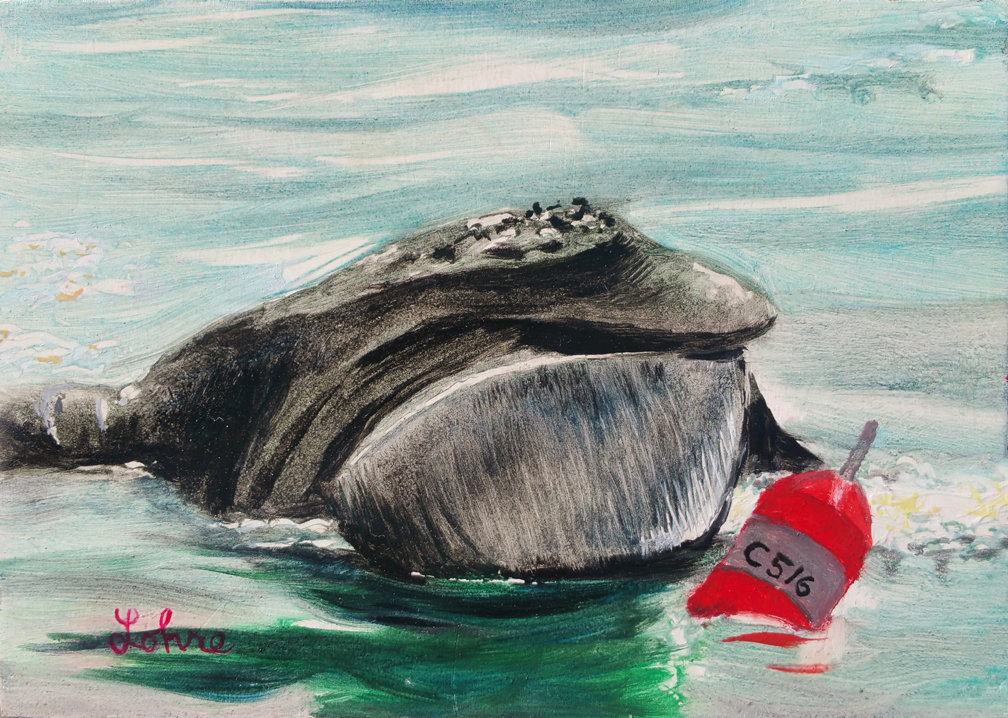
Right Whale #1017 / Buoy C516; 7” x 4” oil on board, $75
Inspired after a month sailing the coast of Maine to paint the blight of the Right Whale.
Looking for a motif during the cruise, Tom settled on a series of right whales with a buoy. He became fascinated with all the different buoys and started taking images of them. Only later when I realized that each remaining North Atlantic Right Whale is known and has a dossier, just like each buoy can be traced back to a fisherman, painting a tranquil scene of a whale with a buoy is a pleasant painting of extinction crisis.
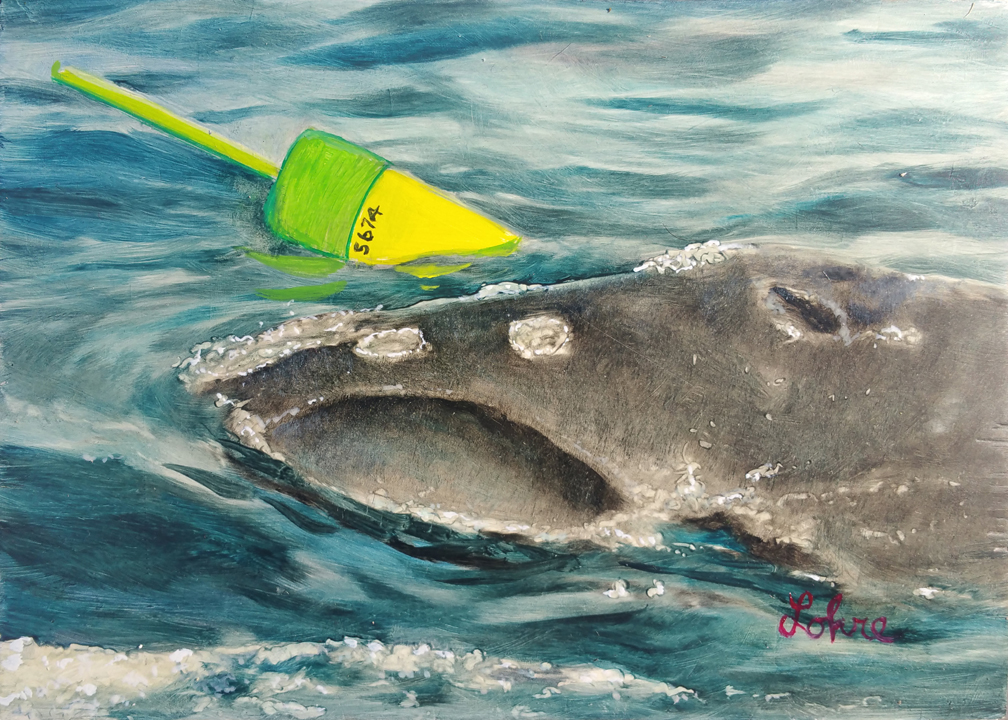
Right Whale #1050 “Gemini” / Buoy S674; 7” x 4” oil on board, $75
After seeing thousands of lobster buoys while sailing Maine for the month of September 2019, Tom settled on the herculean task of saving the Right Whale. He started on a series of actual right whales with the notorious fishing buoy. But after completing three small works, he realized a larger painting was needed. His new motif will be a woman lifeguard riding a known Right Whale where she could be saving them or killing them painting life size.
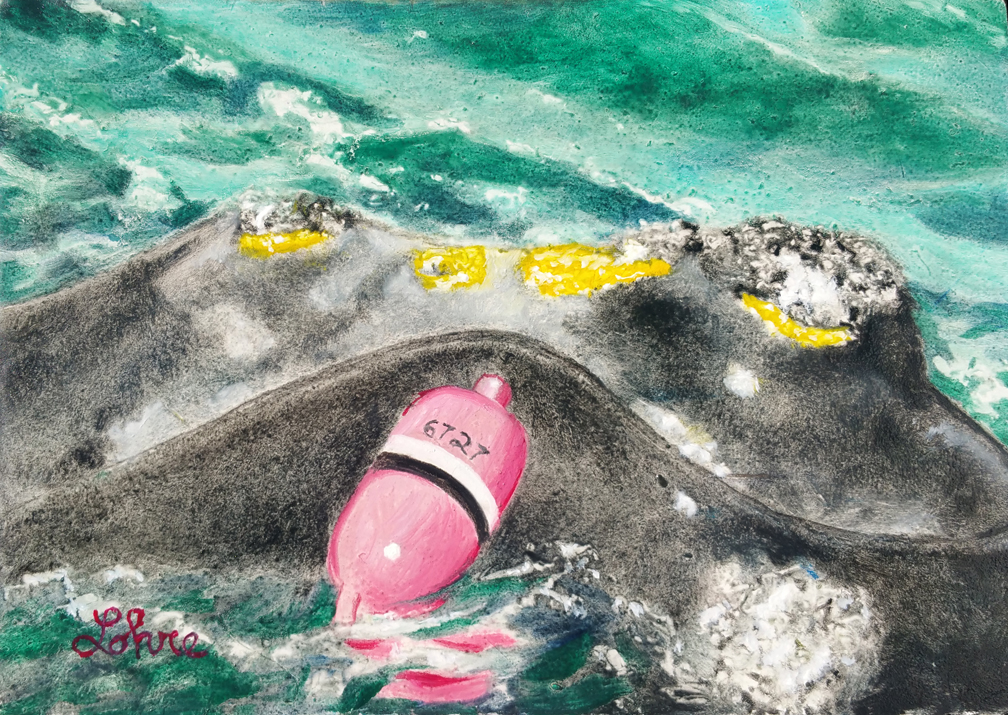
Right Whale #1303 / Buoy 6727; 7” x 4” oil on board, $75
Inspired after a month sailing the coast of Maine to paint the blight of the Right Whale.
The traditional series in the Dutch manner depicts a known whale and lobster buoy. Right whales populate all the places ships go, especially the entrances to harbors and near coastal. Thousands of lobster traps tangle the Right whale to death. Work is afoot to make the traps lineless until the trap releases a buoy to be picked up by the fisherman. There are only 380 right whales left down from 400 in 2019.
The next painting in this series will be a life size woman life guard riding a Right Whale. You will not be able to tell whether she is saving the whale or killing it. For the longest time I've wanted to paint the lifeguards at the pool but a lifeguard posing just did not seem to cut it until I thought of having them ride a whale. Of course I'll have to make a blow up whale!
The funny thing about planning the painting is that his partner wanted to be the model. He went looking for a life guard that looked like her at a young age and found one at the pool. He approached her and she asked her parents and you would have thought he had the most vilest intention known to man, she was a math major in high school. Eventually he realized he did know a young woman who would be perfect and she was totally on board. Now to figure out how to make the rubber right whale!
September 2020 Maine Sail
20 ShutterFly Booklet by Chuck Lohre
https://www2.slideshare.net/ChuckLohre/yacht-fiona-maine-2020
https://tomlohre.com/Maine2020ByChuckLohre.pdf
Tuesday, October 13, 2020
Just finished 49 days sailing Maine with Captain Eric, who I crossed three times with. Signed my identical twin on for the third crew member. He had a great time getting back to cruising, he crossed from Long Island to Nantucket twice with me in the 90's. He's the third crew member on our 4 year European cruise coming up in 2022.
We showed up two weeks before leaving to launch and prepare the boat. The trip was to 15 fantastic spots in Maine while the boat continually broke down. Finally we had to be towed in.
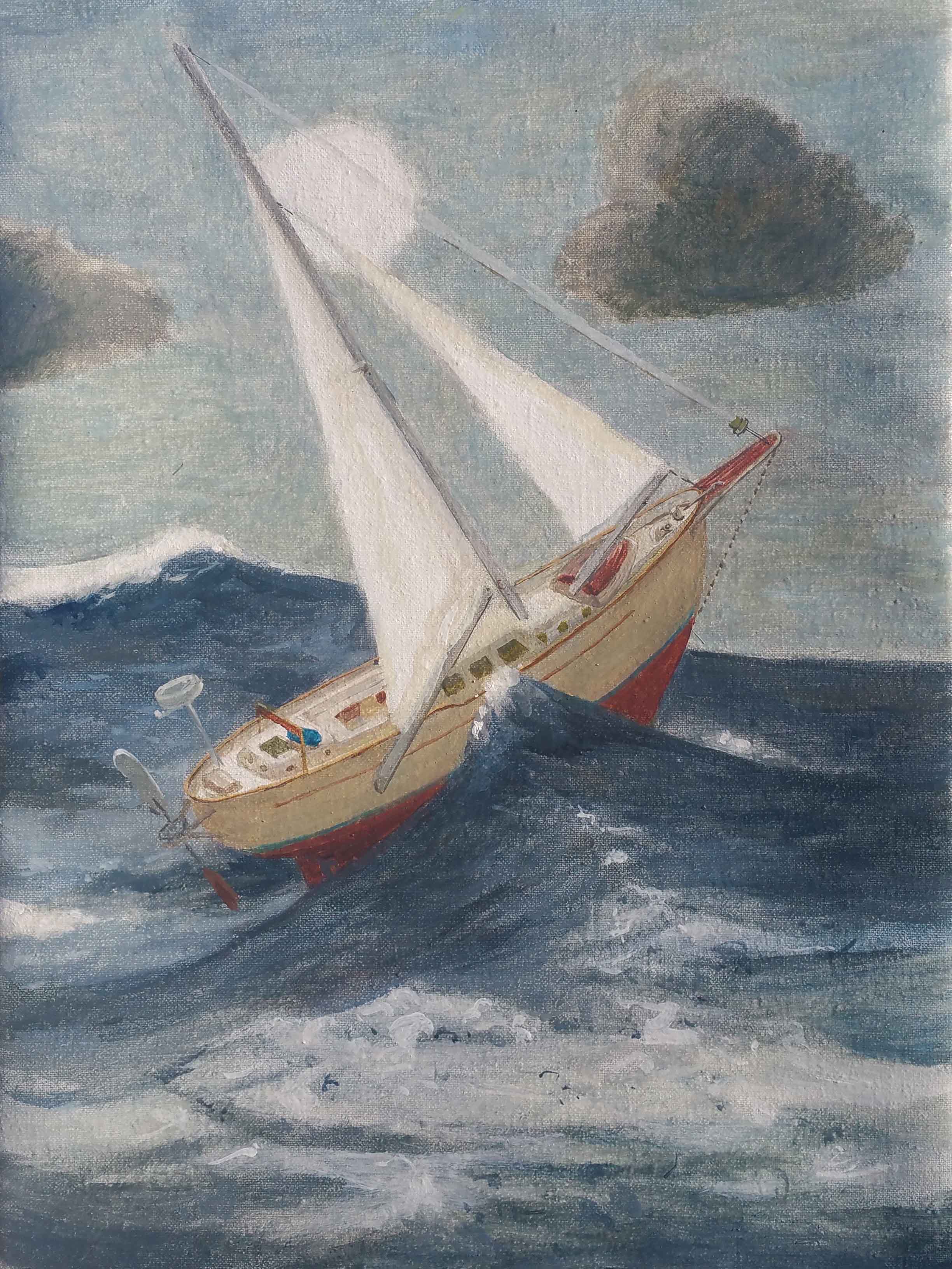
42' Westsail "Fiona" in heavy seas, oil on canvas, 12" x 16",
February 2018
Oil on canvas, 12" x 16", $1,200
Painted during the fourth crossing of the Atlantic. Tom painted the ship he
was on in the manner of Pinkham Ryder. He took his time and worked on the pencil
on the canvas while underway and painted when they were in port.
Fourth Crossing pdf
https://tomlohre.com/Crossing4.pdf
by Tom Lohre
The 387 page journal starts off with a Image / Caption chapter of the complete voyage followed by lengthy day by day notes, images and thoughts. The kind of sailing book he likes to read.
Extra content from the voyage
https://tomlohre.com/crossing4.htm
Captain Eric's Blog
I learned ocean crossings crewing on Eric Forsyth's 42' Westsail. At 90 he is tapering off. Chuck and I sailed in 2019 on his yearly Maine sail. He still is planing a fall Maine sail. I went on the 5 month second leg of his 2018 European loop, the last one.
http://yachtfiona.com/easy-sail-portugal-caribbean-2017-2018/
https://tomlohre.com/VirtualRussia2.pdf
Welcome to the 2nd virtual trip to Russia archived as a PDF. The Blog starts at the bottom.
We leave Friday, May 15, 2020 for the 3rd virtual trip. Learning all conditions for world wide for travelers concerning the virus. By the time we set off requirements will probably be to have been vaccinated.
Setting off for Russia in May of 2021 from Cawtaba Island, Lake Erie, the western end. Taking the Erie canal from Buffalo to Albany, down the Hudson then from Manhattan to Boston. Sailing directly to Orkney Island, Scotland. Next Flekkeroy, Norway; Helsingor, Demark; Saint Petersburg, Russia; arriving mid August. Leaving her on the hard in Finland. Sail the lakes of Russia and in 22’ & 23’. Sail back to Lake Erie via the Caribbean.
200109 Ohio River Sail Great conditions. Perfect in every way.
Bath Tub Boat
14' Home-built Row Boat Sailboat
1971 13’ Banshee Sailboat / Trailer Sold for $300 Stored in a garage, with original sail and parts. After sailing across the Atlantic Ocean I vowed never to be without a sailboat, on a nothing budget. On craigslist someone gave me a Triumph Trimaran and I worked on repairing it till I found a Banshee for sale. What a find. I carved a set of oars for her and she was my go to boat for many years. Tom Lohre, 513-236-1704, Clifton, Cincinnati, Ohio 45220 1971 13 Ft. Been stored in a garage. Oar locks have been installed but can be removed. 7’ oars not included. Rows excellent with boom bungeed to mast. Daggerboard and rudder in excellent shape. Mast and boom in good shape. Mast step a little worn as well as the connection between upper mast and lower mast but still excellent as serviceable. Trailer in excellent condition, greased and lights working. Sail battens sewn in place, no holes but used. No seams loose. Includes running rigging. Hull has one quarter inch patched hull. Hull does not leak, bone dry. All hardware in excellent shape. Includes tung drop down wheel. Groups Page https://groups.io/g/banshee-sailboat DropBox Link to PDF https://www.dropbox.com/s/wm10i1ja6z1...
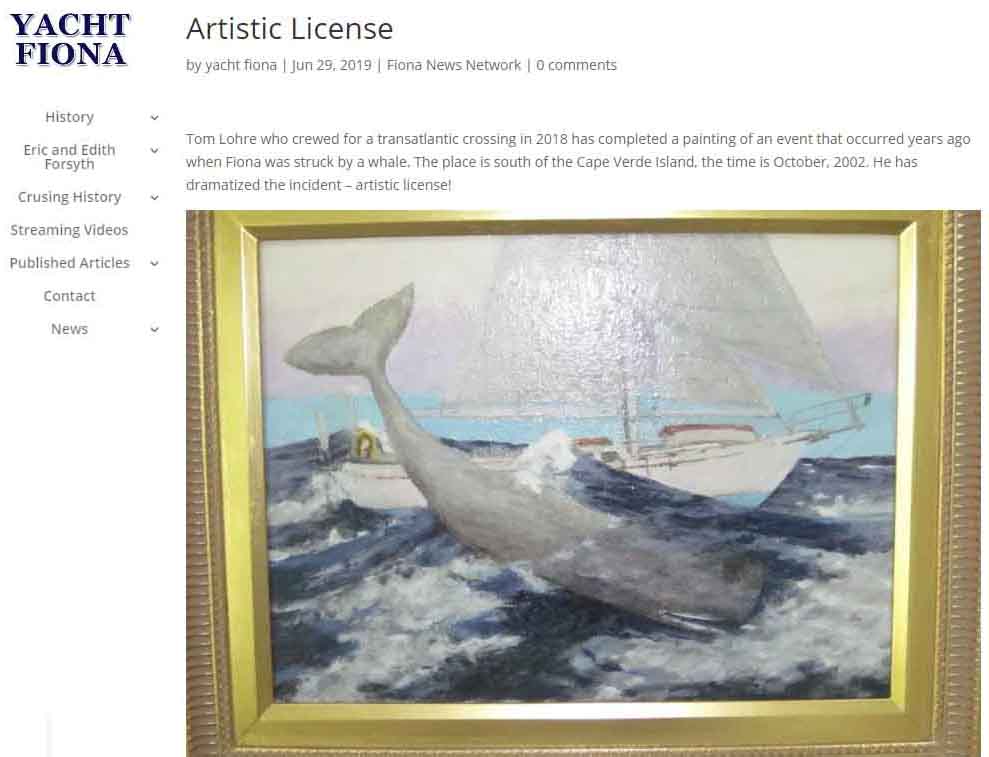
http://yachtfiona.com/artistic-license/
Artistic License
by yacht fiona | Jun 29, 2019 | Fiona News Network | 0 comments
Tom Lohre who crewed for a transatlantic crossing in 2018 has completed a painting of an event that occurred years ago when Fiona was struck by a whale. The place is south of the Cape Verde Island, the time is October, 2002. He has dramatized the incident – artistic license!

42' Westsail "Fiona" in heavy seas, oil on canvas, 12" x 16", February 2018
2018 Crossing
Wednesday, January 17, 2018
Leaving
The plane left the ground smoothly, without notice it was airborne as if it wanted to be high instead of sitting still on the freezing ground. Even the de-icing clunge as if wanting to hitch a ride to 37,000 feet. Though 50° below the two movements propelled the plane flawlessly as if it was its natural state.
The gnawing in my stomach continued and would continue till arriving on Fiona, my second lady, a 42’ Westsail sailboat, I was crewing 6,000 miles in a southern loop down the coast of Africa up the coast of North America, finishing in Long Island just miles from Newark Airport where I took off four months ago.
Sailing through paradise during the best time means the ship gently glides through the endless miles meeting up with one warm volcanic island after another till finally settling into a narrow shallow slip in Patchogue.
The calling sea for me is intrepid. Not exuberant but cautious as if thinking the ship through its paces. She responds well to attention, readily allowing you to spruce her up as you continually listen and feel her wearing.
13 Chapter 4 Month Blog
https://tomlohre.com/crossing4.htm
Captain Eric's Blog Post
http://yachtfiona.com/easy-sail-portugal-caribbean-2017-2018/
Review for "An Inexplicable Attraction: My Fifty Years
of Ocean"
by Eric B Forsyth
Having logged 210 days with Captain Eric I'm happy to say I'd jump aboard
again in a second. Never really scared, we took care of Fiona and she took care
of us. As long as you fix things right away as they break up you never get overwhelmed.
In the meantime, just sit back and read everything aboard and catch up on your
sleep. Always happy to leave her after your watch because we did not sink her.
Never getting far away enough not to hear her creaking and moaning as you lay
in your bunk until Boom, Crack, something needs to be look at. Captain makes
it all look so easy and it is easy for the crew. Captain carries the whole weight
on his shoulders and does it effortlessly. Now after receiving my doctorate
in cruising on Fiona, I'm off to travel the same waters as captain.
Review for "Wings Over Iraq" by Eric Forsyth
Sinking at 500 feet, We made it to the Sphinx
Reviewed in the United States on November 25, 2020
With only one engine, we made it to the Sphinx. Sinking at 500 feet per minute
with full throttle on starboard. We only could communicate by pencil and pad
since the noise was deafening and we never had ear plugs. Holding course was
not hard at all in the simulator but you really knew you were descending at
500 ft. per minute.
Look forward to the whole story right out of a Bond Novel.
The sex scenes were just what you would expect from a young pilot on his first
mission. You take him through all the paces even turning down a hooker.
Wings Over Iraq by Eric Forsyth (available on Amazon)
With only one engine, we made it to the Spinx. Sinking at 500 feet per minute with full throttle on starboard. We only could communicate by pencil and pad since the noise was deafening and we never had ear plugs. Holding course was not hard at all in the simulator but you really knew you were descending at 500 ft per minute.
Not many books bring so many details of life together except a book on the verge of war. "Wings Over Iraq" lands right in the middle of the German re-arming and their need for oil to lubricate it. Germans nose their way into everybody's business including pastoral architectural digs of ancient Mesopotamia. Follow a young pilot grow up in the desert, flying a huge bi-plane British bomber called the "Vimy" while he improves and developes all weather flight techniques, “flying blind”. An ancient history buff, the young pilot is drawn deep into digs at Ur and Egyptian pyramids where the Germans have eyes everywhere. You'll always be looking over your shoulder by the time you finish, questioning everything while the fledgling Nazi movement sweeps into every crack and crevice. Nothing like learning history and flight while meeting the local flower and fauna. The young pilot grows up earning his manhood only to be thrust-ed into reality. Though no Ian Flemming, Forsyth has created a novel you’d love to see as a film.
Eric Forsyth has been my captain on 3 Atlantic crossings, one lasting five months. At 88 he is more active than I am. Ocean sailing is on the downlow these days but he has taken the cover off his Rhodes 19 in preparation for sailing on West Cove, Bellport Bay part of Great South Bay on the south side of Long Island.
2nd Crossing, July 24, 2015, St. John's Newfoundland to Oban, Scotland 4 hour video
The second crossing came up all of a sudden. Monitoring Captain Eric Forsyth Blog: https://yachtfiona.com/, Tom saw he needed another crew member for the North Atlantic Crossing. Generally, Captain wants crew to sign on for long stretches of the journey but from time to time things do not work out and this was one of those times. Tom discovered the need of another crew member on his birthday July 17th and on the 24th he was in Saint John’s Newfoundland.
The trip was an adult amusement park ride twenty-four seven. The captain, 83, was excellent, calm and happy. When it came time to go to the foredeck, we all went.
A month gone. What is the downside for the family. No money made. No arrangements
made. Just sucked life from assets. Like being a Olympian, training to be competitive.
The reward is fulfillment. Like researching for a story. If their was a benefit.
More like a vacation without the family. Should I feel guilty? All positives
and no negatives. If I continued sailing for long times it would be a burden.
Would it be a burden? Transformative time spent at sea makes me a better person.
Sailing with Captain Eric is life changing for me. A authority figure like so
many in my life: father, Captain Beatty, Vince Ellis, Ralph Cowan, James Barker
and Irene. Why use people in this way? Especially Irene. I feel she wanted me
to be the provider and failed miserably. Add the embarrassing actions without
any positive behavior unless you call selfish use of money pursuing art. Is
there no redeeming qualities of a fancy boy, attractive and nothing else. Projected
image seems desirable to those not in the know. The appreciation of responsibility
not fulfilled is disappointment folly. Hope is to change. These voyages are
heavily weighted with positive change. On the surface it seems like selfishness
but in reality it is a easily obtained brief sabbatical, testing ones self to
extreme with great rewards to those on land. Not unlike pursuing a career in
art where no great art results but the example to others to pursue their dreams
almost balances the lopsided reliance on Irene to fund it and make do when Tom
is not home. Is the cost worth the reward? Is the abuse of a spouse justifiable?
When Irene said, "We will find a way." did she cave in too his lopsided
manipulative charm? Everyone does not have the opportunity I have. Have I abused
this opportunity? If someone wanted to change for the better and a dangerous
adventure made that happen should they be denied? Was Irene’s hitchhiking
across Europe worth it? Was her three week sail while Tom was courting her worth
it? Was Helen's trip to Andros worth it? Was Helen's trip to Huntsville worth
it. A resounding yes is the answer.
Is it justifiable to let Irene work and pay for these trips? Tom's behavior
does not justify Irene paying for it. Mediocre house husband chores does not
justify spending money on dreams. Spending a life as a mooching artist is enough
of a dangerous adventure and needs no further financing for life changing events.
When did Irene ever be selfish? When did she ever spend others money for her
pleasure? Never. Even with the deduction for being a mother, Irene's behavior
was and is always of the highest unselfish manner. A better lesson learned is
to be unselfish and providing to a fault. Think never of yourself and always
of your family and community. Tom's significant volunteering in the community
is a veiled attempt provide and be unselfish. It does not hold a candle to cover
the costs of saving and providing real money and guidance.
7/24/2015 Tom arrives in Saint John’s at midnight. In the morning took a cab to Campbell's Marine Supply to buy foul weather gear.
Timeline of Video
00:00 Video starts
00:07 2015 Trip schedule for Fiona
150824
00:14 At the Atlantic Mall waiting for Fiona. After a phone call to the harbor
master, went to Queen’s Wharf.
00:58 Befriended by Gavin French of the catamaran Sea Dog. They took me in and
used their VHF to get reports from Fiona.
1:11 Time 4:05, last radio message from Fiona. Time 3:15, Fiona on VHF verifies
they have AIS read only, reported by Santo Spirit, Beating to North 2 hours
from ETA, making 4Kts beating 80° off rum line. Time 4:07, VHF message from
Fiona. Time 4:23 VHF message, low on fuel 30 minutes out. Time 4:32 VHF discussion
about Fiona. Time 4:50 Jim Winter arrived looking for Fiona
1:47 Fiona sighted, Jim talks about the unusual Newfoundland weather.
2:10 Fiona sails into the harbor. Jim talks about Fiona’s trip through
the northwest passage in 2009 and not being able to make the trip, not having
the time or money.
2:55 Fiona drops mainsail.
4:29 Fiona docks
4:44 On board watching a oil rig tender dock using its side thrusters.
5:08 Captain Eric with his laundry talks to underwater radar survey boat.
5:31 Waiting for Jim Winters to pick the crew up for dinner, Captain Eric talks
to a local.
6:03 Image of crew taken by Jim Winter.
6:10 Image of log entry
Time 1700, Tied up at Queen Wharf, Miles 2119
Jim Winters there to greet us.
Fuel 15 g!!
Tough beat to lay
the entrance of the
Narrows wind veering
to NW, 28hr, gusty
to 35 kt.
Long W 1565
fwd going seems water
Tom Lohre signed on
crew list
6:17 Image of evening dinner of fish casserole and fresh sourdough bread from
the Crawford’s at Jim and Sharon Winter’s.
6:24 1:30 p.m. Saturday, July 25 walk to laundry.
6:53 Music on the monument as Captain walks to Fiona
7:30 Sunday, July 26, Folding large mainsail
7:57 Captain Eric walking to ship with Gospel Singers performing in the park.
8:25 The entrance and tidal rocks
8:47 Looking at the map of the West Coast of Scotland, thirty miles to Oban
from the waypoint marked at the entrance. The start of the canal is north of
Oban, Eric been through it a couples of times but could not remember it.
10:18 Looking at the close up view of Oban
10:52 Captain Eric, Jim Winters and Misha in saloon with Eric talking about
“The Last of the Blonde Bombshells.” Talks about a joke in the movie,
a young girl was asked, “What was World War Two?” She says, “What?
England won three two1.” Laughter all around.
11:55 Crow’s Nest bar above the harbor for Officers and Shipmen with Captain
Eric buying a new vest
12:33 View from Crow’s Nest
12:54 Misha takes a look through the German periscope.
13:32 Military art adorn the walls of the club.
14:06 Coming back from dinner, Monday, July 27, Eric talks about getting the
diesel heater repaired twice and not testing it yet.
14:43 Tuesday, July 28, last day in port. Crew prepares to go to breakfast
15:02
July 27 Log entry
Refuled $352
Engine hrs 1566
July 29
1200 left dock 1210 Set full sail through the Narrows for Jim's photo opportunity
On Board: Eric Forsyth, Misha Tulek, Tom Lohre
Wind SE 20kts
WPT 113= 56°09 N 0360° W, 20nm SW of Mull
15:09 Bending small mainsail
15:26 Art Museum visit to The Rooms
15:44 Restoring the old government building
15:59 almost to the museum
16:19 View of harbor from the museum.
16:36 Captain Eric takes in the view
16:56 The gay parade
17:32 Image from Saint John’s guide book of harbor in snow.
17:39 Image from Saint John’s guide book of ship with cliffs.
17:46 Image from Saint John’s guide book of wharf buildings from the water.
17:53 Image from Saint John’s guide book of man and woman looking out
to sea from the top of the cliffs.
18:00 Image from Saint John’s guide book of lake.
18:07 Image from Saint John’s guide book of the lighthouse on top of the
entrance to Saint John’s.
18:14 Captain Eric shows CCA circumnavigation burgee with big band music playing
in the background. Holds up a checkered blue and white flag hoisted to give
notice to lock through the canals in Denmark.
19:09 Captain Eric walks back to Fiona under a full moon.
19:30 Captain Eric talks about going food shopping tomorrow.
19:53 Crew walking to dinner.
20:09 Image by Jim Winters of Tom tying a Turk’s head on the wheel.
20:16 View of the harbor on a sunny day.
21:12 Captain Eric and Tom having coffee after shopping.
21:22 Jim Winters and Captain Eric talk in the cockpit enjoying a Mount Gay
rum and apple juice with slice of lemon with peanuts the day before Fiona leaves.
The row boat “Why Not” sets out schulling out of a tight spot while
the schuller sings, “And its Wave over Wave.”
24:21 Tom sews in the cockpit the drip covers for the crews berths.
24:38 Morning view of the harbor on the day of leaving, Wednesday, July 29.
Misha and the crew leave for breakfast.
25:52 Visual survey of the starboard sign of Fiona with detailed close-ups of
the winch, dinghy, mast winches, Bimini top, ladder, cockpit winches, wheel,
mainsheet pulleys, gallows, Avon boat bag, radar, stern flag, Aries wind vane
self steering device and life buoys.
31:30 Tom talks of leaving everything shipshape, pockets filled with voyage
things, hand salve, needle and wax tread, knife; putting his wallet away.
31:58 Captain at wheel giving orders to Misha at the mast while passing through
the Narrows with sails hoisted under power so Jim Winters can take images from
shore.
32:49 Image of Fiona in front of large oil rig tenders and warehouses.
32:56 Image of Fiona passing green buoy into the Narrows.
33:03 Image of Fiona with red buoy to port and green buoy to starboard with
northern rock of the Narrows.
33:10 Image of Fiona with colorful houses.
33:17 Image of Fiona with house and cliffs.
33:24 Captain Eric questions why the harbor master does not respond right away.
Misha is straightening lines. The harbor master wants to know if Fiona is participating
in “Traffic Reporting.”
34:45 View of the stern, American Flag and The Narrows in the distance.
34:49 Misha takes down the flags.
35:10 Isobar map for the day and track, SE 20kt wind.
35:17 Misha takes down the CCA, Cruising Club of America, burgee being taken
down.
https://www.cruisingclub.org/
36:10 Thursday, July 30 Looking at map of Atlantic, Captain Eric talks of former
route from Newfoundland to Ireland. Our route is north just south of Mull. Eventually
going through the Caledonian Canal to Inverness, then through a Danish canal
to the Baltic.
37:18 Isobar map of the day, wind ESE 25-28kts, rain, 48°
37:25 View of autopilot controls in cockpit, close hulled port tack, you can
hear the mainsheet pulley squealing, as the camera makes a turn around Fiona.
38:38 Image of log:
1400 Pos 47°37.3N 52°29.5W Log 2128 Course 080
Wpt 1748 m 056°t
1930 Set ship's time to 2000
2000 GMT -2
30 July '15
0200 Wind SE kts, backing Log 2185 Course 080° Bar 1030
0800 Wind ESE, 15-20 kts Log 2216 Course 060° Bar 1025
Rain outside temp 48°
wpt 113 1660m 057°t
Tom's first entry
1100 Wind ESE 25-28kts
Rain, outside temp 49° Log 2233 Course 055° Bar 1020
1200 wpt 113 1637 on 058° Log 2238
Pos 49°05.9, 50°37.5
1400 On Port tack wind E'ly Log 2249 Course 150°
25-30kts
wpt 113: 1627 on 058°
Pos : 49°16.5N, 50°29.6W
Making good 6.2kts
1700 Furled jib at 1530 Basically Log 2264 Course 180° Bar 1020
soggying along, wind down but still from E
2000 Wind down to 15kts slowly Log 2277 Course 165 Bar 1018
backing, Motor sailing, foggy & wet
38:48 View of Aries clutch on wheel while engaged, hearing mainsheet pulleys,
morning fog, close hauled on port tack
40:06 Tom looking out companionway on Friday morning, July 31.
40:35 Isobar map showing Fiona in upper left quadrant of Low.
40:42 View of block and tackle of boom vang showing the snap shackle.
41:13 Log Image
Emails & Notes
Went to thrift store
7/29 Left Saint John’s
7/30
7/31
8/1
8/2
Finally got free time to send an email. Wish I was there to take care of you.
I so want to be better then okay. Having the time of my life. Will have to get
Willard to ship aboard. Captain Eric is a god. You'll love his quotes. Look
forward to emails from time to time when possible. Much love, your shipmate
8/4
Thank you for your email.
When the boat is heeling over 25 degrees it is hard to do anything and that
is what it has been since leaving Saint John's.
Finding sailors for long trips is difficult. Eric takes anyone. I hope Willard
gets to ship with him. Eric said for the most part sailing is easy with 15 kts
off the stern quarter, rolling waves 3 feet high and 300 feet between peaks.
Not this time. Pounding, rain, cold, getting bruised and beaten the first four
days out through the Labrador Current, past the Grand Banks dealing with contrary
winds 35 kts on the nose, where we want to go. You move carefully trying not
to re hurt the hurts. I want to sail long distances. On land befriended for
local hospitality. The birds live in the ocean, on land to mate. I will sail
around the islands till I get my dose, you stay at the Marriott till the sailing
is glorious. I'll have everything ship shape for a cruise dinner and love.
8/5
Helen
Six and a Half Days at Sea
Your Mom trusted me to keep her safe when we shipped aboard our first sail.
Captain Eric is keeping Misha and me safe. Heeled over 20 degrees with Fiona
leaping over 4 foot waves is sailing for an acrobat. Captain Eric is excellent.
I want to be like him. Enjoy your big adventure. I am. love, Dad
8/7
Fantastic job getting tickets for Chuck. Pay AT&T and Bell by calling. What
a burden going through my junk email. Sent email to Helen and Willard. Half
way there. Thinking of paintings and story of journey. Could be happier with
you here. XXXOOO shipmate valentine
8/8
Irene
Got your email about Vanguard. Take it. Put the income diversion into the other
Vanguard bond fund. Not the one used by State Teachers. Good to patronize Ludlow.
Eric feeds us boat food of cans, instant rice and potatoes. Tea and cookies
at 3. We split a beer at dinner if he remembers. Fiona cocktail at 5 of Mount
Gay Barbados Rum, apple juice and piece of lemon. All I will do in Oban is book
the cheapest flight home. I did this to experience the big ocean. Strange night
spent in the boat with no sail up. Too much wind. Last time Eric did it it was
in the Southern Ocean. Boat laid perpendicular to the wind. Up and down with
the huge waves, 5' high and 75' between the peaks. Had a dream amongst
the racket that we had to add to the ballast. You were in charge. How do you
tie a ham sandwich down in the bilge? It must have weigh a ton. It is like hitchhiking
across a foreign land. Love from the sea. Tom
Helen
We can have all the chocolate we want but one cookie a day with tea at 3. Did
not buy enough cookies. The sea made a terrible racket last night. Sunny and
glorious today. Your sewing is holding up well. Dried my socks on the engine.
I will not worry about you driving with friends on a date if you will not worry
about me sailing with friends on long passages. The show here is looking at
the sea a sky. Fixing things, making things, dealing with the weather. It is
our friend. Your have a whole week of vacation. What do you want from Scotland.
I want you from North Carolina. Dad
8/10
Love, Stitched a cover for the computer. When it gets rough water pools on the
chart table. With the cover and a plastic bag it has a good chance of staying
dry. I tied the computer to the table in chance Fiona takes a leap. I have been
emailing Helen when I email you. She has not responded. Glorious day sailing.
Like it is supposed to be. Westerly mild winds, Sun poking out 10%. Supposed
to be like this for several days. 630 miles left. Read your email about Victoria
Secrets nightie. Do your morning walk in the hot summer wearing it. Do not wash.
Put it back in the bag for the next sail. Mixed with your perfume will throw
mw right on the rocks. Mentioned "strange night spent with no sail"
in Vanguard recommendation email. Rocking like the dickens as Fiona lays naturally
perpendicular to the waves with no sail up. Waves 5 feet with 125 feet between
crests. Better than any amusement ride. Will get Eric's take on sailing
style. Chuck sent email about Paddlefest, Lumenocity and gliding like sailing.
hugs and kisses Tom
8/11
Helen
Hovering at 50 degrees. Still seeing Northern Fulmar Petrel. No dolfins. Saw
a whale 400 feet away spouting 2nd day out. The clouds and ocean entertain.
Birds are jokers. Fiona is an amusement ride. I look at the sea for hours as
the weather changes. Going 5 miles an hour, 125 miles a day. Love Dad
8/12
Received email about dental work you are having done. Health is everything.
Hope to get $1,058 flight from Glasgow after repairing few things on Fiona once
in port, about two days. 342 Nmi left. May land Saturday. Winds favorable. Becoming
fearless with the sea with healthy respect. Not unlike mountain climbing in
wilderness. Mother Nature can deliver a wallop in both. Calm for lst two days.
Low moving through. Winds not from where we are going. Fixed fresh water system
and removed Formica panel to fix gimbaled table. Knee doing well. Everything
limber. We slither on deck staying low. Avoid getting thrown into things. Thank
you for the Arts Fest info. Love, your lifelong mate.
8/14
Irene
Got your email about Helen's return and the romantic twist. Wish I could
be there to take her to first day of school. Pleasant sailing today and till
arrival. Huge swells 1000' fetch and 9' high. Partly sunny in mornings
and then cloudy. 54 degrees hottest yet. Took out sextant. Saw a new bird. Stitched
an adjustment in Misha's drip cloth. Replaced propane tank and discovered
bolts loose on wind vane that steers the boat. A good morning. Eric and I saw
a whale dive under Fiona. Just light my drawing of the heart sail. Going down
wind, "run", main on left side, "starboard tack" and jib
poled out on the right side, "wing on wing." Shot a lot of skys. Imagine
sailing around never really going anywhere eating things caught and seined for.
I would need a mate like you. love
Helen
Welcome back. I would send a snapchat but we do not have Internet. We communicate
using short wave radio transmitting packets of data the size of a twitter. We
send a packet and the receiver sends back a handshake bit to say it received
it and to send another. We use the station in Belgium. Sending energy to get
that homework done in time to enjoy the last rays of vacation. Hugs, Dad
8/15
Irene
Just off Scotland and above Ireland. Kept watches last night for the first time
since the second night. Arrival around midnight. Motoring for the wind the wind
has died. Saw a seal 8 feet off the port beam, the left side middle. Still seeing
the ever present Northern Fulmar Petrel. Last night at sea saw us up at 3 to
change sail set. Only had about a dozen sail changes the whole trip. The toughest
at night in heavy wind and sea. Huge swells from the gale we were in not unlike
a hurricane. Eric said swells like this obscuring the horizon are rare. Lying
a hull was rare. Only did that because the main haylard got stuck. Our part
of the gale was manageable. Staring right at it, 6 fot waves, 75 foot fetch,
45 knots of wind. We were in the calmer part.
Love from the sea, Tom
-------------------------------------------------
8/16 Arrived in Oban
Irene
I am all for counting calories and exercise, throw in white teeth. I will follow
any Weight Watcher portion recipe. Captain Eric has been feeding us belly timber,
can meat, beans, soup, instant rice macaroni or potatoes. He eats like a bird.
We have not seen the birds eat yet! Thinking they feed on the squid that rises
to the surface at night. He still has his chocolate after the few mouthfuls
he calls dinner. On land he orders the small soup. If you can stand the process
for white teeth we will be there for you. As usual it takes forever to land.
Spotted a 1000 foot hill, land ho! Sails furled, folded on the boom with strips
of nylon ribbon called gaskets. Please do not send the old message. Erase it
after you hit reply. Love, your sailor husband
Helen
I will do anything, go anywhere, climb any mountain, sail any sea to lessen
the pressure school is putting on you. looking forward to seeing what you have
been dong in Sims. And taking that last swim with my daughter watching. Love
from Dad
8/19
A month gone. What is the downside for the family. No money made. No arrangements
made. Just sucked life from assets. Like being a Olympian, training to be competitive.
The reward is fulfillment. Like researching for a story. If their was a benifit.
More like a vacation without the family. Should I feel gulity? All positives
and no negatives. If I continued sailing for long times it would be a burden.
Would it be a burden? Transformative time spent at sea makes me a better person.
Sailing with Captain Eric is life changing for me. A authority figure like so
many in my life: father, Captain Beatty, Vince Ellis, Ralph Cowan, James Barker
and Irene. Why use people in this way? Especially Irene. I feel she wanted me
to be the provider and failed miserably. Add the embarrassing actions without
any positive behavior unless you call selfish use of money pursuing art. Is
there no redeeming qualities of a fancy boy, attractive and nothing else. Projected
image seems desirable to those not in the know. The appreciation of responsibility
not fulfilled is disappointment folly. Hope is to change. These voyages are
heavily weighted with positive change. On the surface it seems like selfishness
but in reality it is a easily obtained brief sebatical, testing ones self to
extreme with great rewards to those on land. Not unlike pursuing a career in
art where no great art results but the example to others to pursue their dreams
almost balances the lopsided reliegence on Irene to fund it and make do when
Tom is not home. Is the cost worth the reward? Is the abuse of a spouse justifiable?
When Irene said, "We will find a way." did she cave in too his lopsided
manipulative charm? Everyone does not have the opportunity I have. Have I abused
this opportunity? If someone wanted to change for the better and a dangerous
adventure made that happen should they be denied? Was Irene’s hitchiking
across Europe worth it? Was her three week sail while Tom was courting her worth
it? Was Helen's trip to Andros worth it? Was Helen's trip to Huntsville
worth it. A resounding yes is the answer.
Is it justifiable to let Irene work and pay for these trips? Tom's behavior
does not justify Irene paying for it. Mediocre house husband chores does not
justify spending money on dreams. Spending a life as a mooching artist is enough
of a dangerous adventure and needs no further financing for life changing events.
When did Irene ever be selfish? When did she ever spend others money for her
pleasure? Never. Even with the deduction for being a mother, Irene's behavior
was and is always of the highest unselfish manner. A better lesson learned is
to be unselfish and providing to a fault. Think never of yourself and always
of your family and community. Tom's significant volunteering in the community
is a veiled attempt provide and be unselfish. It does not hold a candle to cover
the costs of saving and providing real money and guidance.
Sea Fever
BY JOHN MASEFIELD
I must go down to the seas again, to the lonely sea and the sky,
And all I ask is a tall ship and a star to steer her by;
And the wheel’s kick and the wind’s song and the white sail’s
shaking,
And a grey mist on the sea’s face, and a grey dawn breaking.
I must go down to the seas again, for the call of the running tide
Is a wild call and a clear call that may not be denied;
And all I ask is a windy day with the white clouds flying,
And the flung spray and the blown spume, and the sea-gulls crying.
I must go down to the seas again, to the vagrant gypsy life,
To the gull’s way and the whale’s way where the wind’s like
a whetted knife;
And all I ask is a merry yarn from a laughing fellow-rover,
And quiet sleep and a sweet dream when the long trick’s over.
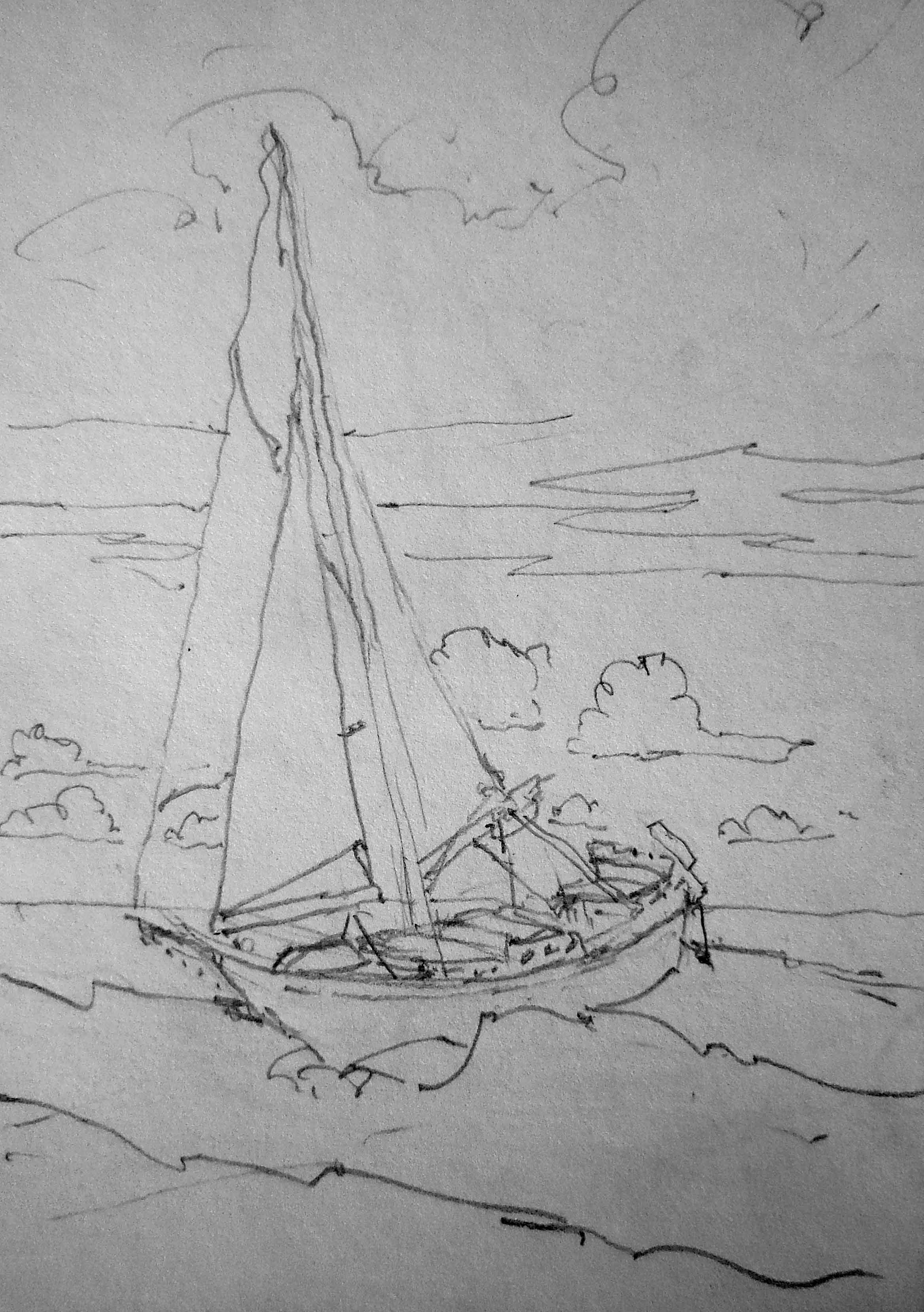
Crossing III, a sail from Portugal to Saint Martin pdf
a drawing a day, dreams, captain says, log entires & tracking map
Crossing III pdf with two weather maps a day, a drawing a day of the sea state, no dreams
Crossing III YouTube video of all raw footage, almost five hours!
Banshee

Tom fitted his Banshee with oar locks and carved a set of eight foot oars out
of poplar. They come in real handy while sailing the Ohio River with the current
and traffic. Bungee the boom to the mast and you have plenty of room to row
while sitting on a small cooler for a thwart.

Ocean Explorer, 16" x 12", Oil pastel on board, Thursday, November 26, 2015
32B Hull number ZBY320380376 #38
Clio, Port Clinton, OH
was Selah, Port Dover, Ontario
was Alpine Star
Story of putting a new engine in a 32' Bayfield on Lake Erie at Port Clinton, Ohio.
No sailing for two and a half years on the Bayfield. We sailed on the Ohio in a 19’ pocket cruiser out of the Ohio River Launch Club in Cincinnati. Going up for a week at a time install the engine & Caphorn Self Steering device for two and a half years.
17 meg complete information on the engine install. A tedious document from the blogs. Starts with the end.
https://tomlohre.com/Engine2.pdf
Raw Video Footage of the install
CapHorn Self Steering
including a Raymarine tiller stick to allow the device to steer under power to a compass heading.
https://tomlohre.com/Bayfield32WindVaneSelfSteeringInstall.pdf
Raw Video Footage of the install
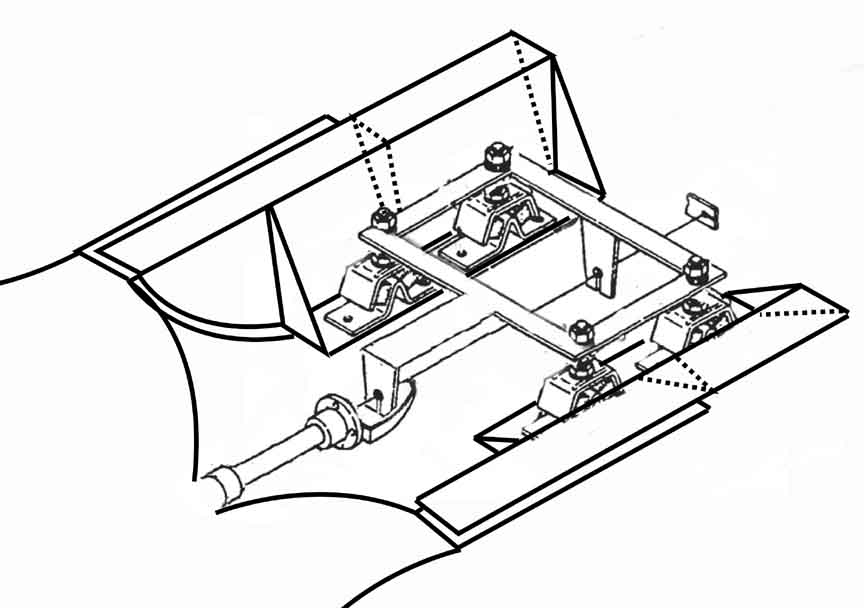
3YM30AE Yanmar Install in Clio 32B sailboat
Images of the engine space, jig and rail extensions. Making them out of aluminum,
3/16” for the jig, 3/8” for rail extensions.
About half the engine sticks out into the cabin and the rail extensions (that
are being made with 3/8" aluminum with as many gussets as possible) attach
to the complete length of the original rail 23” and then goes into the
cabin 7”
Hope to get at least ¼” to 1/8” circular alignment with the
jig. What is the adjustment range in the Yanmar mounts?
14” distance between Yanmar engine mounts lengthwise
22" old rail mounts length
22" width between center of old rails
7.5" height of rail side at highest point forward
20" Stern tube to lip between the engine space and the deck of the cabin
13" stern tube to transmission shifter
5.5" distance needed from engine center line to hull to accommodate transmission
shifter
15" from the lip between the engine space and the deck of the cabin and
the forward end of the engine
3.25" space between top of lip between the engine space and the deck of
the cabin
19.5" inside space between original rails fore
18.5" inside space between original rails aft
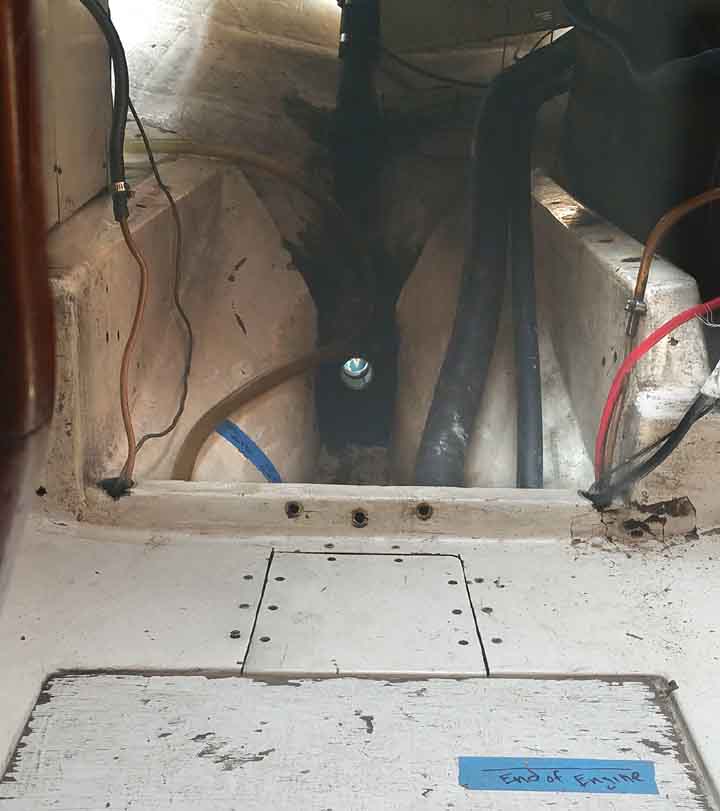
Ready to start building new rails.
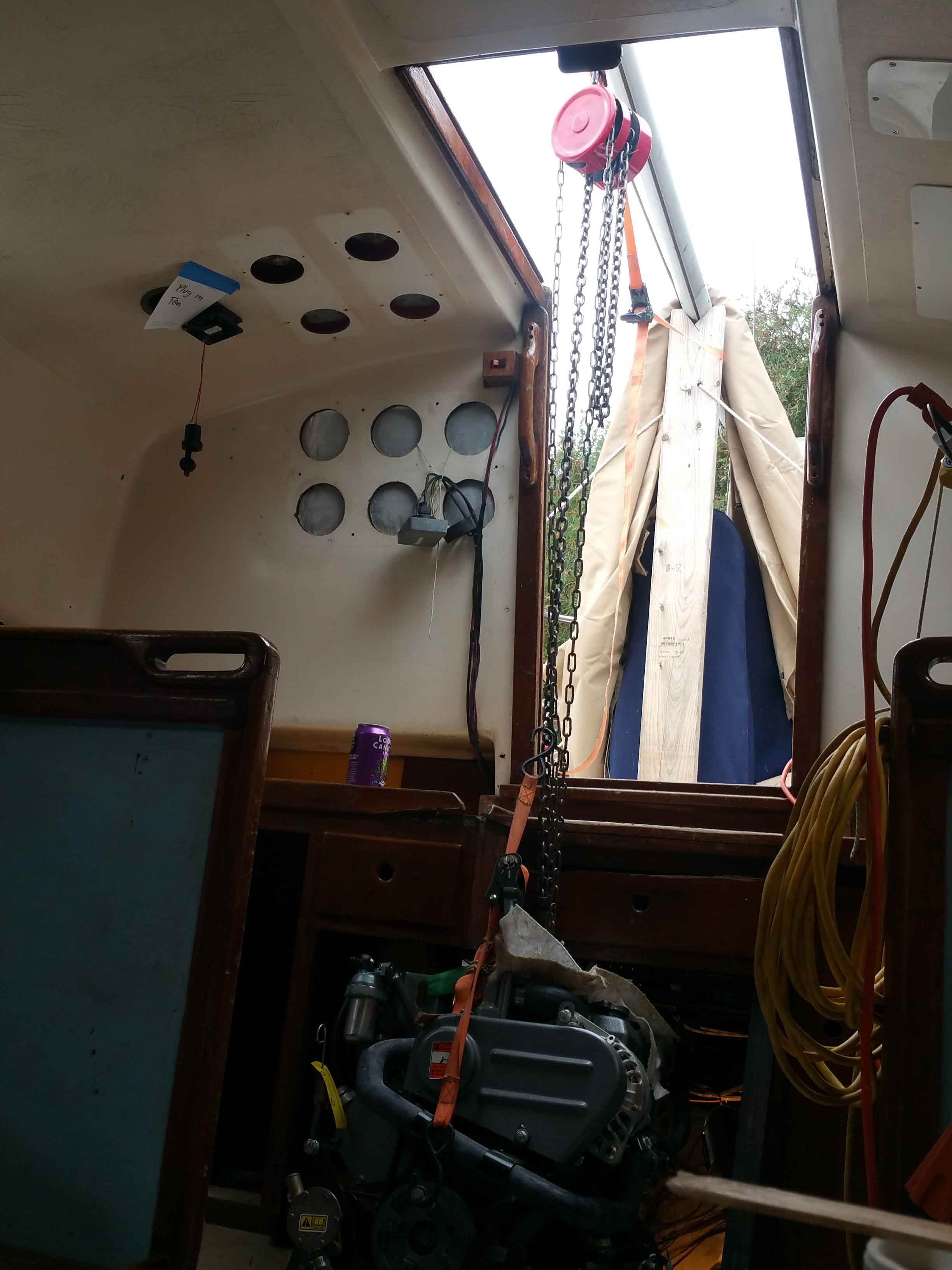
Chain come along attached to the boom with the cover stand holding it up. The engine was put in and removed at least 20 times.
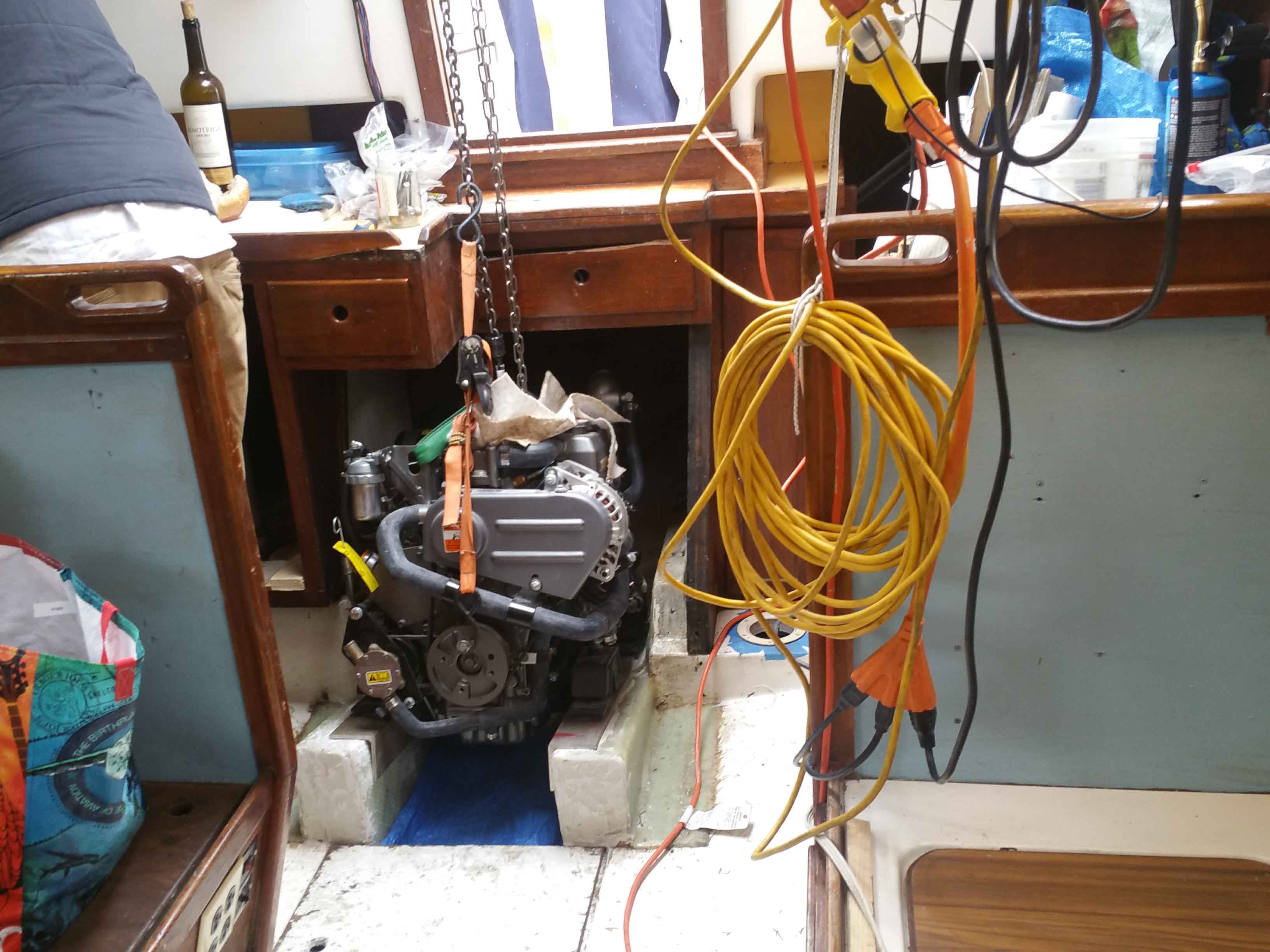
Took the advice of Bruce Jones, local expert, and suspended the engine where it is to be and took measurements.
Bruce Jones Boat Repair
4829 E Muggy Rd, Port Clinton, OH 43452
(419) 656-0360
https://www.facebook.com/Bruce-Jones-Boat-Repair-1088794427952002/
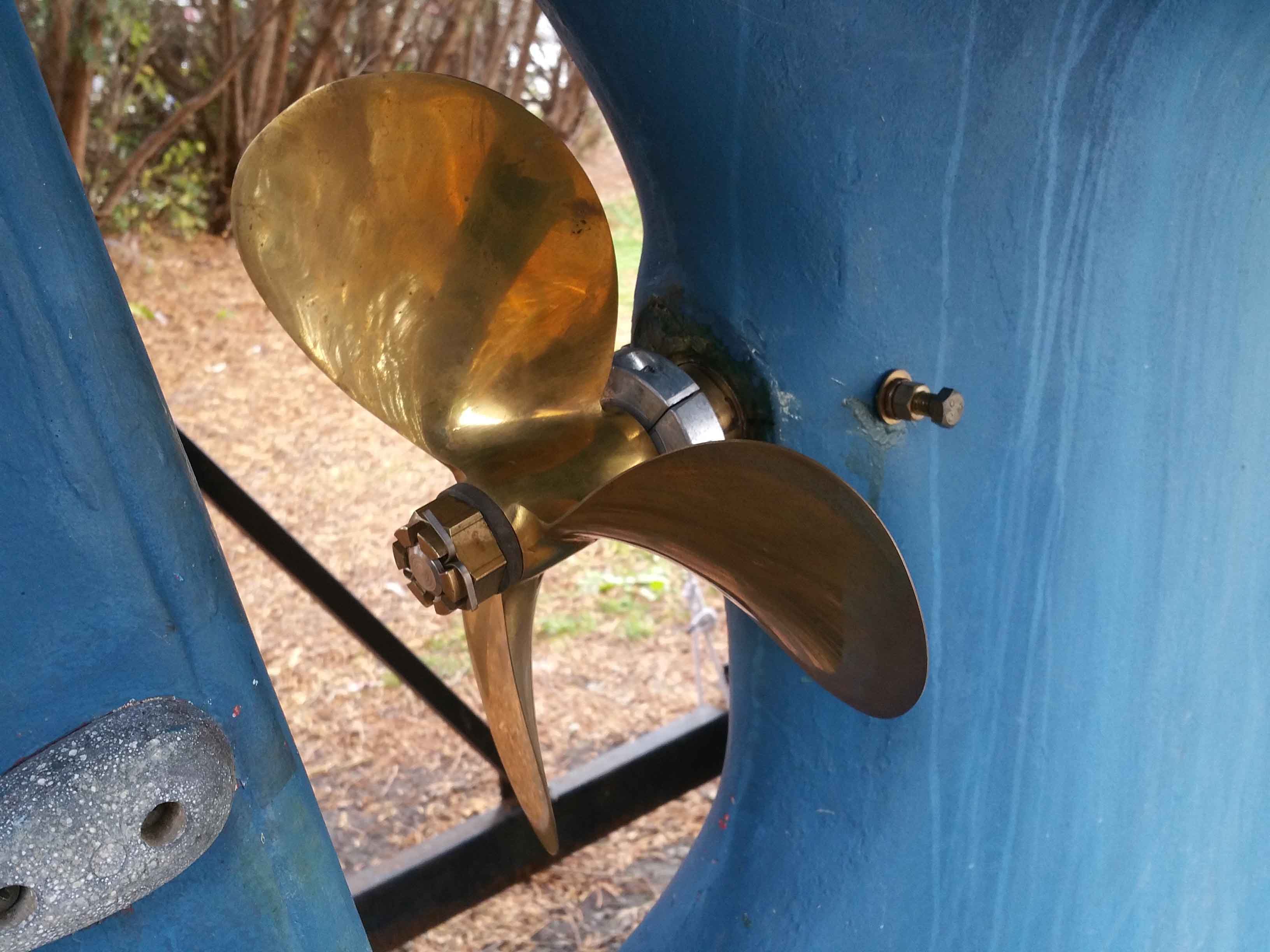
Epoxied two bronze threaded sleeves to hold the tapered bolt in a small hole in the strut bearing on both sides. Hope to find an old collar off a scrap 32. You can see it used to be there. We left an inch of the strut bearing showing so we could remove it if we wanted with the engine still in.
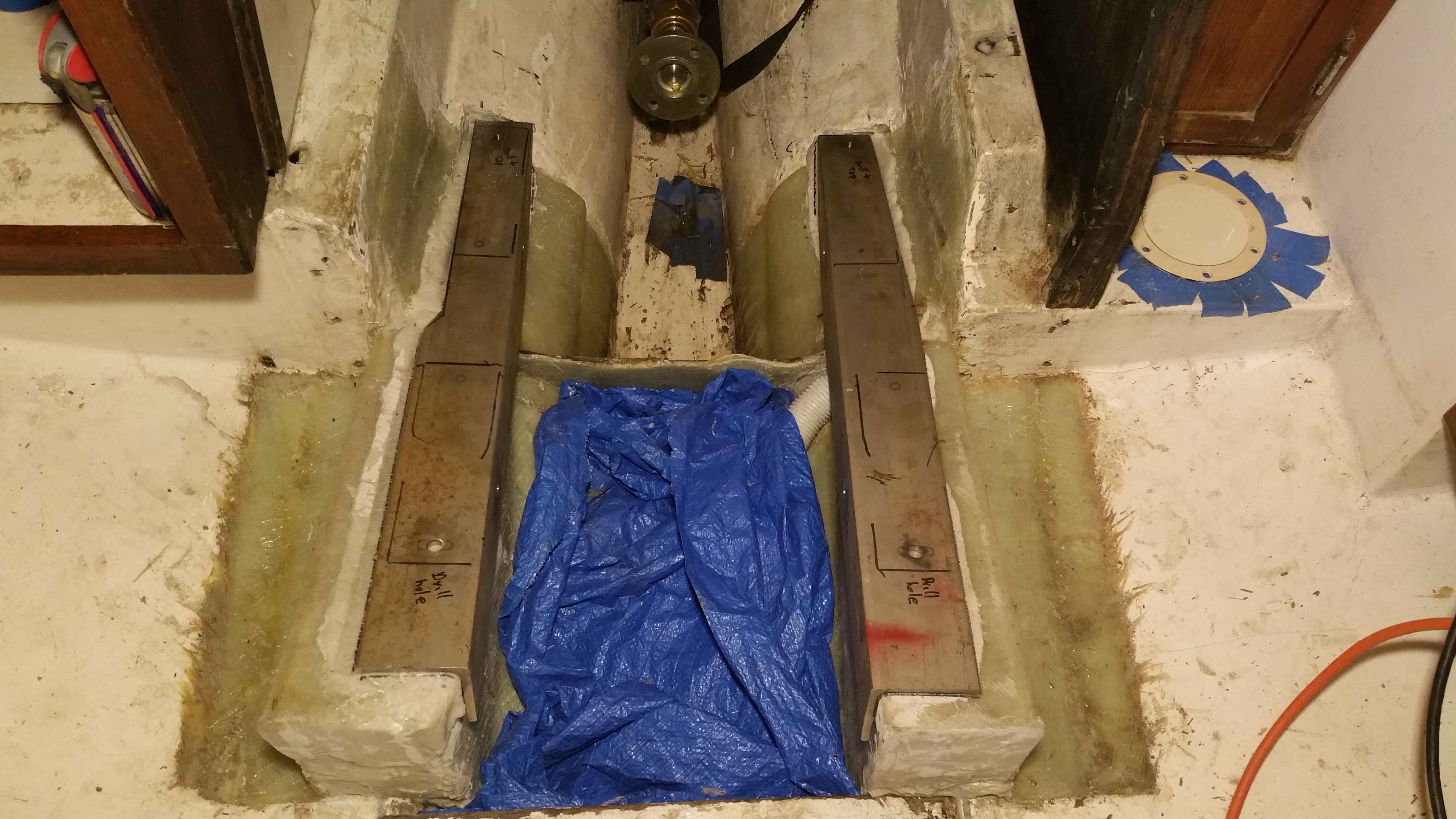
Final rails with stainless angles.
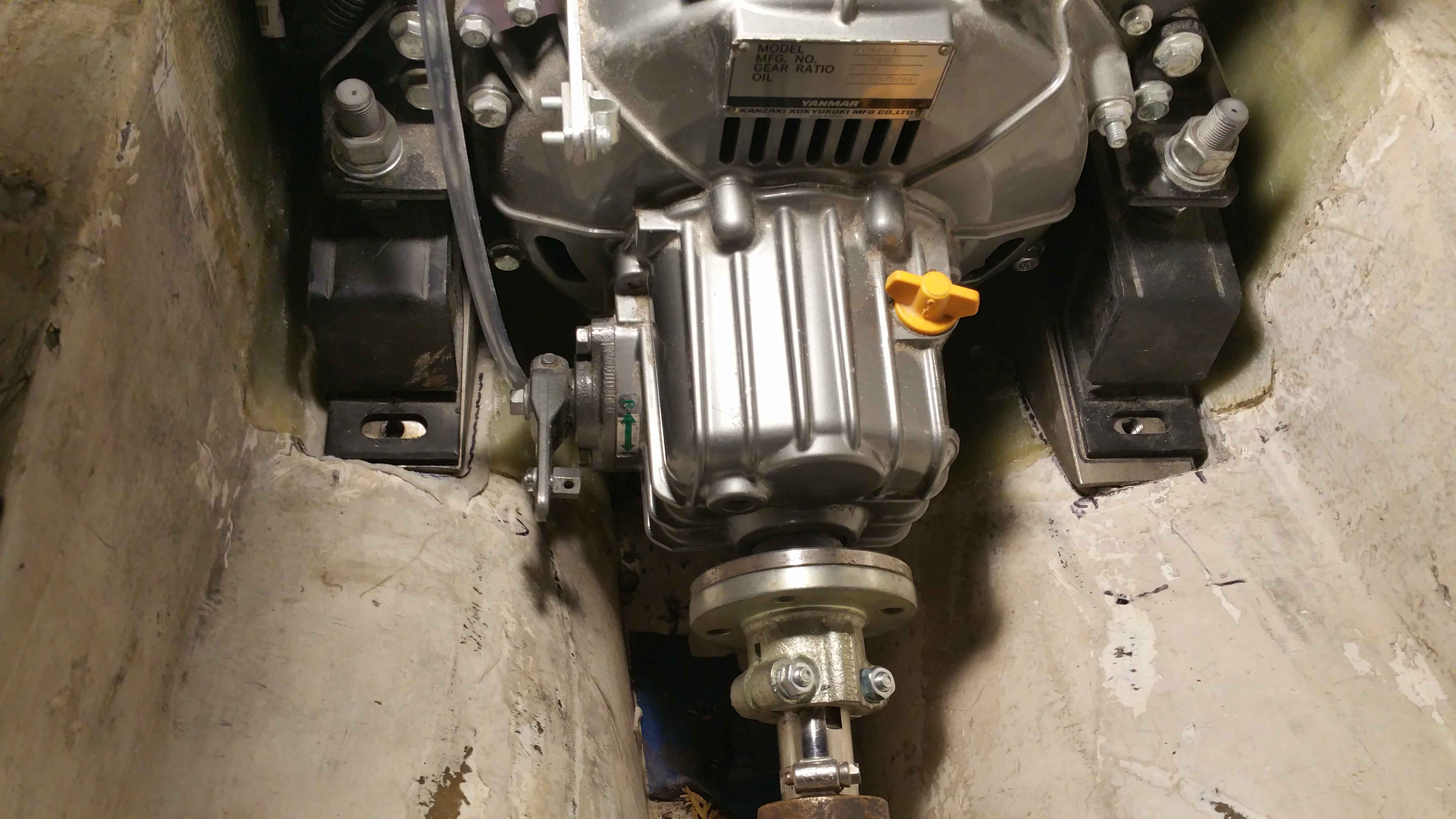
We used the stainless angles to hold the rear of the engine since to fit the mounts had to go right against the hull. Nuts were welded to angles for the rear engine bolts.
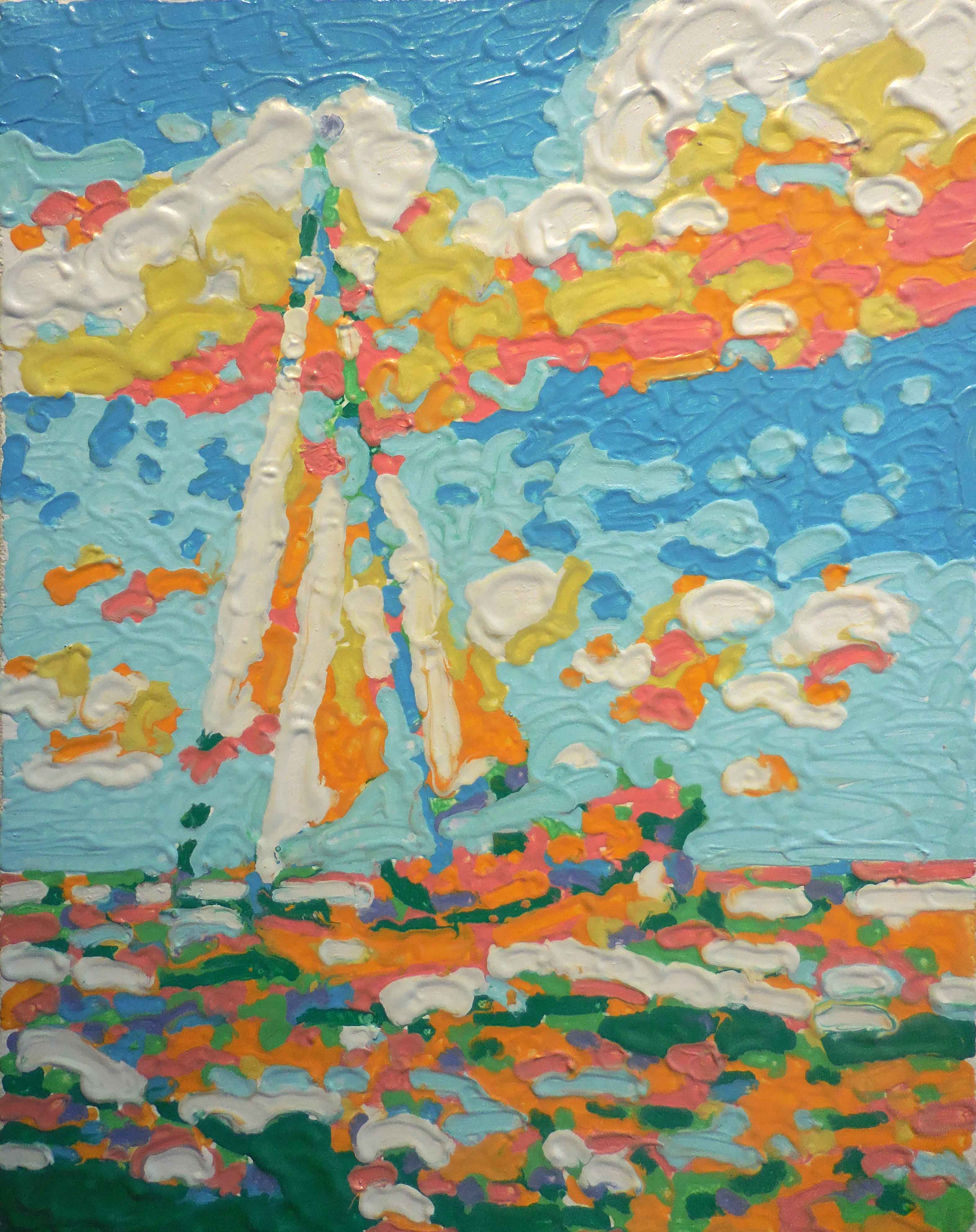
Fiona
Fiona XI, 8" x 10", Melted oil pastel on sanded steel
42' Westsail Web Page
24 February, Mostly Cloudy, Wind NE 10-15 kts, Waves NW 5', Fetch 750'
SPRING 2016 Crossing on Fiona with Captain Eric complete with sea & surface state fax and pencil drawing for each day.
https://www.dropbox.com/s/9zk9dor64wwip64/Christmas.pdf?dl=0
Fiona I, Second North Atlantic Crossing I, 4" x 5.5", Oil pastel on paper, September 29, 2015
The second crossing came up all of a sudden. Monitoring Captain Eric Blog, Tom saw he needed another crew member for the North Atlantic Crossing. Generally, Captain wants crew to sign on for long stretches of the journey but from time to time things do not work out and this was one of those times. Tom discovered the need of another crew member on his birthday July 17th and on the 24th he was is Saint John’s Newfoundland.
The trip was an adult amusement park ride twenty four seven. The captain, 83, was excellent, calm and happy. When it came time to go to the foredeck, we all went.
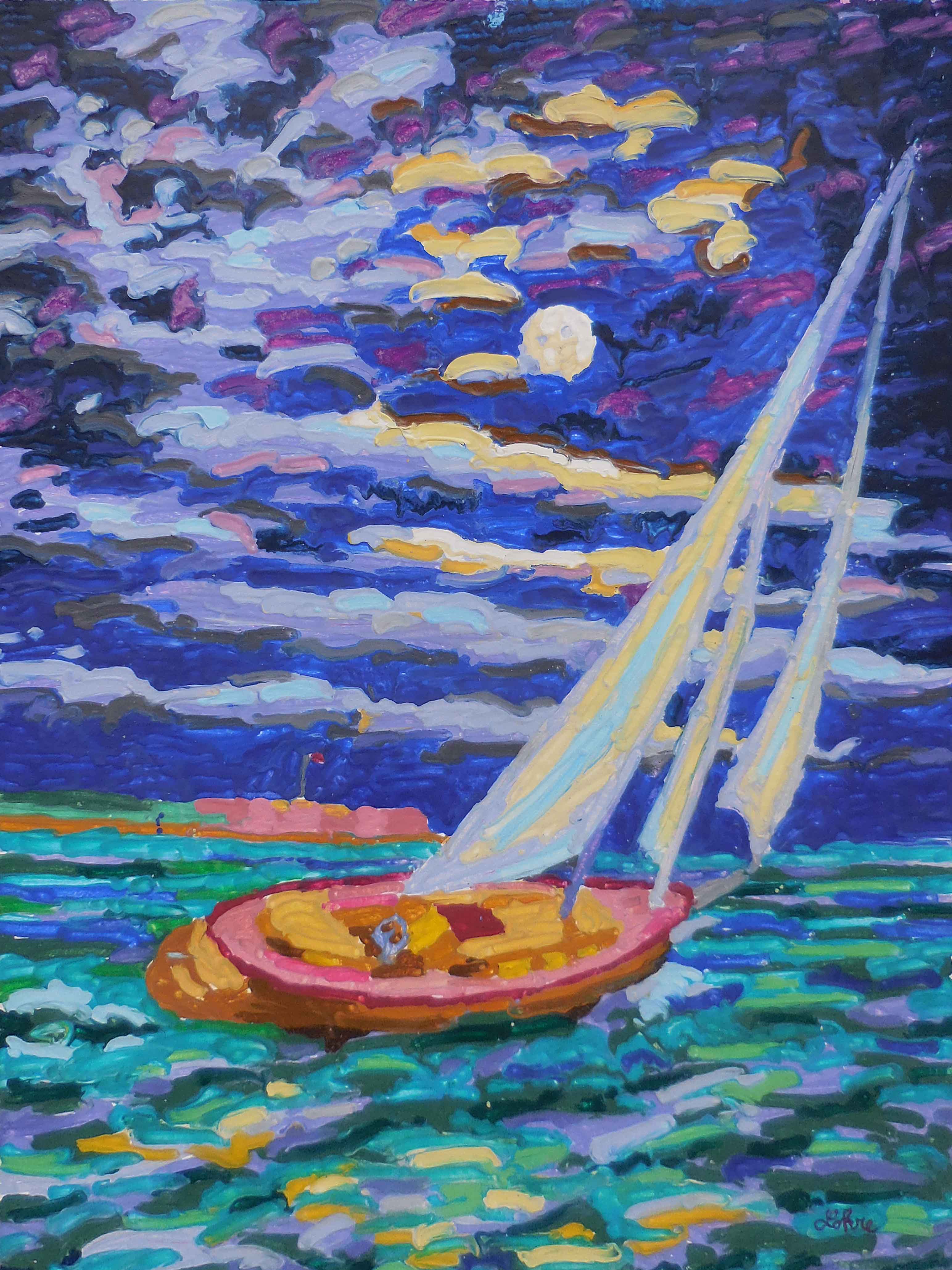
42' Yacht Fiona Crossing Bay of Biscay, 16" x 12", Oil
pastel on board, Saturday, November 28, 2015
Tom was staying at the Renaissance Charleston Historic District Hotel for a
wedding and could not help but look for a place to paint. He needed an outlet
since he was melting oil on pastel melted on board with a heat gun so off he
set out with his rig looking for a view with outlet. Walking northeast to Harris
Teeter Market on E Bay Street then further northeast to Concord Street. Fleet
Landing Restaurant, across from the Customs House, looked promising but no outlet.
Further south on Concord the City Gallery had many outlets, none working. The
park offered good compositions. Then progressing further south on Concord Tom
struck the mother lode, The Carolina Yacht Club had an outlet at the base of
its flag pole with seating and fantastic view. Tom spent the rest of the afternoon
painting into the evening as the moon came up. The club rents itself out and
a law or brokerage firm was enjoying a holiday party with lite beer and shucked
oysters. Tom watch the catering team set up and the partiers arrive. He could
not believe no one commented on his painting then realizing they were not sailors.
As such as he tried to mingle and talk with the group he could not get an invite
to have a beer and oyster.
Tom had been following the Fiona, the sailboat he crossed the North Atlantic
in, in June of 2015.
http://yachtfiona.com/rough-crossing-biscay/
From the story
Reefing and Unreefing
By late on Nov. 14, we had reached 49° 04’ N, 07° 17’ W
and I judged we could lay a direct course for Cape Finisterre without getting
into the maw of Biscay. The next day we sailed on starboard tack, reefing and
un-reefing as the wind varied between 22 knots and 35 knots, with gusts to 40.
At 0230 on Nov. 16, I decided to shake out a reef in the mainsail; the cleats
for the slab reefing lines are all on the port side of the boom, so this job
is best done on port tack. The sea state was far too rough to tack without an
assist from the engine, which was still defunct, so we had to gybe. After a
quick briefing Gus handled the jib sheets, Steve took the main sheet and I stood
at the wheel. With a yell of “Gybe-Oh” I put the wheel over. The
sails shivered and with an unnerving crash the boom went over — the main
sheet was not hardened up as much as it should have been and Steve collapsed
onto the cockpit grating, holding his hands to his face. In the light of my
flashlight I saw blood oozing between his fingers; the loose sheet had caught
him across his face, knocking out a tooth.
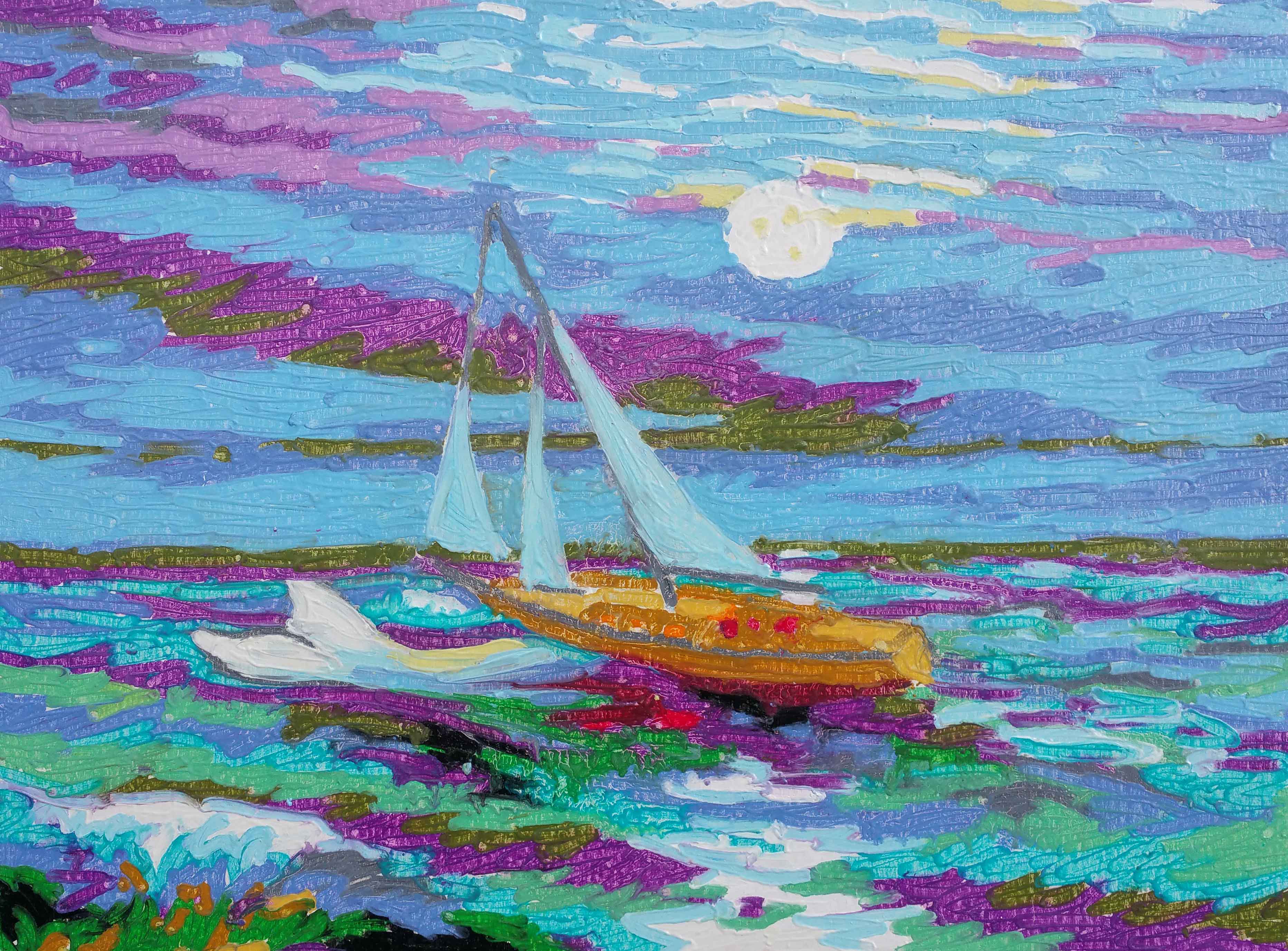
Fiona Crossing Bay of Biscay, 16" x 12", Oil pastel on board, Saturday, November 28, 2015
Quotes by Captain Eric
“Tera Firma, the more firma the less terror.”
“A mate wanted to ship out on a Scottish square rigger but when he was
told to butter his biscuit on the flat side instead of the dimpled side because
it used less butter, he decided not to.”
“Origin of Species was a mask to bring back the rogue of the Yaghan tribe.”
“The Sunderland above wing seaplane was based in Oban to sneak up on the
German U boats.”
“The sailmaker said, when you bring in your sails they are really used
up!”
“When the boom broke, I used up another one of my nine lives.”
“Life is full of little gusts.”
“It’s unusual for the swells to block the horizon.”
“3M 5200 is expensive and once applied cannot be removed. 3M 4200 can
be removed.”
“The bow bulkheads became delaminated. An additional bulkhead was sistered
in and laminated to the hull by Weaks Yard. They did an excellent job.”
“Wind increases the weather helm.”
Captain Eric worked for Avro Canada, this company started in 1945 as an aircraft
plant and became within thirteen years the third-largest company in Canada,
one of the largest 100 companies in the world, and directly employing over 50,000.
from Wikipedia
“Got you by the short hairs.”
“Sailors always complain about the wind.”
“When you are charging a battery, you get back half of what you put in.”
“That’s boating.”
“Everything breaks, it just goes without warning.”
“316 is common stainless.”
“You’ve earned the land when you get there. Think of the pastry
shops and coffee!”
“This stove is my bien negra, “black beast” in French.”
“You make choices and pay the price.”
“When laying a hull the boat forms a slick to lueward and prevents waves
from breaking over the ship.” Once they pumped oil out through the toilet.
“Mother Nature throws you a curve ball.”
“Left the propane solenoid on again, a flogging offence.”
“Cleanliness is not next to Godliness.”
“I’ve been on so many islands and what good has it done me? I am
still a simple lad from Lancashire.”
“The aerometer came to life to frighten us.”
“I am a cat personality.”
“You’ve been a very good crew.”
“Mysterious things happen on boats all the time.”
“You can really hurt yourself on a boat.”
“That’s the ocean for ya.”
Flotsam is natural stuff in the water. Jetsam is stuff dropped off a boat.
Ohio River Launch Club
After six years, a motif for the Ohio River Launch Club
Emma Lou
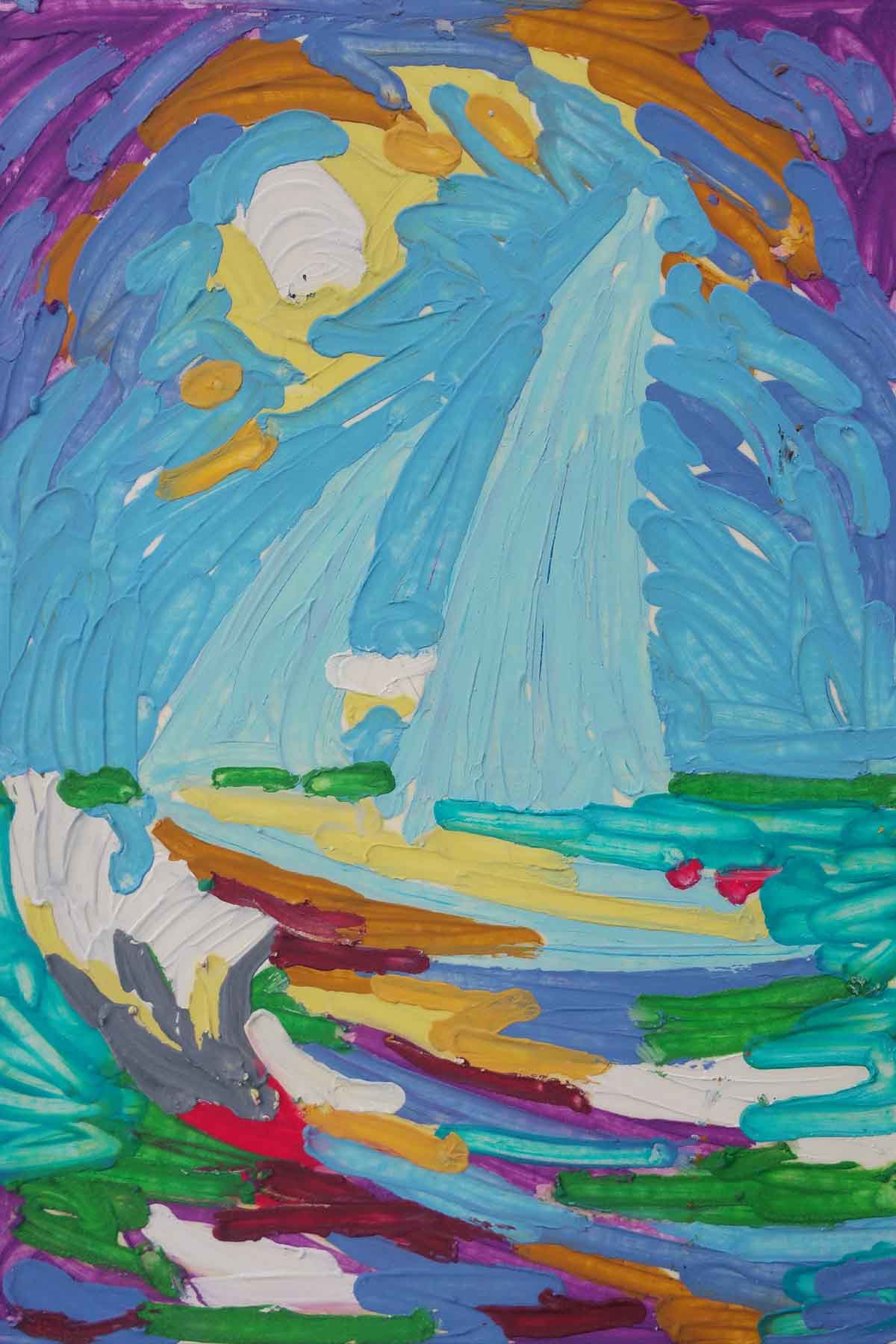
Emma Lou, 4" x 6", Oil pastel on paper
 Boathouse Painting, 10' x 18", oil on board, April 23, 2014
Captain Tom
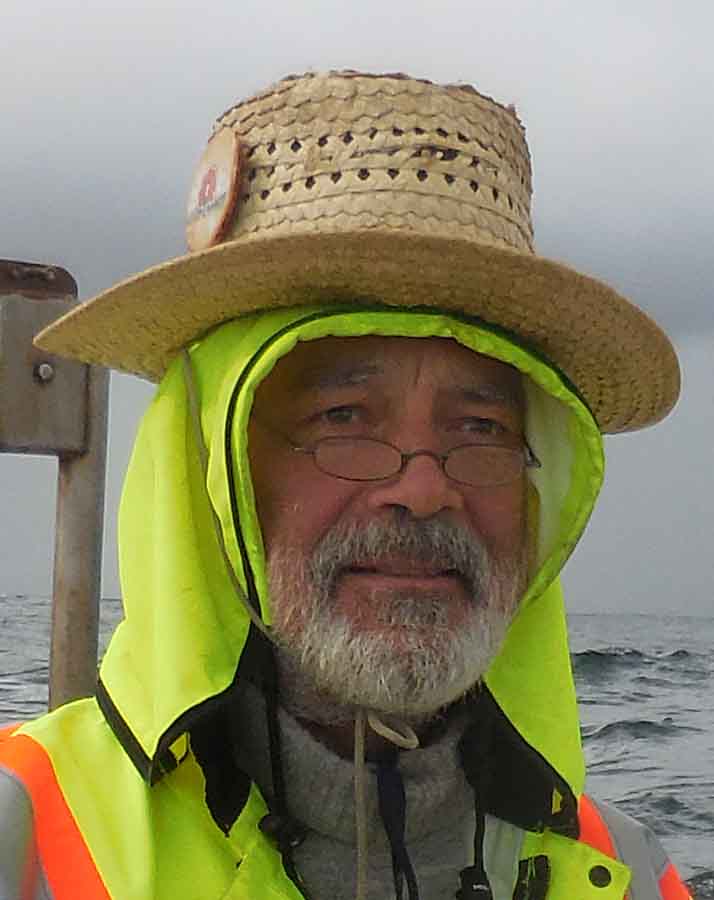
Normal attire, Tom always has his straw hat held tightly by a slip knot even with a rain hood. It keeps the rain hood from moving around. The hat works like cats wiskers and keeps him from geting into places he cannot get out of.
Study for crossing of the mid-Atlantic
We, the Navigators
For many centuries the peoples of the Pacific have voyaged over the vast stretches of empty ocean that lie between the island groups. The intriguing question of how they navigated these trackless seas has for long fascinated many people. This book gives the answer.
By Doctor David Lewis
https://tomlohre.com/Navigators.pdf
View Following the Peqoud in a larger map
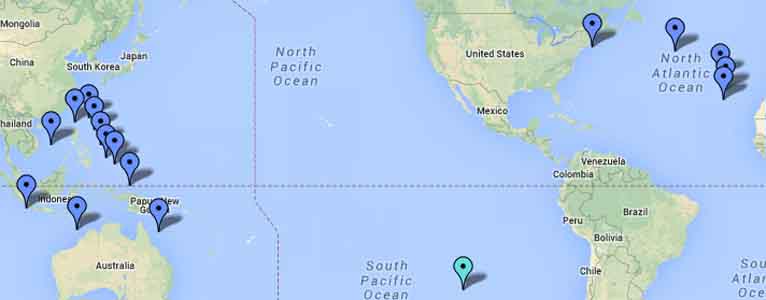
Peqoud Leaves 12/25/1850
Christmas Day the Peqoud leaves. September 9 the Morgan leaves.
Ahab Comes on Deck 1/10/1850
Figuring 100 miles a day, 1600 miles out from Nantucket, Ahab comes out for the first time for the weather is mild and the temperatures rising. Winds 5kts SW 40"23'W 39"4'N Although the temperatures h...
Ahab Calls All Men Aft 1/11/1850
33'51"W 26'10"N 23 days out of Nantucket following the same course of the Morgan in 1841 and the book as reference. Looking at 1/11/13 weather, the large low centered off Newfoundland will not effect ...
Ahab Throws his Pipe Overboard
37'00"W 38'13"N 22 days out, 1/15/1850 the Peqoud finds itself around where the Morgan was 9/28. Chapter 30 THE PIPE "He tossed the still lighted pipe into the sea. The fire hissed in the waves; the s...
100 Leg and Arm
Which way heading?"
Ahab
33'51"N 26'10"W, 23 days out the Peqoud could be where the Morgan was 23 days out. Chapter 37 SUNSET "The cabin; by the stern windows; Ahab sitting alone, and gazing out"
Morgan July 7
3'22" S 120' 40" OPeqoud could be about here on May 7.
59 The Squid
Entrance to the Java Sea
87 The Grand Armada
Sundan Straight With a fair, fresh wind, the Pequod was now drawing near to these straits; Ahab purposing to pass through them into the Java sea, and thence , cruising northwards, over waters known to...
100 Leg and Arm.
"Spin me the yarn," said Ahab; "how was it?" "It was the first time in my life that I ever cruised on the Line." began the Englishman.
111 The Pacific
122° E., lat. 20° 28' to 20° 55^ N. When gliding past the Bashee isles we emerged at last upon the great South Sea; were it not for other things, I could have greeted my dear Pacific with uncounted th...
118 The Quadrant
Now, in that Japanese Sea
119 The Candles
Towards the evening of that day, the Pequod was torn of her canvas, and bare-poled was left to fight a Typhoon which had struck her directly ahead.
123 The Musket
The three corresponding new sails were now bent and reefed, and a storm-trysail was set further aft; so that the ship soon went throught the water with some precision again; and the course - for the p...
124 The Needle
Sea long slow billowing staggering breeze Sailing West the needle reads east-southeast
126 The Life-bouy
...south-eastward to the Equator. Rocky islands
132 The Symphony
And at the girding line of the horizon, a soft and tremulous motion -most seen here at the Equator
.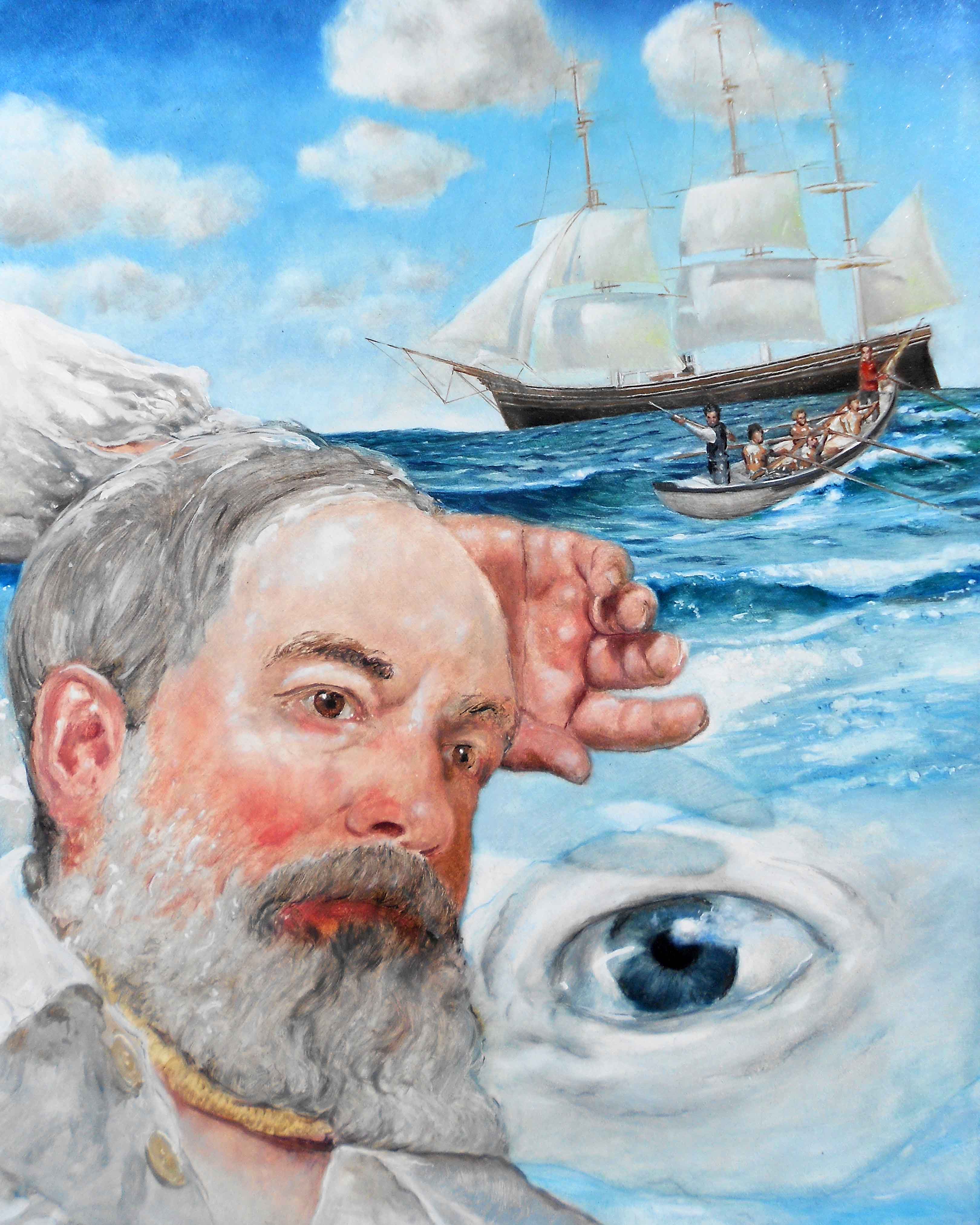
Tom Lohre as Parsee, 16” X 20”, Oil on canvas, work in progress
As Tom works on his portrait as Ahab he will be following the voyage of the Peqoud in real time weather using the track of the Charles Morgan out of New Bedford in September of 1841.
Moby Dick by Herman Melville
Chapter 134
THE CHASE – THIRD DAY
Page 560
While Daggoo and Queequeg were stopping the strained planks; and as the whale swimming out from them, turned, and showed one entire flank as he shot by them again; at that moment a quick cry went up. Lashed round and round to the fish's back; pinioned in the turns upon turns in which, during the past night, the whale had reeled the involutions of the lines around him, the half torn body of the Parsee was seen; his sable Parsee frayed to shreds; his distended eyes turned full upon old Ahab.Comment posted about PBS’s Into the Deep from the American Experience SeriesMan’s Extinction and the WhaleboatThe impact of whaling is the same as every other harvesting to extinction. Man’s rape of the planet is ever ending till it is all gone. The rich get richer and we suffer. Gas fracking is our new whale. Why cannot we develop a sustainable livelihood? I hope the government sees giving tax breaks to lifestyles that are sustainable instead of tax breaks to a slow death of the planet.Tom's knowledge of the whaling industry is focused on how to sail a whaleboat. Painting himself as Parsee, one of Ahab’s devil crew tied to Moby Dick as Ahab calls his men to lower for Moby on the third day of the chase with the Peqoud in the background has given him new knowledge of the whaleboat while dreaming of traveling the same long distances the crew of the Essex did.
http://www.imagekb.com/ahab-youtube
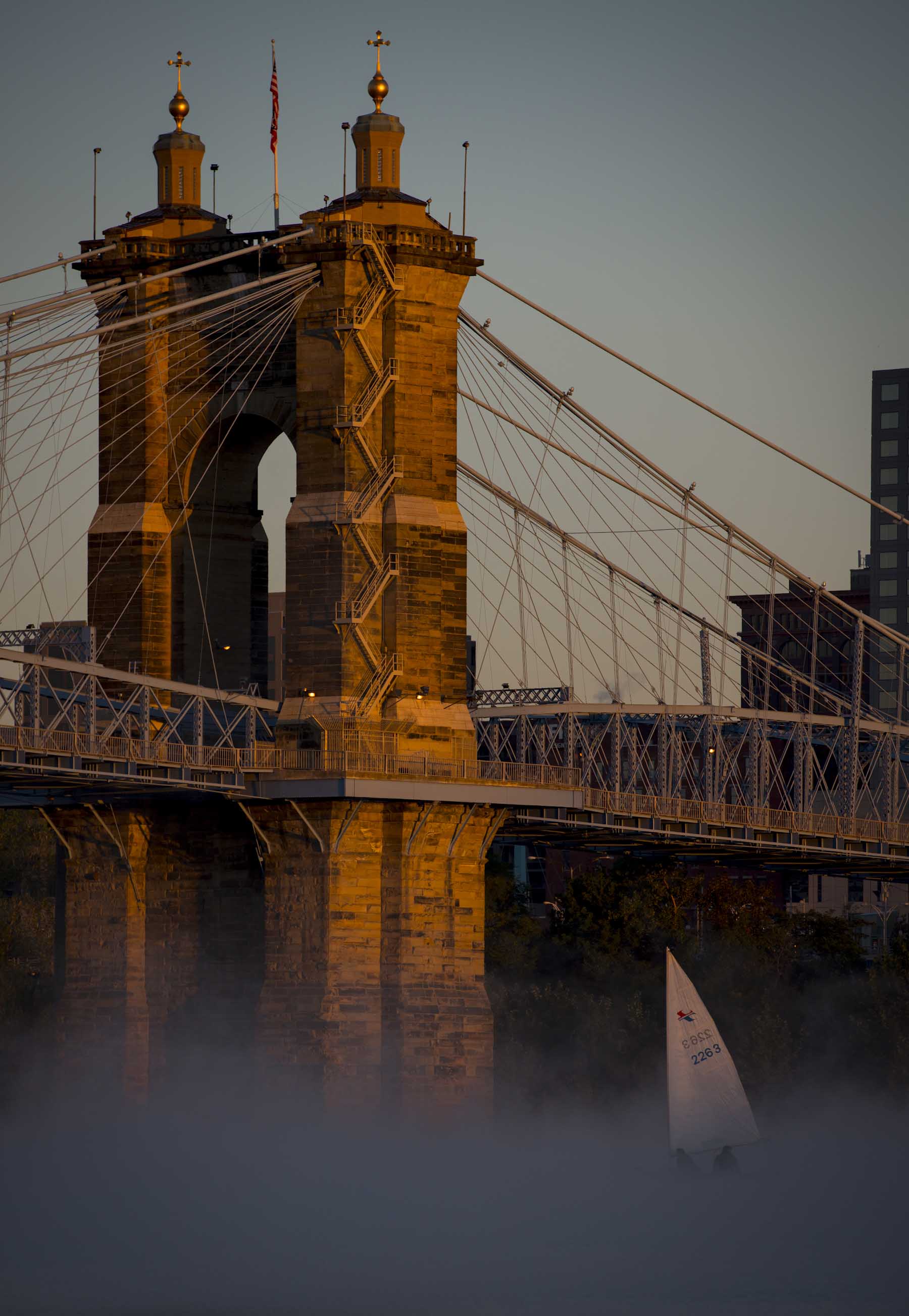

Willard and Tom sailing the 2263 Banshee on a foggy morning while 75 swimmers raced in the Ohio River. Both photos by Michael Keating, photokeating at gmail.com, http://news.cincinnati.com/article/20120414/NEWS01/304140075/Through-our-lens-Michael-Keating-reflects-career
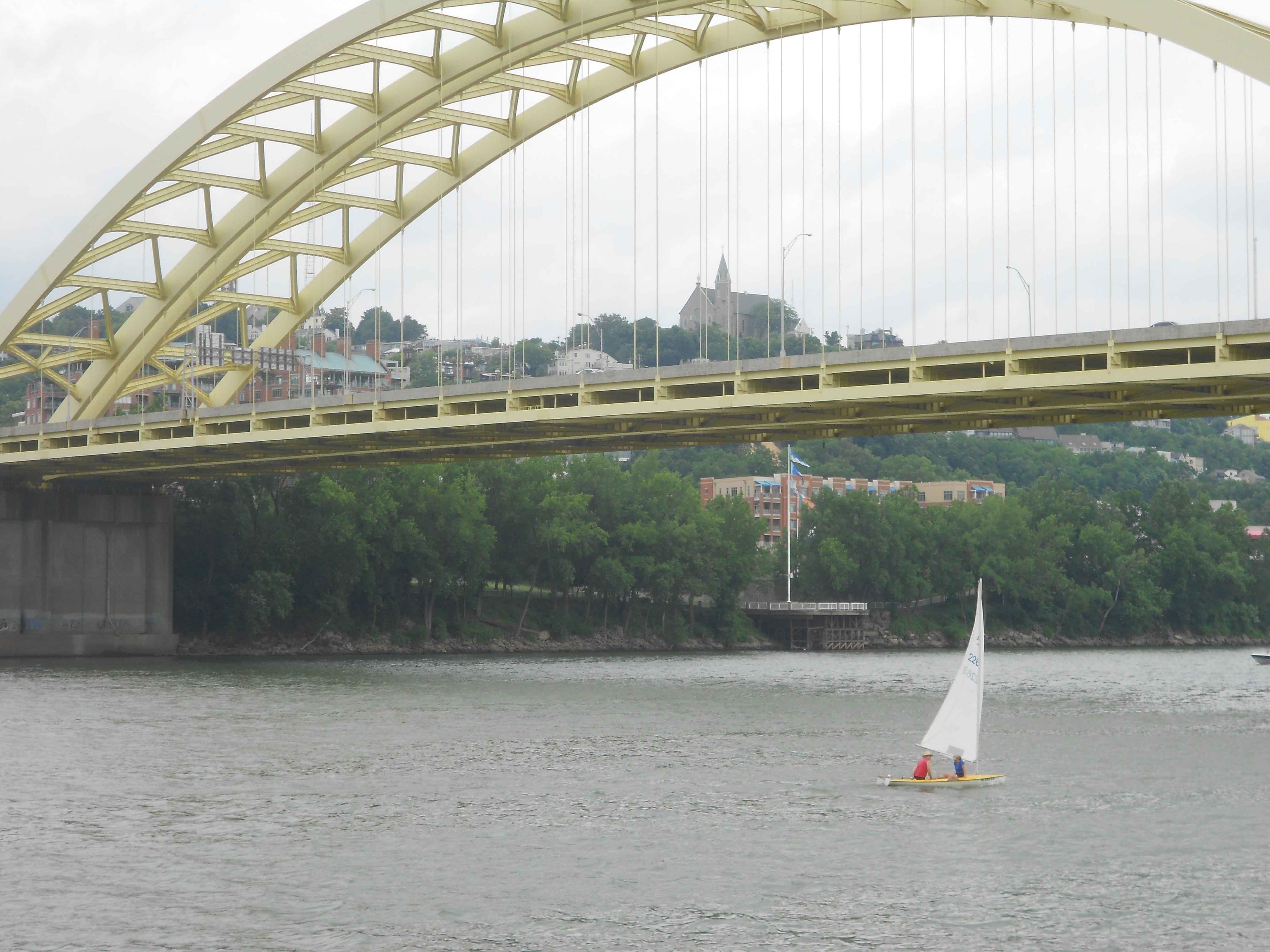
Father's Day 2012, sailing Banshee with Susan

Tom as Captain Ahab, 16" x20", oil on canvas, February 17, 2012
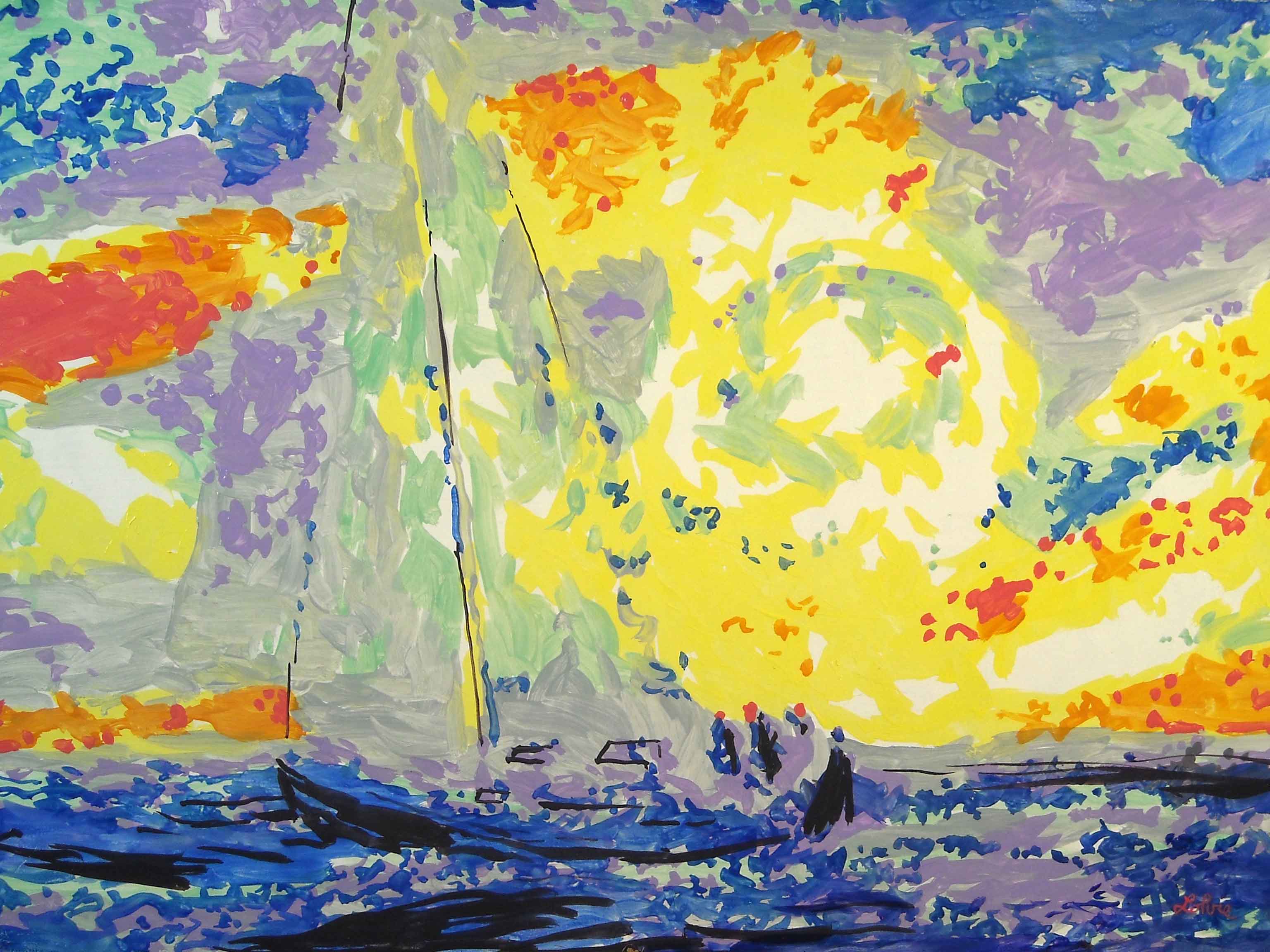
At Sea IV, 16" x 12", oil on canvas, October 18, 2010
October 25, 2011 on the Ohio River
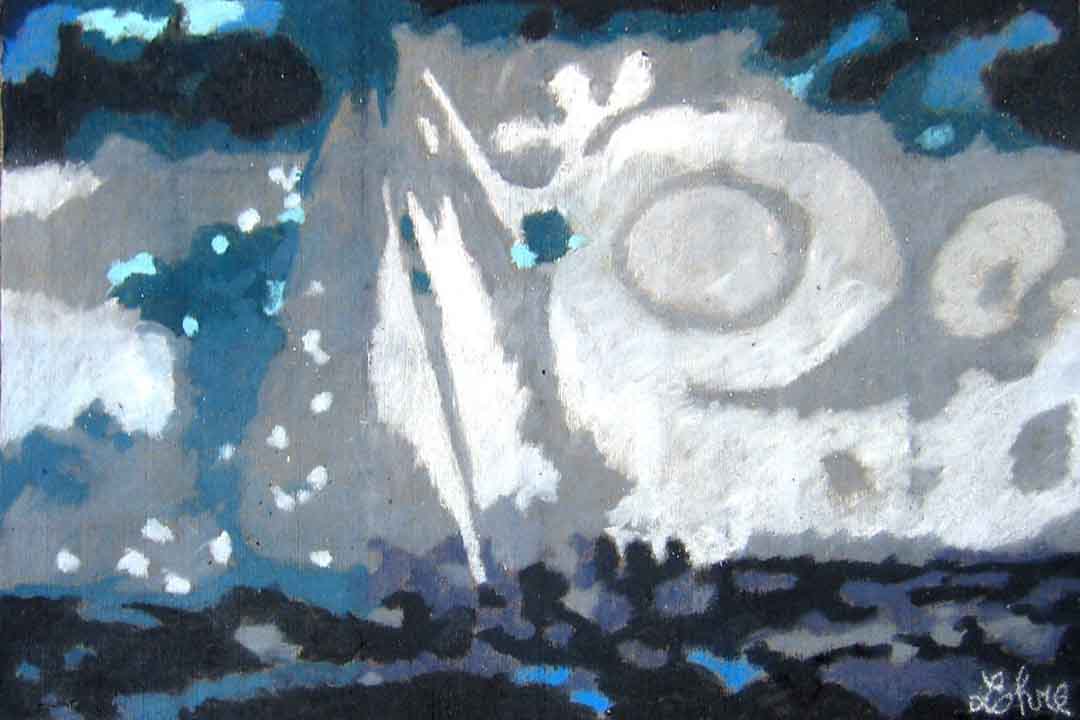
Pastel Mural on Concrete of "Passing Fastnet Light," 6' x 4' September 18, 2010
Sail On, a song dubbed over a shorten version of the video.
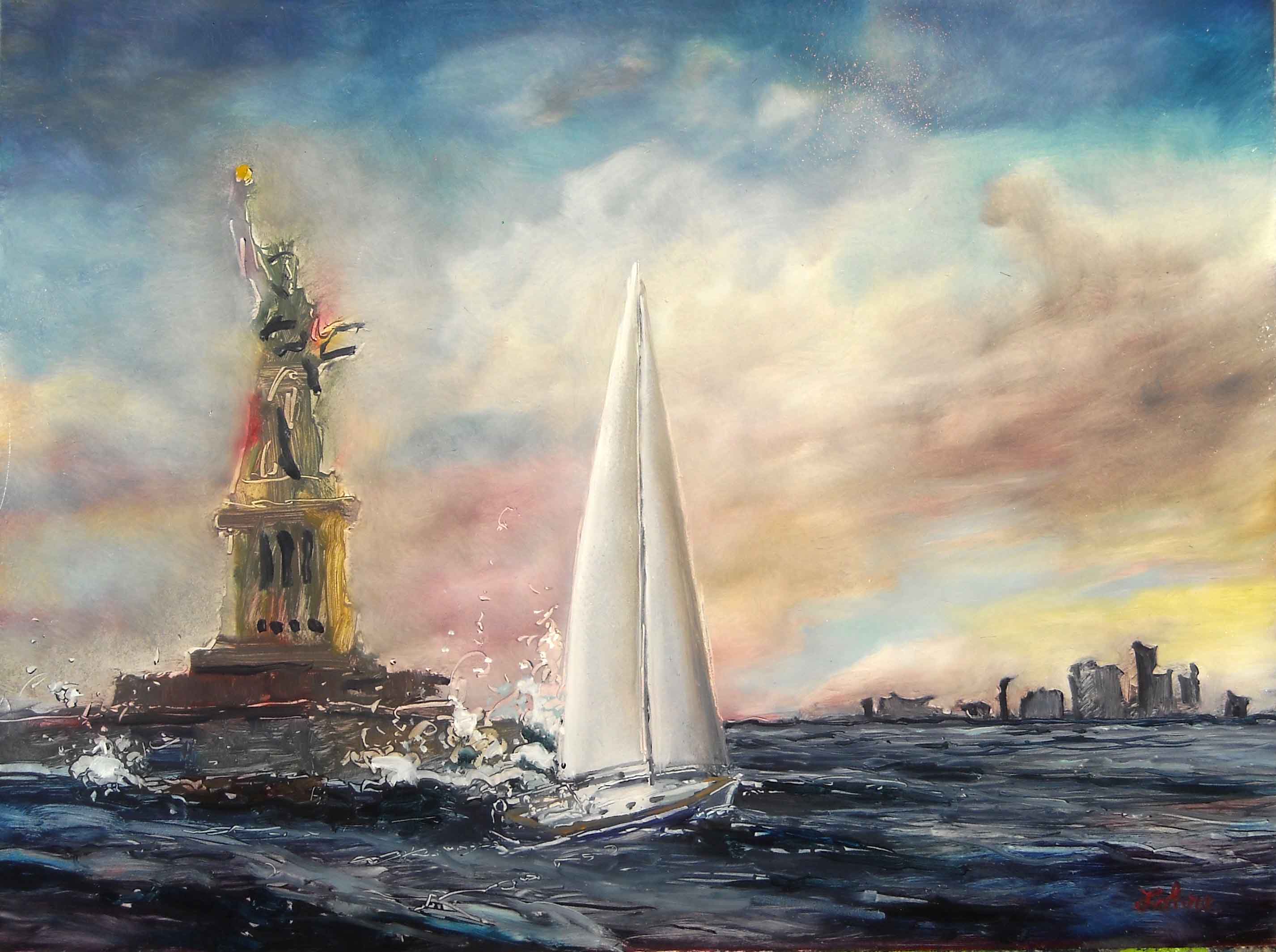
Liberty, oil on board, 16" x 12", May 2010
DRAW: What America Means to Me America to Tom Lohre means sailing through the night in rough seas, close hauled, trying to make Liberty Island. The wind is blowing him into the island. The painting shows the boat barely making the southeastern point of the island on his way to Manhattan in the early morning.
The Cincinnati Art Museum invited artists to perform, ”What America means to Me” on a small stage in the “See America” print collection in the Schiff Gallery. Some played music, others read poetry, Tom screened the video from his across the North Atlantic with two sailors in a 36’ Pearson from May 28 to June 28, 2010; painted on his “Liberty Arrives in Manhattan” and played sea shanties. Visitors to the gallery were encouraged to, “DRAW: What America Means to Me.” Their drawings were immediately projected on a wall.
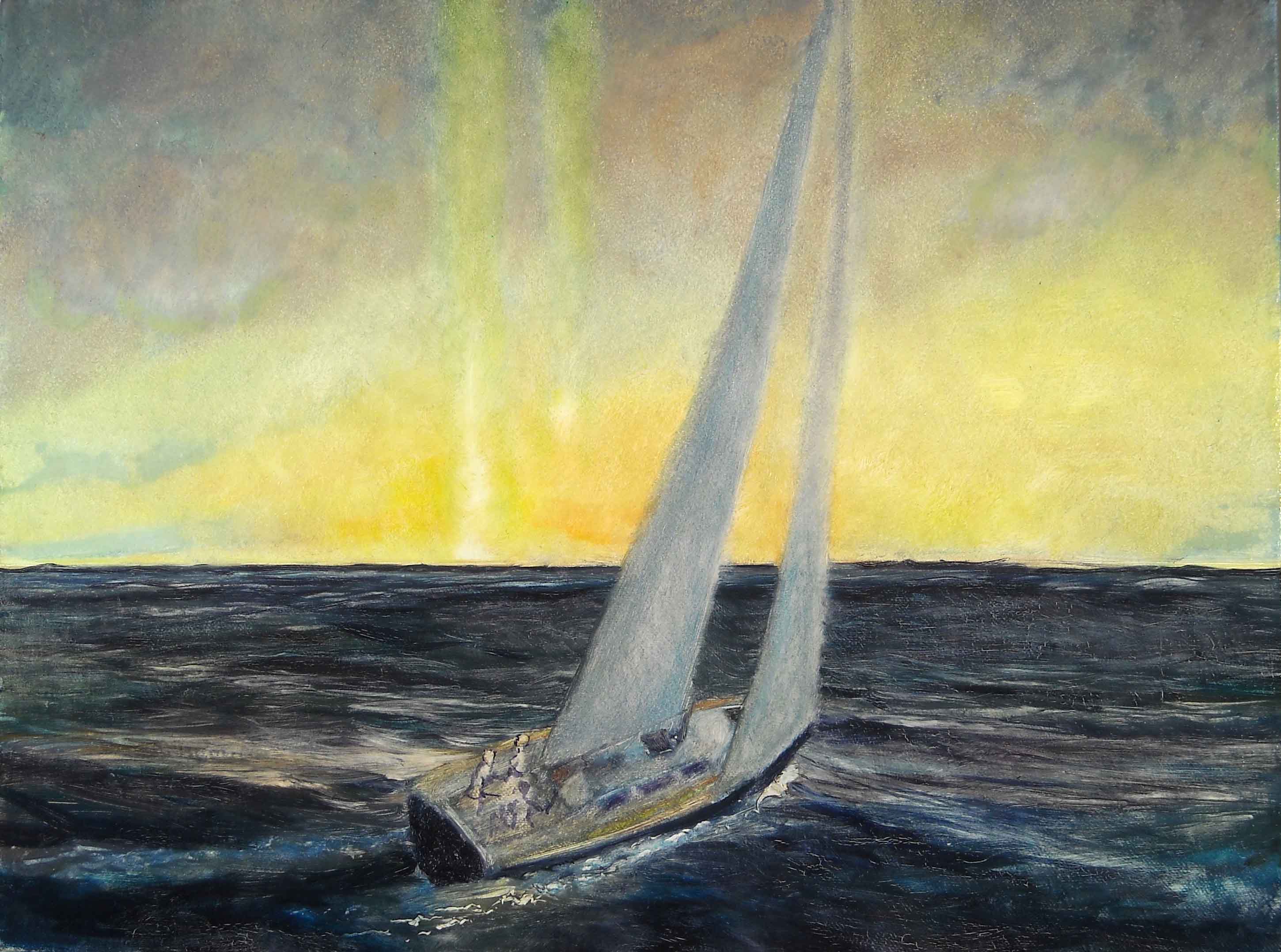
Green Ray, oil on board, 16" x 12", August 20, 2010
While crossing the North Atlantic in a 36’ Pearson with two other sailors we experienced a double green ray. The rays happen when the sky is clear just after the setting sun. A brief flash of green light shoots up and like a rainbow there is always a subtle double. Tom has enhanced the phenomenon for this painting. The sunset was the first day at sea leaving Newfoundland headed for Ireland.
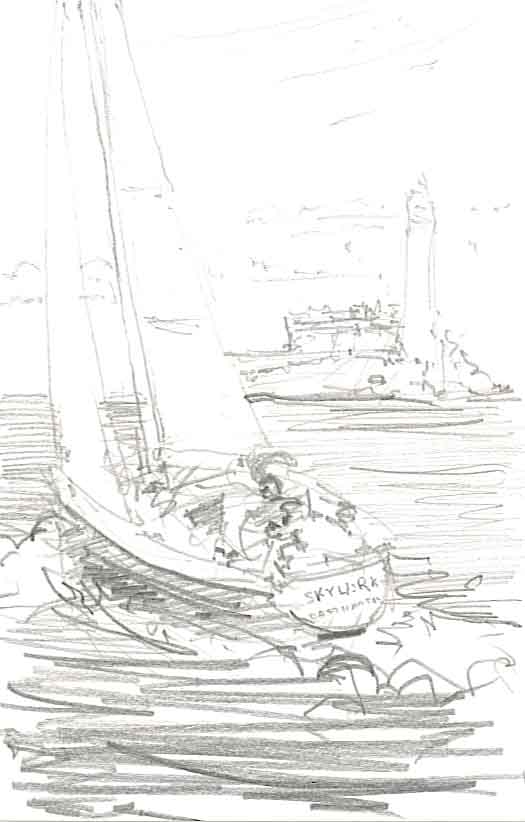
Sketch of Skylark passing Fasnet light.
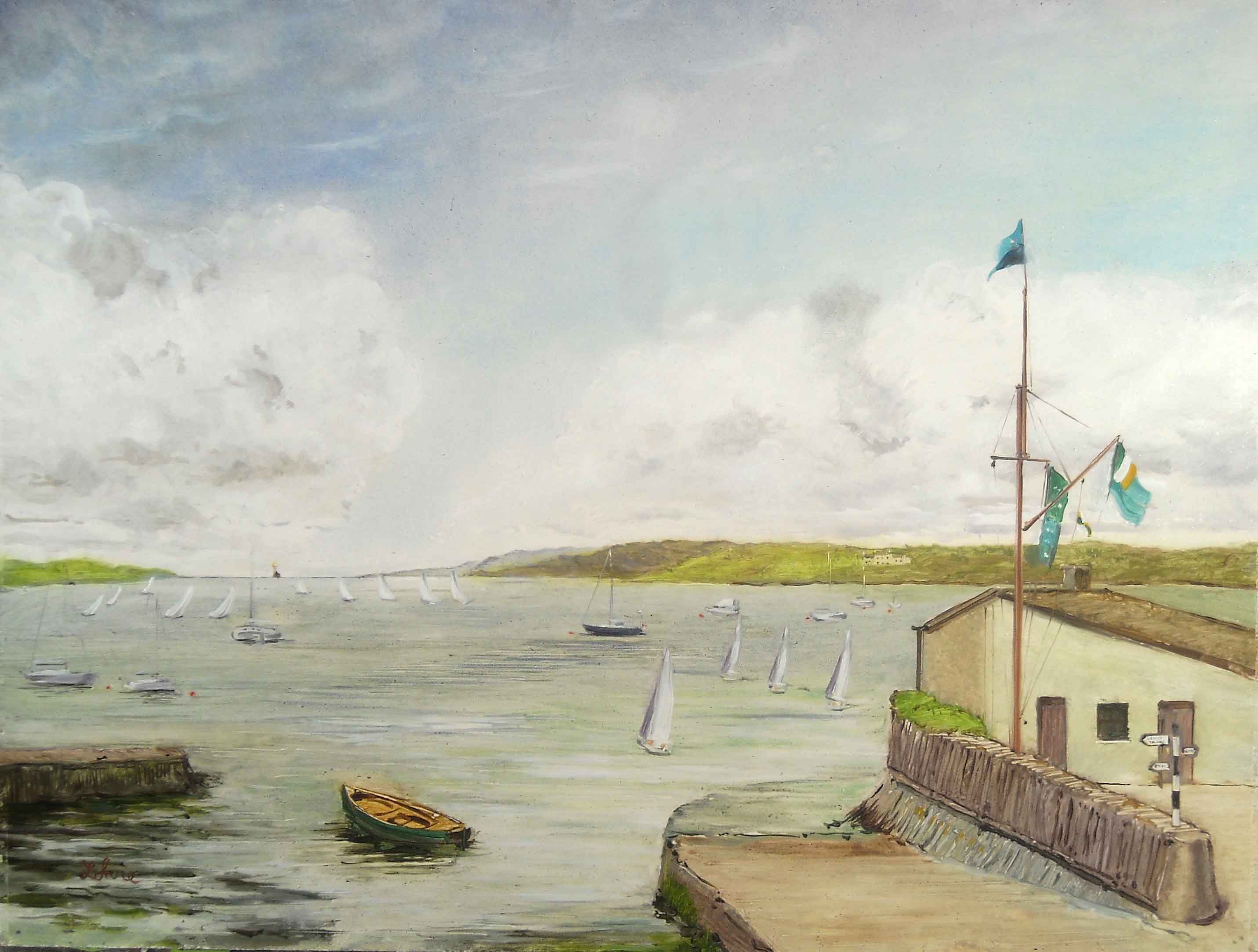
Baltimore Ireland, 16" x 12", oil on board, June 27, 2009
Art Sail
The tide was red, before I went to sea
Beaten down, round after round, with clammy sweating hands
Anxiety abound, losing 25 pounds
Then off to sea for 3000 miles in 21 days
Round the clock 4 on 8 off, steering, weather, cooking
"What made it better?” asked he.
She said, "Once you left, I felt alright."Art Sail by Tom Lohre
Sailng Forum The Fear of Ones left Behind
http://www.cruisersforum.com/forums/f108/the-fear-experienced-by-loved-ones-left-ashore-34073.html
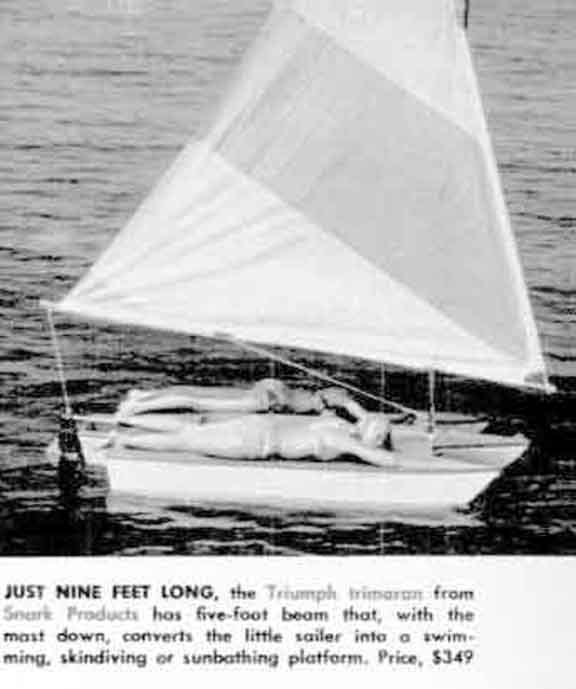
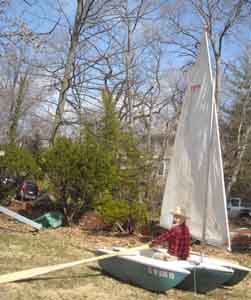
Once back on dry land in Cincinnati Tom became hell bent on getting a sailboat. FreeCycle, an Internet group, offers things for free. He joined and posted a message wanting a sailboat. Low and behold, a post came back about a neighbor who had a trimaran he wanted to get rid of. A 9’ long, 5’ beam, 1971, plastic Triumph trimaran with a lateen sail rig. He split the plastic hull, fiber glassed the interior, replacing the interior wood cross braces, re-screwing the top and bottom plastic together. Mounting a rudder and oar locks he will be sailing/rowing in Cincinnati Harbor on the Ohio River. An old river rat whose first job was on a converted Ohio River towboat into a restaurant with a boss whose parents were slaves. He went on to become a rigger on a river salvage operation. His father introduced the family to houseboats and they navigated up and down the Ohio at least three times. Later helping him sailed his Morgan 36' from Miami to Lake Erie. Years later while living for twenty years in NYC, he sailed out of East Hampton culminating with helping the captain sail his refurbished 1980 Pearson 36' to Baltimore, Ireland. Now he must always have a boat but being a portrait painter find monies slim. This was a free 1968 Triumph trimaran by Snark and getting it ready to sail on the Ohio River in Cincinnati Harbor was interrupted by finding an illegitimate sailboat, the Banshee, with trailer on Craigslist for $450, starting with it instead. The local canoe livery, Thaxtons, bought the Triumph for his grandchildren.
Watching Jaws 2 looking to see if there is a Snark in it. http://www.thebeachcats.com/forums/viewtopic/topic/1876 is the tread about the boats in Jaws II.
Turns out several fondly remember this craft.
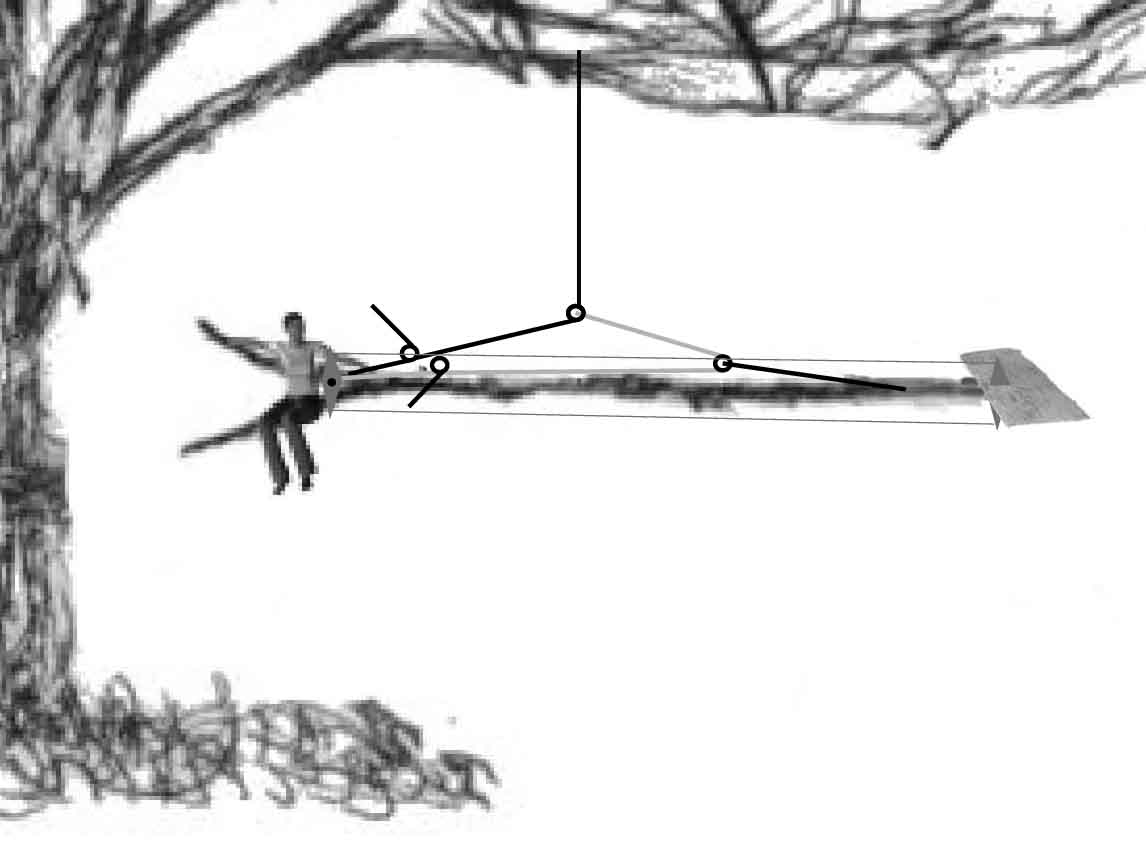
Working on his art show about the sailing trip across the North Atlantic Tom felt he needed something to illustrate the occasional beating you take not only figuratively but also in reality. When the boat is beating up wind, you are slammed into the gunnels often. Broken ribs are not that uncommon. Broken relationships are not that uncommon either. The loved ones left onshore get beaten up emotionally. At first he thought he could make a “Mechanical Sailboat” like the “Mechanical Bull” you find in Texas Road Houses. His love of mobiles and thoughts of the movement you needed to simulate a sailboat lead him directly to a huge mobile suspended from a tree made of tree limbs. As the sailor-rider gets moved up and down and around by the grounds persons pulling ropes attached to the far ends of the limbs they are passed hot cups of coffee that gets spilled and occasionally a bucket of water is thrown on them. All the while they watch the video shot during the trip on a big sheet from a LCD projector. It should prove to be a fantastic event. Of course you will have to pay big bucks to ride but you will get the log book and DVD from the trip and maybe a piece of scrimshaw or oil painting of the sail. Crossing the North Atlantic
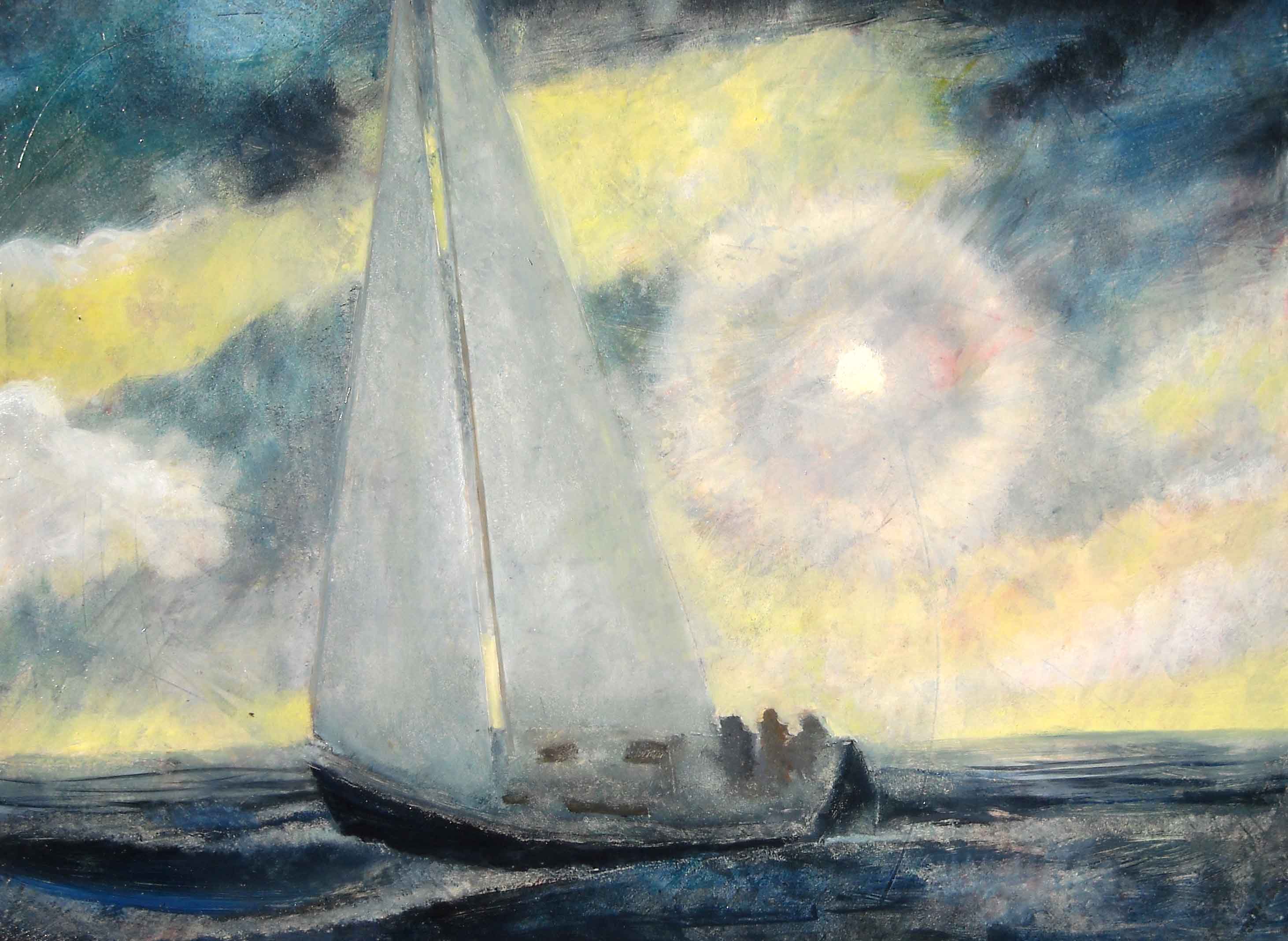
Passing FasnetLight, 16" x 12", oil on board, July 17 2009
Painted from the imagination after returning home, Tom let the paint wander round the canvas until it started to come together. The boat modeled in “Virtual Sailor” to help the reality of the scene. The light halo sun placed for compositional reasons, but when finished, Tom realized that it was Fastnet Light. They sailed past Fastnet in the early morning fog later making landing at Hare Island.
https://www.dropbox.com/s/02g17l33kqi453f/skylark.pdf?dl=0
Click here to see the booklet about the trip.
Good food, good sleep and great sailing make for a happy crew.
Chuck Lohre, land communication support, plotted on Google Maps the journey from the SPOT GPS satellight beeper tracker:https://www.google.com/maps/ms?msa=0&msid=101449469933130122956.00046b2344dc164f83eb4
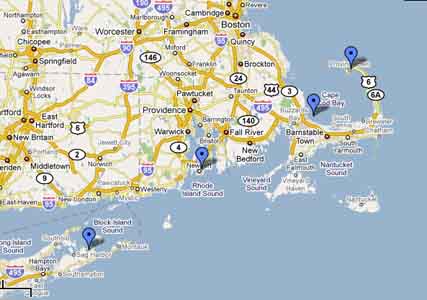
Thurs May 28 Left East Hampton; Noon: 41.023100, -72.182400; arrive in Newport 11 pm
Fri May 29 Newport RI; Pick up life raft, noon: 41.485000, -71.319300; go to art opening;
Thurs May 30 Leave Newport for Province Town; Noon: Just out of Buzzards Bay Canal, MA 41.788400, -70.467000
Pierre Beauregard, master harmonica player, cousin and friend to the captain plays a little ditty on Skylark the day before they set off for Nova Scotia, Canada and later to Ireland over 2,500 miles away. https://www.youtube.com/watch?v=LVS6TSRln_k
Sun May 31: 10 am arrive in Provincetown, Massachusetts; Noon 42.0366,-70.1549 ; dinner at Lobster Pot
Mon June 1: 9 am Rick leaves, Pierre Beaureguard pays a visit, 10 am leave Provincetown under full genoa; noon 42.7578,-67.6993, 1 pm, cloudy, 2 pm raise main, main traveler hits George’s leg, waves 3-4’, winds 25 kts; 3 pm reef main, 8 pm low front moves over
Weather: SW winds 20 kts, 3-6 ft waves, Isolated showers and thunder storms
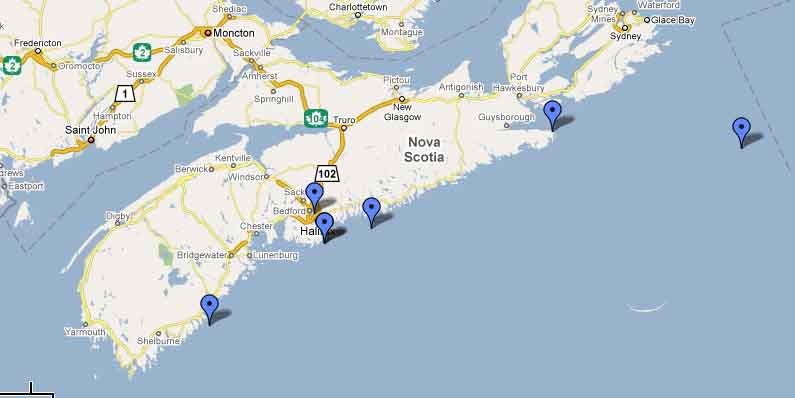
Tues June 2: 1 am wind gusting to 35 kts, take down main breaking 10 main sail guides; 8 am, waves 5-6 ft, wind 27 kts, light rain; 9 am loose life raft after being pooped; retrieve life raft; Noon 43.817700, -64.760300 , sunny, waves 6-9 ft, fetch 75 ft, 8 pm arrive in Lunenberg, Nova Scotia; get Canadian Customs arrival number via telephone and post in window
Wed June 3: 7 am leave Lunenberg; Noon 44.466900, -63.503900 , 3 pm motoring; discover oil low; 3 pm arrive in Halifax; dock at Dartmouth Yacht Club; meet with Raymarine technician, take cab ride to “The Binnacle” looking for sail guides; dinner at local restaurant
Weather forecast: SW Winds 10 kts, Rain possible,
Thurs June 4; Dartmouth Yacht Club, Andy leaves boat, stitched sail guides
Fri June 5; 7 am leave Halifax; Noon just east of Halifax 44.582800, -62.980600
Notes: They say it gets 20 degrees colder when you get to St. Johns. We’ll be four men in a ice hut. You’re a sailor you’ll get the job done. You’re a sailor you can fix anything. Getting rough? Let out the traveler. We worked for three weeks on the boat before setting sail. All systems are on trial. Sailing skills are rusty. Getting to stitch on the sails bred familiarity. Saw whales off P-town. Saw twenty seals at various times off Nova Scotia. May have seen a puffin amongst many seabirds. Everyone asks when we are leaving. I tell them when we are ready. We are a week behind schedule. We will arrive when we get there. Learned there is no fog this time of year. We are really on a cruising sailboat where you motor if there is no wind. With the engine running at 2,400 rpm we use about 1/2 gallon an hour, 5 miles a gallon. To Do List: Install four pad eyes, Install flag halyard, Install topping lift, Stitch sail guides, Install man overboard throw line, Hack saw forward hand rail pins, Add bead of caulk around rub rail, fix table leg
Sat June 6: 5:46 am raised main sail; winds SE 5.6 kts; heading 80; bar 1019, temp 81.3 F; noon docked at Cansco Nova Scotia 45.338500, -60.996200; George went ashore looking for cigarettes and fuel came back with coco, paper towels and roll your own tobacco. Stayed until 3 pm and sailed into our second low. We were in the northwest quadrant so winds were 20-25 from the ENE, waves 5-8 ft
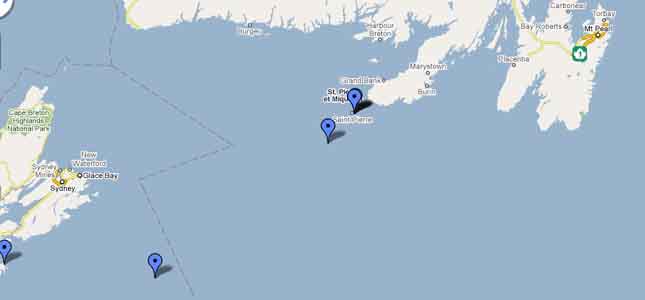
Sun June 7: 3 am RADAR mast forward support pole came undone. Triple lashed it to the railing and boat. Temp 47 F, Boat took a lot of pounding. Maybe we heard more noise from the boat since the motor was off. In the morning variable winds from the north, motoring for St. Pierre; Noon 45.204600, -58.917400; Saw porpoises for the first time; 4:12 pm 1/4” above 15 gal mark in diesel tank; took nap earlier
8 June 2009, 46.500000, -56.5408009 June 2009 St. Pierre, 46.776600, -56.174800
Tom Lohre talks about setting off across the North Atlantic. Tom with the captain and a sail master sailed 2000 miles from Saint Pierre, France to Baltimore Ireland in 15 days. Saint Pierre is a French colony in Newfoundland. The island is about two miles by one mile with an excellent harbor. During prohibition 5000 people lived on boats in the harbor and large warehouses, still on shore, held booze from Europe. The fishing industry is marginal now and now most people live on government jobs. Students go to Paris to attend college. Everyday young childrens would attend sailing school, suiting up in wet suits and launching small sail craft with the teacher running around in a rubber power boat. https://www.youtube.com/watch?v=InvnV77oDCo 10 June 2009, 46.776700, -56.174800
11 June 2009, 46.783800, -56.164000
Ben sets the preventer on the main and uses the spinaker pole on the genoa to allow both sails full access to the wind. Just before we left Saint Pierre, Ben restored the spinaker pole by cutting two inches of the end to access the frozen parts. He reattached it and nows works as good as new. We never would have crossed in 15 days without the spinnaker pole. It allowed us to make 10 knots! https://www.youtube.com/watch?v=u8RGd6AeWg
After reconditioning the spinnaker pole, Skylark makes good use of it making 10 knots in light winds for two days. Ben taught us by showing how to do it. Whatever you do keep the sail downwind of the foreward stay, or line that runs from the bow to the mast. You do not want to wrap the sail around the forestay. Sometimes you have to cut it off.
https://www.youtube.com/watch?v=cxeMunB6hq4
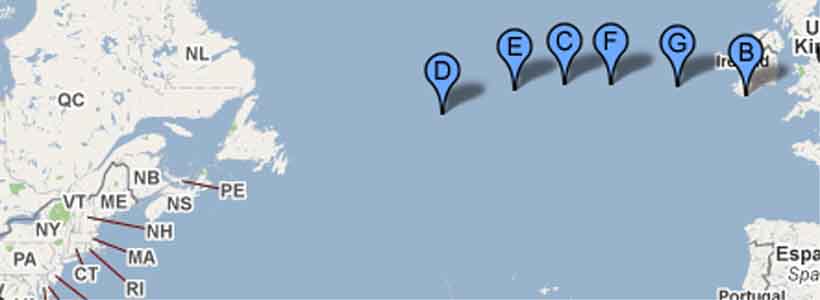
D 17 June 2009 50.3551,-38.0892
E 19 June 2009 51.8002,-31.2866
C 20 June 2009 52.1477,-26.5361
F 21 June 2009 52.1265,-22.1928
G 22 June 2009 52.0931,-15.8134
B 26 June 2009 51.483000, -9.375700 Ireland
During the whole sail across the North Atlantic we only saw one ship, a empty fuel tanker going west about five miles north of us. https://www.youtube.com/watch?v=ITsEgf1_wM8
Ben talks about just sailing without electronics. George describes getting lost at sea while sailing to Block Island from East Hampton. He solicits nearby boats on the radio to help him get his bearings. https://www.youtube.com/watch?v=bzxW6DZ0OOk
Ben celebrated his 52nd birthday at sea and Tom made him a rum cake.
https://www.youtube.com/watch?v=6LINdklmR5g
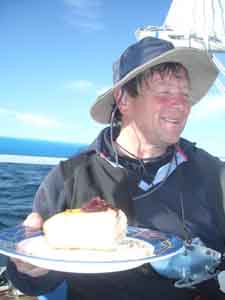
Ben with his rum cake.
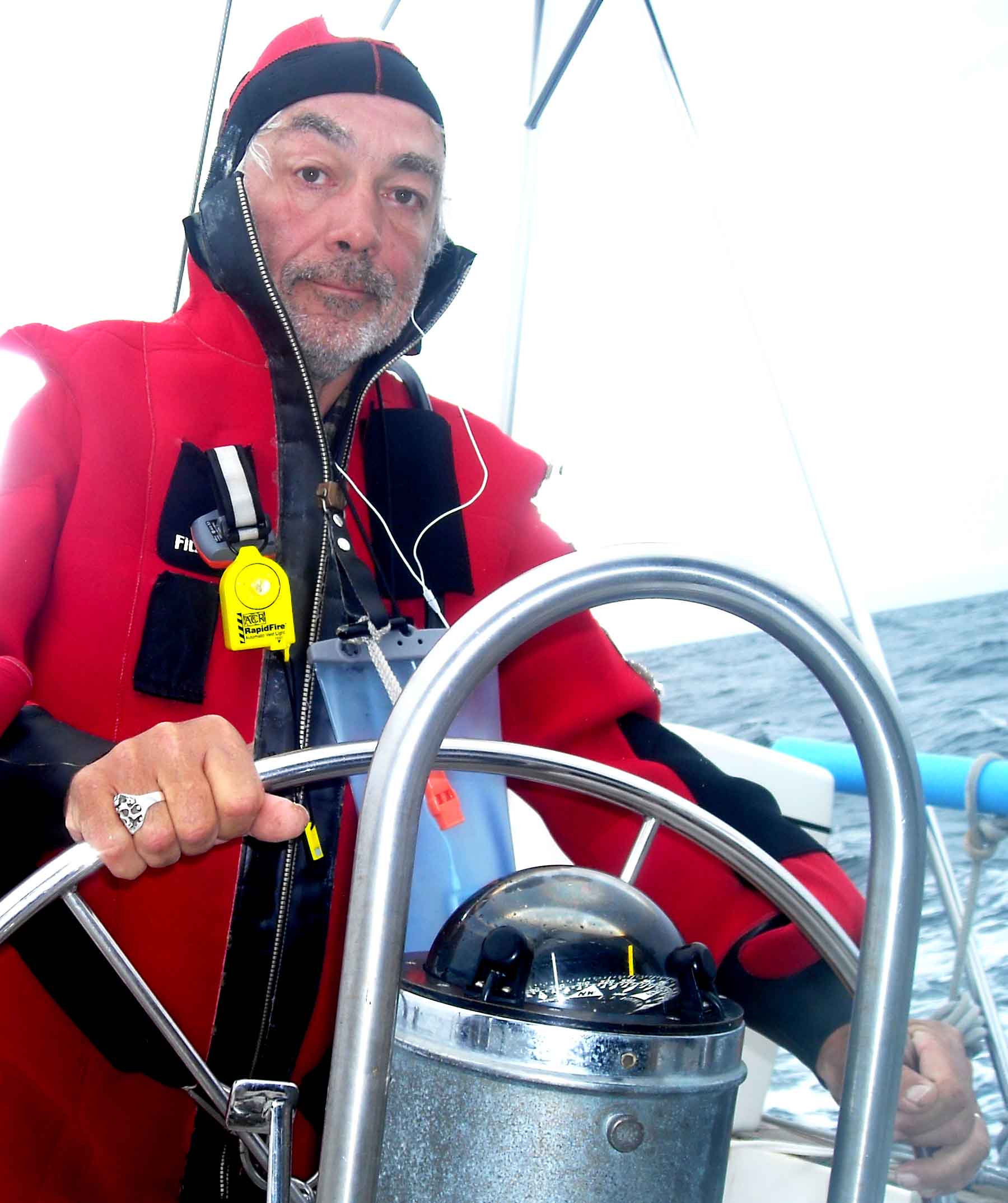
In my immersion dry suit I used as foul weather gear listening to Ben's I-pod!
We witnessed a feeding frenzy. https://www.youtube.com/watch?v=bEk0LnFBVl8
Skylark passes Fastnet Light off Baltimore, Ireland, 4" x 6", pencil on paper
We sailed right up to Ben's family cottage on Hare Island. Ben's mother made us a fine Irish breakfast. Later we all rode Skylark into Baltimore. https://www.youtube.com/watch?v=eYzdTcPmCpc
Baltimore Harbor, 16" x 12", oil on canvas, June 26, 2009, painted from life after the 15 day crossing of the Atlantic. Painted the day after landing from crossing the North Atlantic, Tom brought his paints and ivory plastic to make scrimshaw but found that there was little time to create art. His duties of watch taking, cook, communications and weather kept him busy and the tendency to sleep a lot also got in the way. Tom was ready to leave as soon as he arrived in Ireland for he had been gone for six weeks, three weeks working on the boat in the yard and three weeks at sea. The view is the main launch ramp with the sailing clubhouse building to the right. The man who owns the warehouse directly behind this view owns the boat in the foreground. During the day a school of J 20’s raced out in Baltimore Bay and in the foreground small board sailors worked their circuit.
To celebrate our arrival the O'Driscoll Family had their mid-summer reunion with dancing in the town square. https://www.youtube.com/watch?v=pAbLHLNZCPQ
Itinerary
Sat May 16 to Fri May 22: Yard Work at Three Mile Marina
Sat May 23 to Fri May 29: George, Andy, Rick & Tom Sail to and pick up Givens Life Boat in Newport, Rhode Island
Sat May 30 to Fri Jun 5: Sail to and Outfitting in Provincetown, Rick leaves; Sail to Lunneberg, Nova Scotia; Sail to Hailfax, Nova Scotia, Raymarine technician visit, Andy leaves.Sat Jun 6 to Fri June 12: sail to St. Pierre, France, Ben Morris arrives and reconditions spinnaker pole, outfitting completed.Sat Jun 13 to Fri Jun 19: Leave St. Pierre to Mid-point of North AtlanticDate: Sat, 13 Jun 2009 15:42:35 GMT
Latitude:47=2E4696
Longitude:-50=2E8114Date: Mon, 15 Jun 2009 15:28:46 GMT
Latitude:48=2E612
Longitude:-44=2E4461
Date: Tue, 16 Jun 2009 15:55:49 GMT
Latitude:49=2E6236
Longitude:-41=2E132Date: Wed, 17 Jun 2009 14:59:09 GMT
Latitude:50=2E3551
Longitude:-38=2E0892 Date: Fri, 19 Jun 2009 15:35:04 GMT
Latitude:51=2E8002
Longitude:-31=2E2866
Sat Jun 20 to Fri Jun 26: Mid-point to Baltimore, Ireland; Ben leaves.Date: Sat, 20 Jun 2009 15:20:40 GMT
Latitude:52.1477
Longitude:-26.5361Date: Sun, 21 Jun 2009 14:34:02 GMT
Latitude:52.1265
Longitude:-22.1928Date: Mon, 22 Jun 2009 15:41:43 GMT
Latitude:51.9699
Longitude:-18.4527Date: Tue, 23 Jun 2009 12:07:06 GMT
Latitude:52.0931
Longitude:-15.8134
Sat Jun 27 to Sun Jun 28: Baltimore, Tom Leaves; George takes Skylark to Kinsale for more crew and technical work on Raymarine systems.
Skylark’s Info
Name of vessel: Skylark, 36' Pearson Sailboat
Crew
Captain and owner: George DuBose boss@george-dubose.com Sail Master: Ben Morris
Cook, Weather, Communications, Splicer & Whipper: Tom Lohre
Electronics: Andy HeermansCrew out of Kinsale: Rick, Jim
Endorsements
Margaret S. Lohre, M.D. mentions: Tom is leaving on the Feast day of St. Brendan. Saint Brendan of Clonfert or Bréanainn of Clonfert (c. 484 – c. 577) (Irish: Naomh Breandán ) called "the Navigator", "the Voyager", or "the Bold" is one of the early Irish monastic saints whose legends reflect their history. He is chiefly renowned for his legendary quest to the "Isle of the Blessed," also called St. Brendan's Island. The Voyage of St. Brendan could be called an immram (Irish voyage story). He was one of the Twelve Apostles of Ireland.[2] Saint Brendan's feast day is celebrated on May 16
Sheri says:
May you have clear skies,
and Starry nights...
May the wind be always at your back,
and there be smooth waters for your sail...
May the fish be plentiful for the catch,
and time plentiful to enjoy your journey...
And may St. Brendan watch over you and
guide you until your safe return home!
Tom's Story of the Trip
George
When George first mentioned the idea of crossing the North Atlantic in his new old boat I was game. For many years while sailing in New England I always tried to persuade the vacationers to take their two weeks at sea and go to Bermuda, one week sailing there, one day to turn around and one week to get back. It was rather an extended version of their daily wants to leave one quaint harbor and sail to another quaint harbor, take a shower, have a nice meal in a fine restaurant and then do it all over again the next day.
My Reason
My reason for wanting to sail long distances derived from my career as a fine artist. Never having great success monetarily selling my art but still living the highest life possible, I developed a habit of going to great places but eating out of grocery stores. I saw making land as a huge expense. The vacationers shared docks fees, fuel, food, ice, beer, etc. While I was perfecting my talent in my thirties others were perfecting their ability to make money. My development as an artist took place in Greenwich Village, New York City where I was the village fine artist. I friends were excellent artists and we all steadfastly refused to compromise our talents. Repeatedly advised not to do anything I did not want to do. My talent would take me through life much like a bird that did not reap or sow. My skills as a waterman were welcomed and I stuck my neck out creating debt while on vacation. Now I see clearly how to proceed: buy my own boat; load it up with my own foods: homemade hard biscuit and dried meat, rum, dried fruit, peanuts find two other sailors and set out yearly to sail from Chicago to Mackinaw, Toledo to Buffalo or North Carolina to the Bahamas. You could do it in a open whaleboat but a Cirrus Westerly would be more comfortable.
What to Study
The trip was going to happen and I started studying what I thought you would need for the journey. What I studied turned out to be secondary to the greatest focus: the sails, lines and hardware. In five months of studying heavy weather procedures, first aid, communications, weather forecasting I never brushed up on my sailing terms and was completely embarrassed those first days out at sea. I had not sailed in three years and it showed. The boat was ten feet longer than the one I learned on and all the parts had a lot more momentum. It was not until the end of the trip that I started getting used to the operations. The captain was right with it, as was the sail master, which really made me a liability for the first few days.
Spouses
All three of us who crossed the Atlantic had spouses with anxiety. Turns out the drive to sail and understanding the risks are the sole domain the sailor's mind. My wife said she was much better once I had gone but still referred to us as the three idiots.
Weather
The ideas than fill a mind not familiar with sailing sometimes make the possibility of sailing the watery world impossible. In reality, without two weather systems working in conjunction the wind rarely goes above 30 knots and the waves higher than 8 feet with a 100’ fetch, or the space between the crests. The sailor and the boat have many safe options to deal with heavy weather or winds above 35 knots and waves larger than 15’. Generally, the winds get to be much higher long before the waves get larger. We had a lifeboat, drogue and storm jib. The major heavy weather contingency would be to sail into the wind with as short as sail as possible attacking the waves at an angle and heeled over to avoid pitch polling, or having the boat completely turn around under water generally breaking the mast. The sail master made notice of the parts of the interior of the boat that would break off their mounts and fly about in such event. A more severe form of this manner is to set the sails counter to each other making the boat zig zag into the wind. If this setting of sails did not work, we would drop the drogue off the stern to prevent the boat from sailing too fast.
We never saw any winds higher than 35 knots or waves higher than 9 feet. They say you should leave for the crossing after a low and we left after a monstrous low. The system combined several smaller lows and delivered 45-knot winds off the coast of Ireland where we were to land two weeks before we got there. Normally this time of year the weather offers benign systems substantially less than normal North Atlantic weather. We followed this low across the Atlantic. First, it was on top of us and then we saw it off to the northeast horizon for a week and a half. We could also see the clouds from the Gulf Stream in the south. Normally it was cloudy with winds out of the northeast and southeast
Why More Do not Go
There are three reasons more people do not travel the watery world more often. Without these three reasons, there would be thousands of boats out in the middle of nowhere. We saw one other boat a large empty fuel tanker about six miles to the north heading west. The first reason is seasickness. If you get seasick then the trip is quite miserable and though you can take medicine, it never is pleasant. Some say that after three days, the sickness goes away and so you can be put off by the other two reasons. The next is heavy weather where the boat is heeled over and occasionally you are thrown about. It would not be so bad if the boat was just heeled over 30 degrees and you feel like you are walking in the corners but the boat slams into the water from time to time making everything that is not tied down slam into something else. If you happen not to have yourself wedged in for such a banging it becomes a series of bruises. Fortunately, our slamming about for four days did not happen until the end. If it happened in the beginning, we would have been nursing our wounds for the rest of the trip but would have been better prepared for the next time it happened. The last thing is the time it takes to get somewhere. Even at ten knots crossing an ocean, take weeks.
Three Weeks Working Three Weeks Sailing
I was gone for a little over six weeks but we were only at sea for three weeks. The rest of the time spent working on the boat. Skylark, the name of the boat from the previous owner, was a complete refit. Wiring, major hardware, electronics, stove, refrigerator, winches, cleats were replaced. It had a new engine with 100 hours on it but that was about the extent of anything else being new with the old 1981 boat. Work started with the boat out of the water and all the through holes, the five holes that go through the hull and have valves on them to open and close, being rebuilt. Everyday a crew of four would saw, drill, measure, fit, sand, bolt, screw things from 9 a.m. to 6 p.m. The captain and electronics expert spent three years working on the boat and the closer the take off date came the more action in the boat yard became. Endless trips to the hardware store augmented with constant reading of installation manuals and authorization by the captain concerning what you were doing. I installed handrails, the oven, stitched damaged parts of the genoa sail, spliced ropes, caulked while the rest of the crew had endless tasks. Slowly the long list of things to do and buy got shorter but we left East Hampton on May 28 with still a long list. I had called Three Mile Marina my home in East Hampton for thirty years and was probably not coming back. We picked up the plastic duffel bag lifeboat in Newport, Rhode Island and continued on to Provincetown, Massachusetts. We continued to outfit the boat in P-town and set off for Nova Scotia on Monday July 1. First landing in Lunenburg, we continued on to Halifax where an electronics expert tried to get the autopilot to perform properly. Andy our fearless electronics expert left the boat after being seasick for several days and not comfortable with the high seas. His wiring was flawless and all inconsistencies traced back to the equipment. George and I continue on to Saint Pierre, a French colony in Newfoundland. Taking 6 hours watches we made in it three days. We continued to outfit the boat in Saint Pierre. Ben Morris arrived from England and immediately set out to get the spinnaker pole working. George went up the mast for one last time. We set off for Ireland June 12 around noon.
Watches, Foul Weather, Gear Spot
Leaving Saint Pierre was uneventful until I saw a large 4 prop high wing gray cargo plane flying about 4,000 feet above us and then later a navy blue with gold yellow trim King air buzzing us. We turned on the VHF radio and discovered that they were trying to contact us. I had pushed the “Help” button on the SPOT device in accordance with procedure. There are three buttons on the SPOT. One is labeled “Okay, another “Help” and the last “911. The “Help” and “Okay,” buttons can be set up to send a 150-letter message to ten people. The same people received both messages and the “Okay” button was to let everyone know that we were fine and would have the satellite phone set up if they wanted to try to reach or send an e-mail that would be replied to that day. The “Help” button was to let everyone know that the weather was too rough to connect the satellite phone and no e-mail would be sent that day. As it turned out the- SPOT device did not send a message every time I pushed the button and when I pushed the “Help” button the first time, it sent seven messages. This confused Chuck and Irene and they decided to call the Canadian Coast Guard. The Coast Guard decided to send try contacting us via our VHF radio and when that did not work sent two planes looking for us. I was very distraught at this chain of events and Ben got on the VHF radio and assured the pilot of the King Air that we were all right and would not be pushing the “Help” button anymore.
Communications
We had state of the art electronic chartsTobaccoShips SeenSea LifeMid OceanHow to Reef the MainHow to take down the spinnakerFresh Corn
Things in your pockets
Paper Towel Cleaning
The hell with the boat I’m off watch
First aid
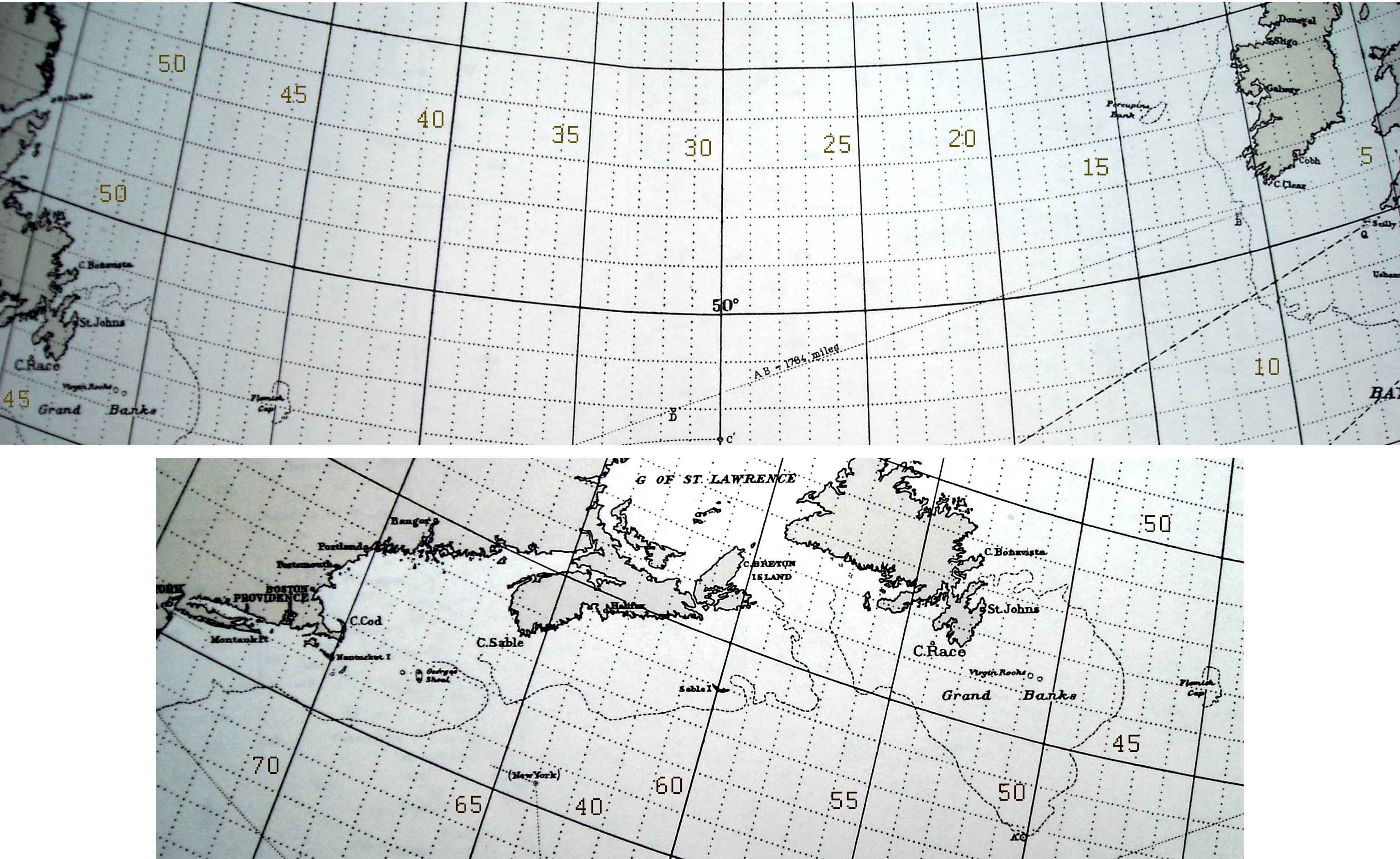
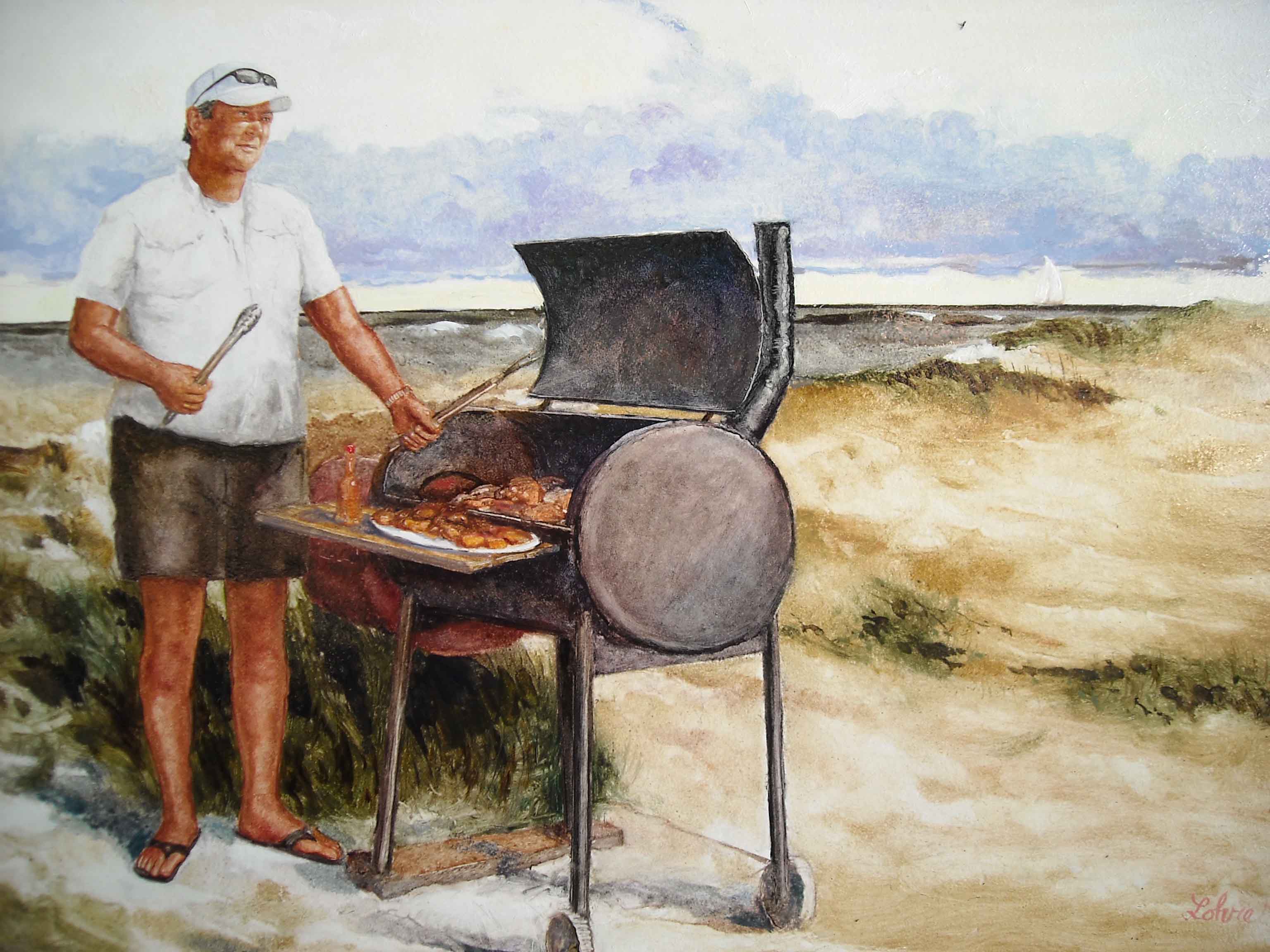
Grill Man, 16" x 12", oil on board, September 2008This painting follows in the great tradition of men with their Kills. Instead of an Indian standing over his Buffalo we have Bob standing over his grill.
Solo Sailing Jokes
Sleep on the shelf in your closet. Replace the closet door with a curtain. Six hours after you go to sleep, have your wife/girlfriend open the curtain, shine a million candlepower flashlight in your eyes, activate an air horn, and yell "Roger Blough to the sailboat approaching Grays Reef!" Renovate your bathroom. Build a wall across the middle of your bathtub, and move the showerhead down to chest level. When you take showers (don't we all whilst racing?), shut off the water while soaping. Every time there's a thunderstorm, so sit in a wobbly rocking chair and rock as hard as you can until you're nauseous. For the full effect wear the dog's hidden fence electric collar, and go out to the mailbox and back. Put lube oil in your humidifier instead of water and set it to high. Leave a lawnmower running in your living room for several hours a day to simulate recharging. Have the paperboy give you a haircut. Store up garbage in the other side of your bathtub. Wake up every night at midnight and have a peanut butter and jelly sandwich using stale bread, if anything. Cold soup or canned ravioli are optional. Set your alarm clock to go off at random times during the night. When it goes off, jump out of bed, get dressed as fast as you can, run out into the yard, and adjust the tension on the clothesline. Once a month take every major appliance completely apart and then put them back together. Do this in the dark with a flashlight clenched in your teeth, and your wife/girlfriend occasionally dropping a plate onto the floor behind you. Use 24 scoops of coffee per pot and allow it to sit for 5 or 6 hours before drinking. Install a fluorescent light on the bottom of your coffee table and lie under it to read books. Raise the threshold and lower the sills on your doorways so that you either trip or hit your head every time you pass through one of them. Lock wire the lug nuts on your car. For your "after steak and merlot" dessert, prop up one side of the cake pan while it's baking. Then spread icing really thick on one side to level out the top. This is optional, but extra credit given for those oven-less Rearick types. Tether yourself to a four-wheeler, jump into a swimming pool, and have your wife/girlfriend drive laps around the pool until it runs out of fuel (the four wheeler, that is). Should be done at night, in at least third gear, while wearing a strobe and blowing a whistle. Practice acquiring the sun in your signal mirror at a busy 4-way intersection. Attempt to direct the beam down all 4 streets. Aerobic run, which is sure to follow, will generate adrenalin similar to waiting to reef until the boat has been knocked down. Run into the kitchen and sweep all the pots and pans onto the floor after having previously covered the floor with BB's. Maneuver as fast as possible between the cupboards trying to put it all away. Must also be done at night with clenched flashlight in teeth. For Ron "Radio" Wells, start calling your friends at six-hour intervals and let them know where you are. Tether yourself to the hood of your car, and use your hacksaw to cut off the luggage rack, while your wife/girlfriend drives down a two track, at night, in the rain.
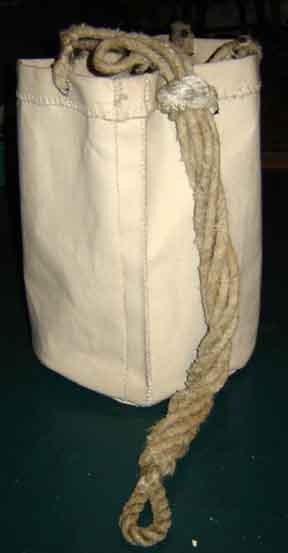
This is Tom's first ditty bag. He made the circumference 34" instead of 6" radius called for in the instructions so he could use it for general toting. The 17" height is the same.
He made it in winter waiting for the sailing season to start.
Get Started on your own Ditty Bag Thanks to: Colin Grundy, Editor - Knotting Matters, John Burke of the International Guild of Knot Tyers - North American Branch and Barry Brown the maker of the below bag.
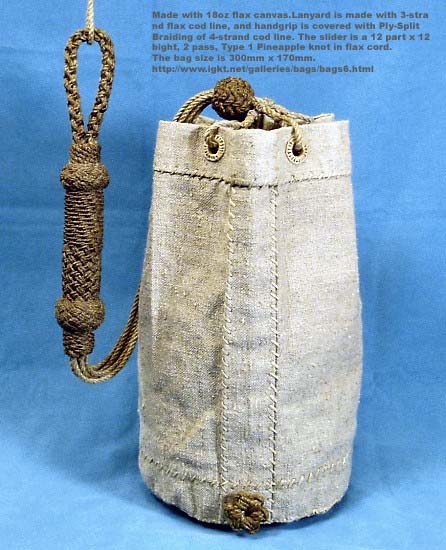
The materials used are:
Flax canvas supplied by
Wolfin Textiles Ltd
www.wolfintextiles.co.uk
Cod line and flax cord. These can be obtained from either
Footrope Knots
knots@footrope.fsnet.co.uk
or
Tradline Rope and Fenders
www.tradline.co.uk

Bogs from past sails




Return to Three Mile Harbor, East Hampton to sail on George DuBose's 26' Pearson. A friendship that would last for
He got back on the water until 1979 when he helped take a sailboat from Chesapeake to East Hampton.
and then a 38' Morgan in 1972. He sailed in Lake Erie and then along the East coast of Florida and Georgia in 1970-74.
1972 Tom's sailing adventures start with his father getting a 26' Morgan in 1972
1967 Tom's family buys a Martin Marietta aluminim canal style cruiser with no flying bridge. Keeps the boat at Captain Hook's, a converted tow boat with marina attached at the public landing Cincinnati, Ohio. The rig was anchored at the upper part of the landing. The lower part had the warf boat for the Delta Queen.
View Locations of Paintings from Life in a larger map.
Experience The Warm Feeling of Owning Original Art
Click To Contact Inspiring Smiles Forever
Look to these pages for the latest from the studio and the boat yard. This is a simple web site with no cookies or security hosted by Go Daddy. Trust they will let you have fun browsing.
Complete Works, Portraits, Landscapes, Still Lifes, Sculpture, Lego Artist...
Click To Sign up for auction notices or check past auction sales at EBTH
Have any Tom Lohre painting on Prints, Greeting Cards, Throw Pillows, Duvet Covers, Shower Curtains, Tote Bags, iPhone Cases, T-Shirts, Round Beach Towels, Towels (Beach & Bath), Yoga Mats, Spiral Notebooks, Fleece Blankets, Portable Batteries Chargers, Carry-all Pouches, Weekender Tote Bags, Coffee Mugs, Tapestries, Face Masks, Jigsaw Puzzles, Stickers and Oraments via Fine Art America
If you don't see your favorite painting request it to be offered.
Post comments on Facebook https://www.facebook.com/tom.lohre/
Tom's sailing page Stories of 4 Atlantic crossings, boat rebuild, sailing on the Ohio River and links to PDF and videos
Online Clifton Chronicle The local publication Tom was the editor for ten years.
Special Web Sites, Family Tree, Friend's Links
11223 Cornell Park Dr. Suite 301, Blue Ash, Ohio 45242