
Complete Works, Portraits, Landscapes, Still Lifes, Sculpture, Lego Artist...
Sign up for yearly notices by sending an e-mail to newart-subscribe@tomlohre.com
Post comments on https://www.facebook.com/artisthos/
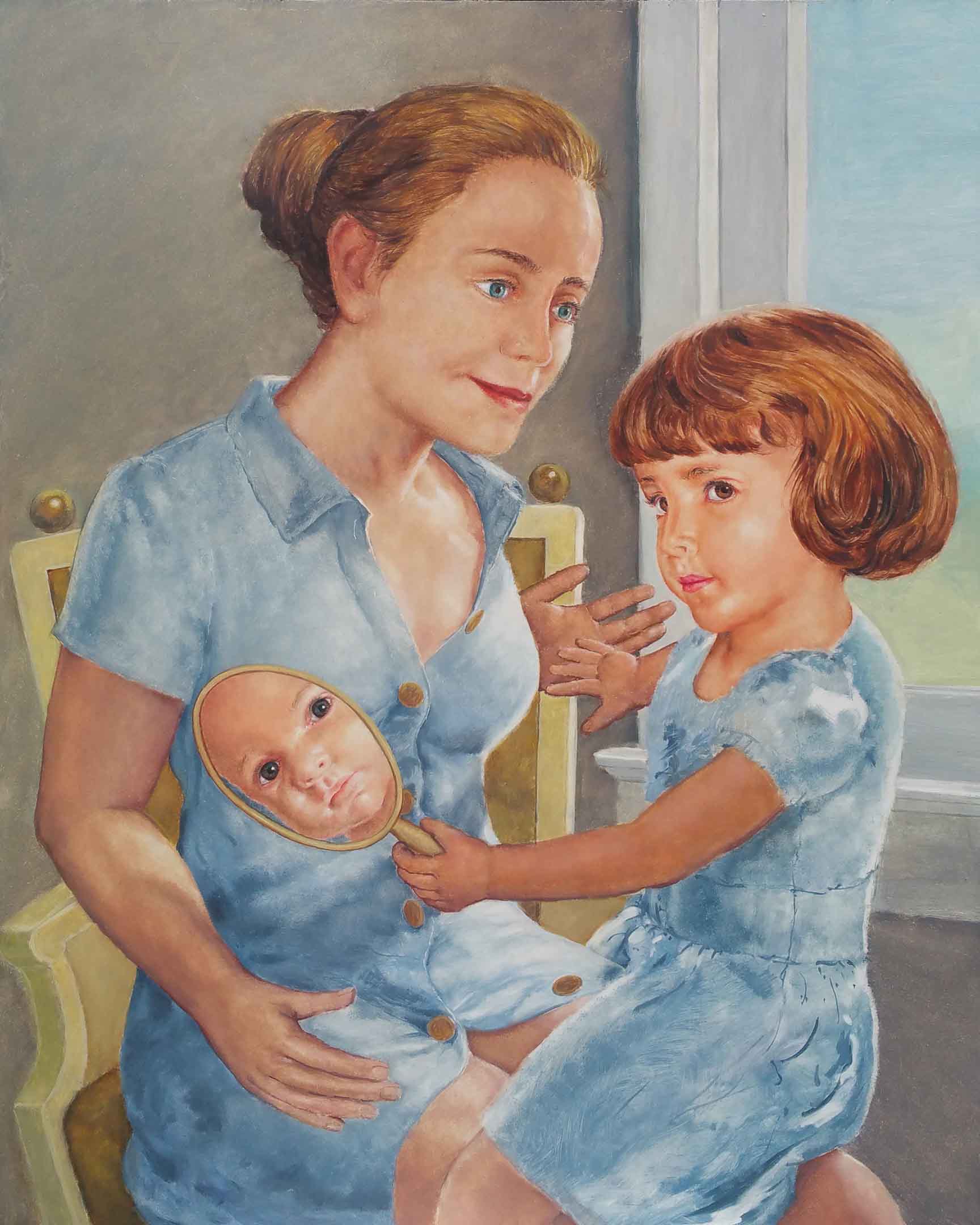
Irene and Helen, 24" x 30", Oil on canvas
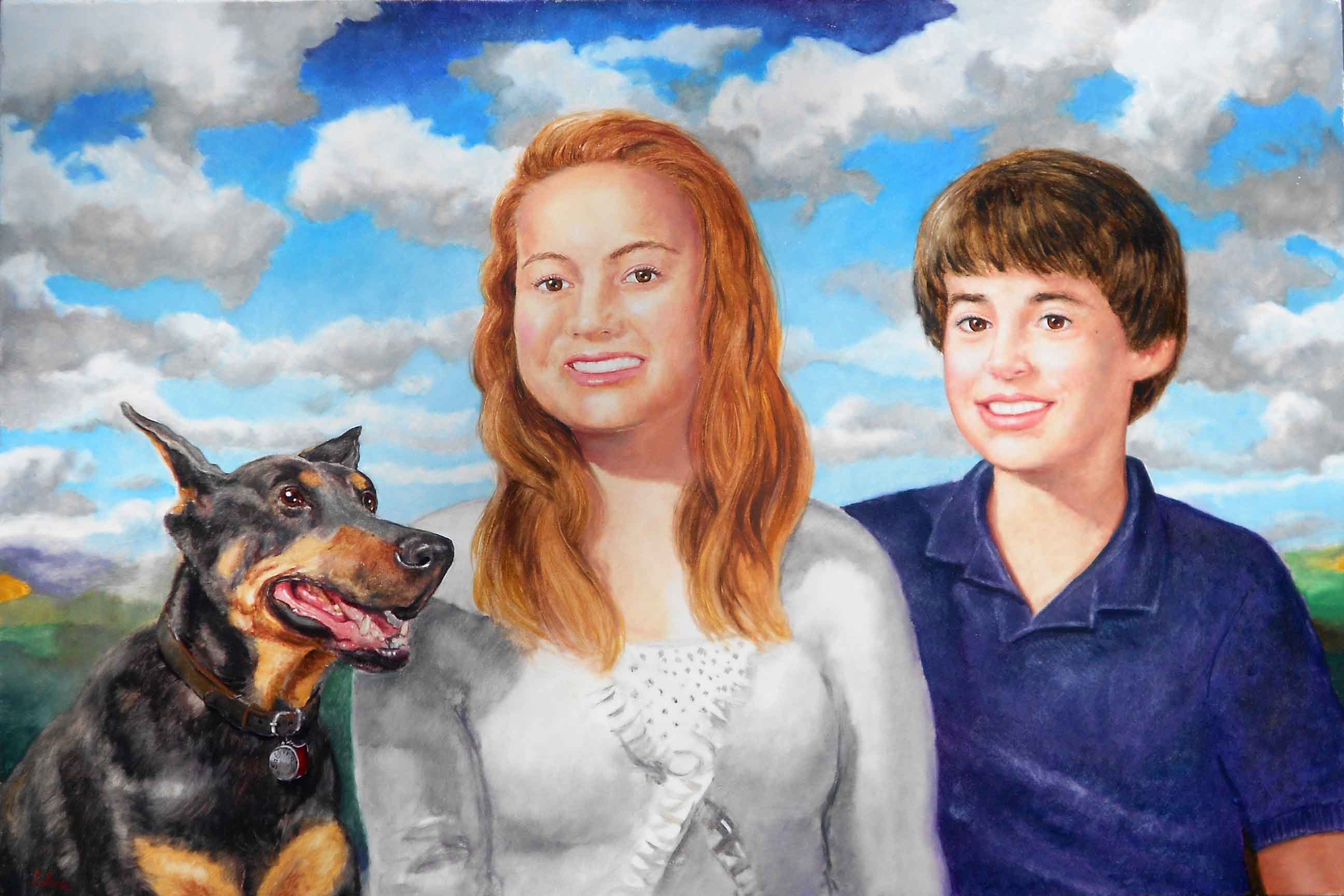
Maria and Mikey with dog Sabrina, Oil on canvas, 36" x 24", March 13, 2012
A portrait using a new very slow drying medium that allows work on the whole canvas wet for several months. A year after finishing, a spray of Dammar varnish seals the transparent oil color that uses the smooth white gesso surface as white.
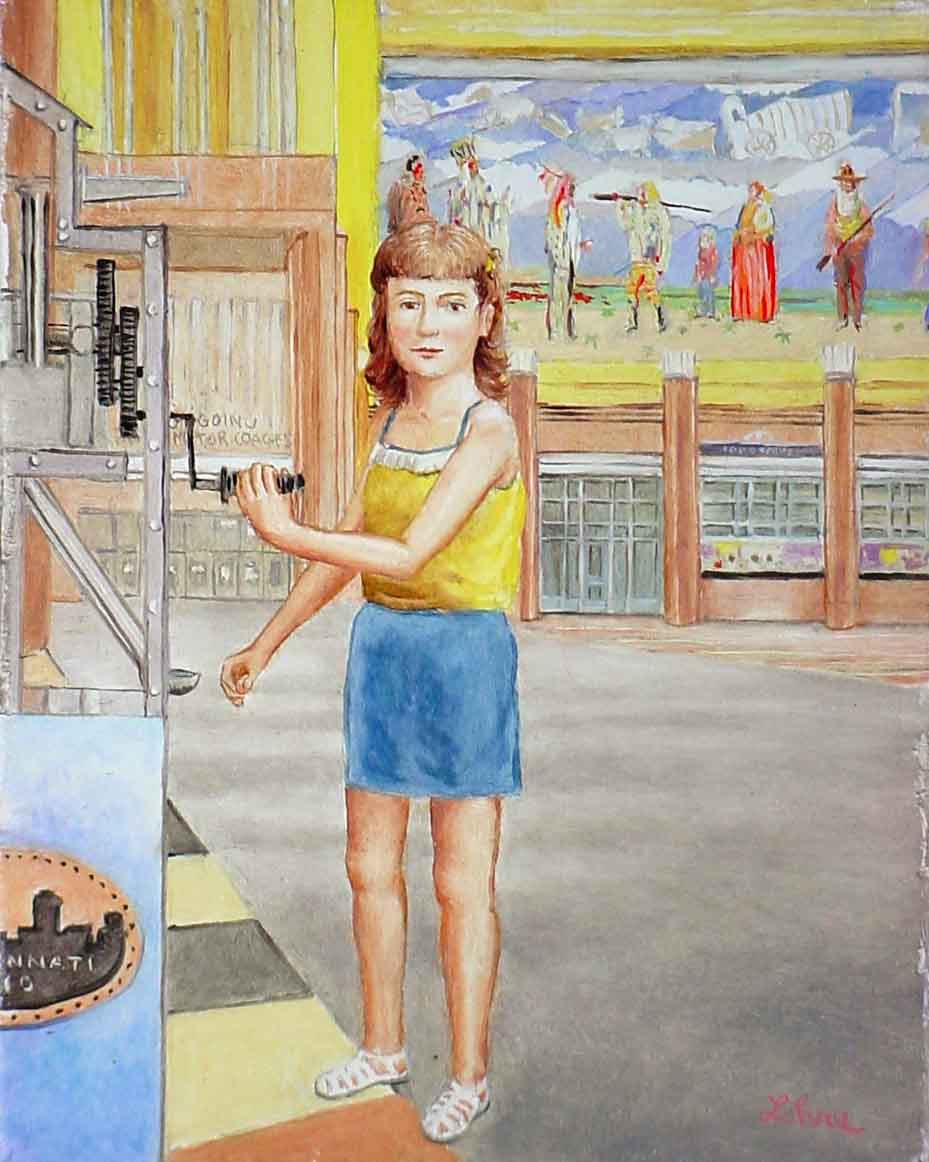
Cincinnati Museum Center, 8" x 10", oil on canvas, October 14th, 2005,The center is the old Union Train Terminal. Tom worked in the famous rotunda in front of one of the machines that turns a penny into a souvenir. The little girl is Tom's daughter.
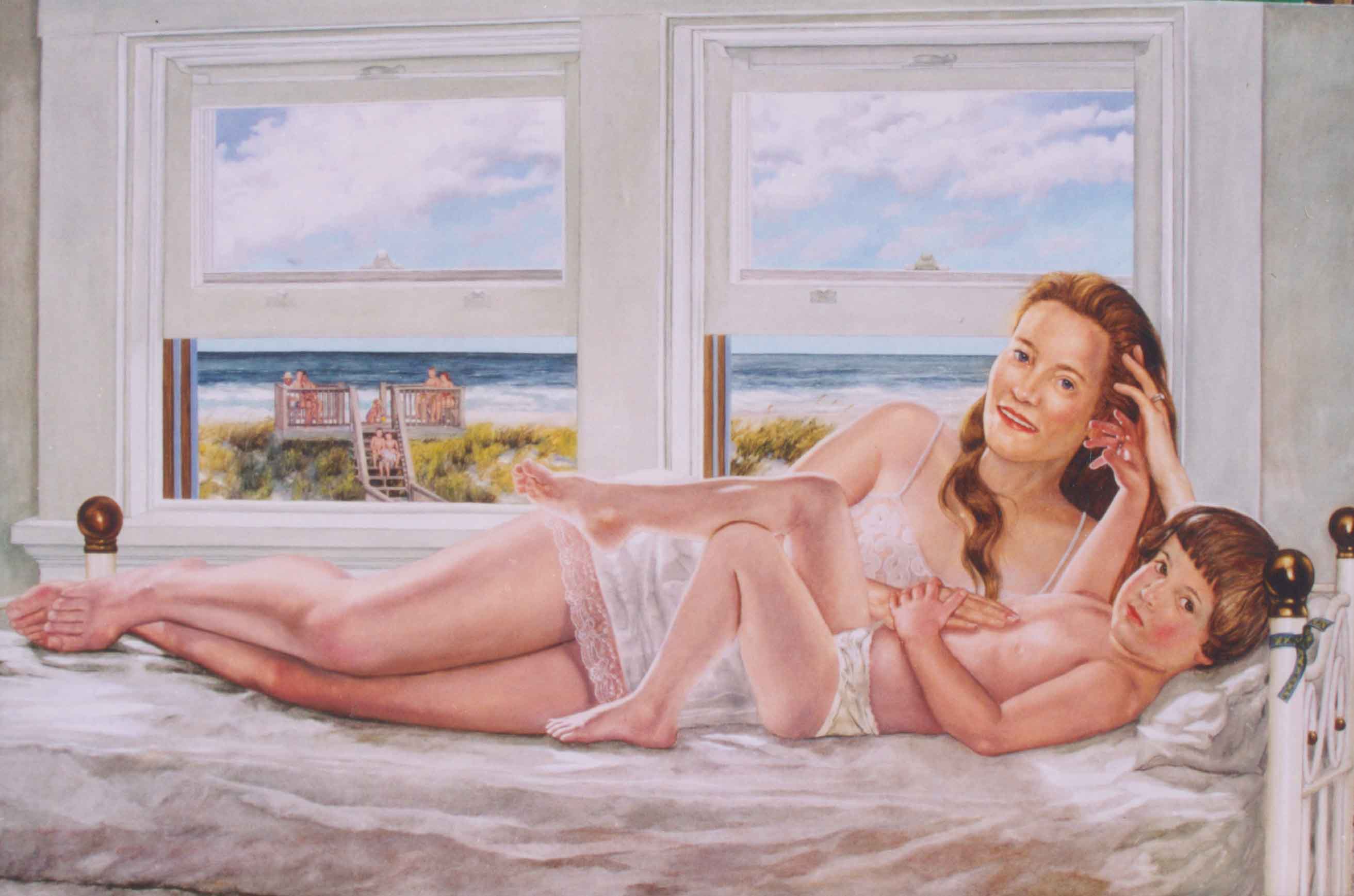
Irene and Helen, 4' x 5', Oil on canvas
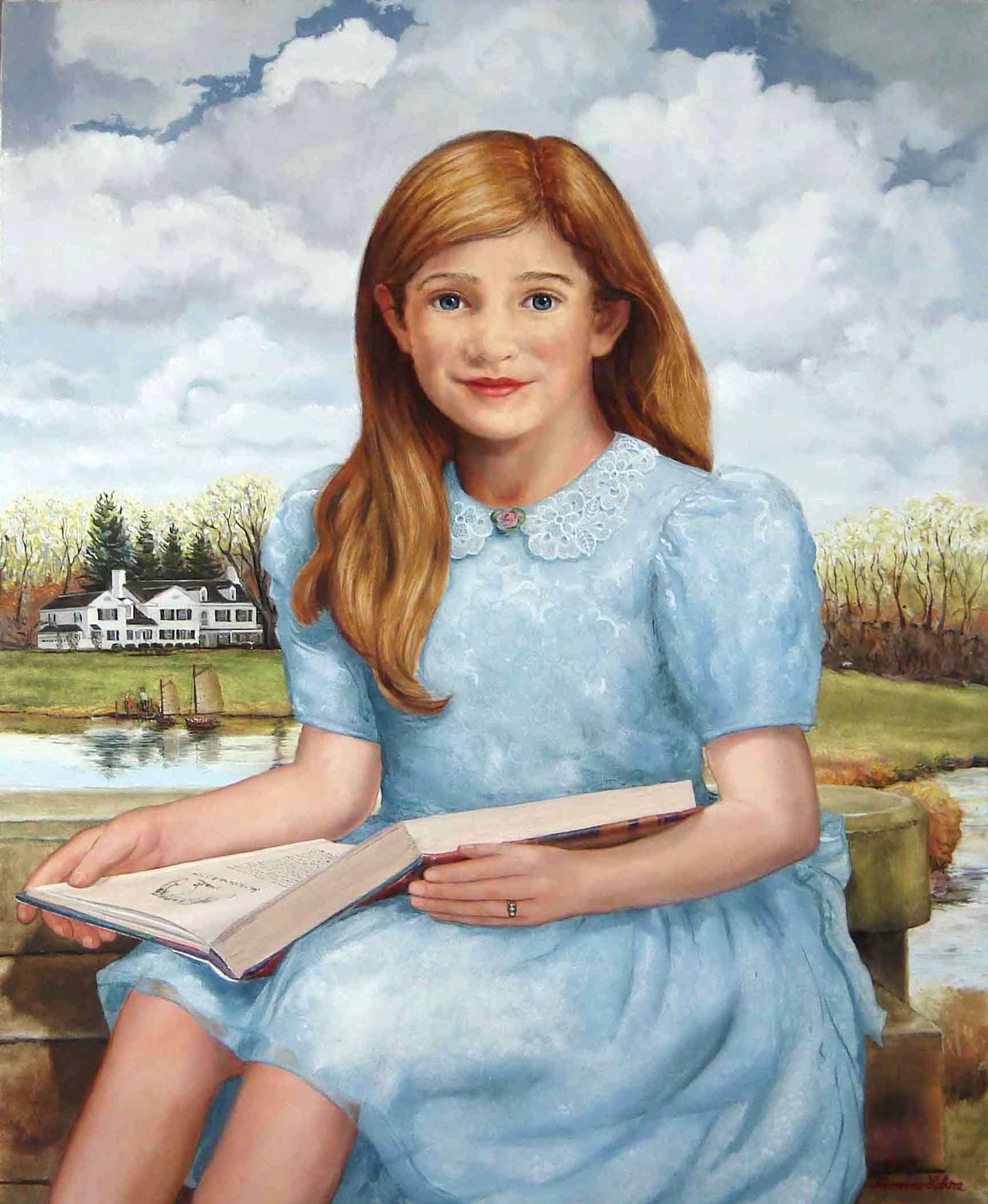
Oil on canvas, 24” x 30”, May 31st, 2002
Every portrait is special to the client, one painted and the artist. It’s the artist’s job to make the portrait desirable to all three. Just about anything is possible for Tom in the way of portraiture. Charcoal, watercolor and oil portraits can be done quickly if necessary.
Tom spent a year working on Morgan’s portrait. Tom spent the better part of the summer of 2001 collecting images and doing studies for the portrait by visiting for about an hour a couple of days a week. He took photos, sketched and worked on the full size drawing of the portrait on the canvas it was to be painted on.
The pencil line drawing of the painting on the canvas in pencil was approved. He gave copies of the drawing to the commissioner and the subject so they could get used to the drawing and offer advice. Just before painting he removed most of the pencil on the canvas so it would not interfere with the oil paint.
He started with the face, working steadily for two weeks because his technique is to work on wet paint and it takes about two weeks for the paint to set. The face was given preliminary approval. Next, the arms, hands, legs, book and neck were painted. Two weeks were spent painting the neck. The original neck was partially painted and what was to be on the canvas had to show additional neck. Both passages had to be painted with adjusting color and shape.
Two months of thinking, looking at the dressed mannequin, and searching for a technique, was used to start painting the dress. All the aspects of the surface handling had to look effortless. In the final painting the three layers of fabric show clearly and the lace does not in the least, look struggled. Tom developed a special brush for the dress made out of a child’s rubber toothbrush. The rubber bristles were cut into a oval and mounted on the top of a old brush handle. Next was the sky, which slightly emulated a portrait that hung in the commissioner’s home.
Finally the background was painted by addressing the whole passage at one time so as to make the effect harmonious. This meant two weeks of steady painting because the painting technique is wet.
Tom’s technique is no glazing or over painting. Only once the paint has dried can additional painting be done, which is not desirable.
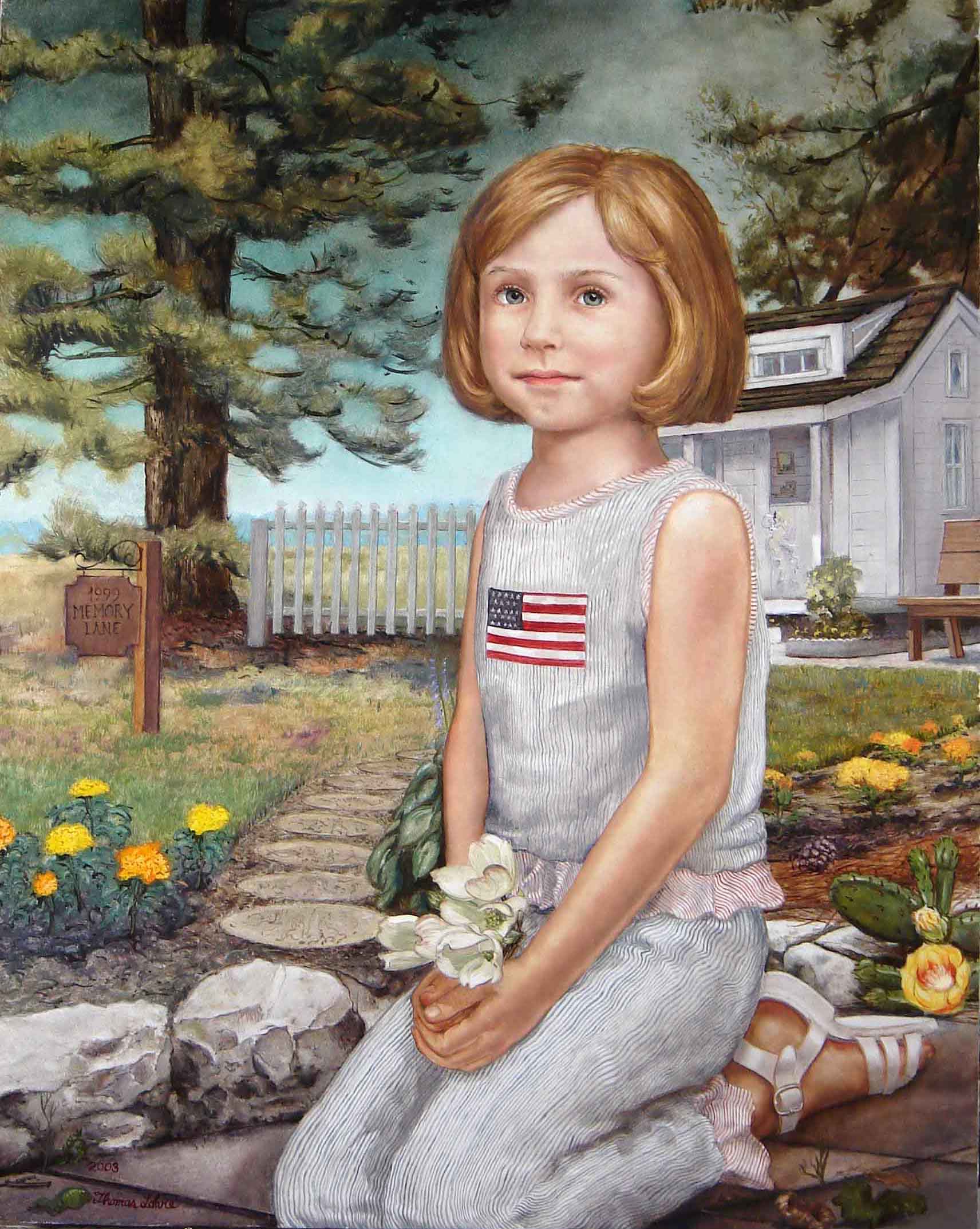
Maggie's Portrait, 24" x 30", Oil on canvas
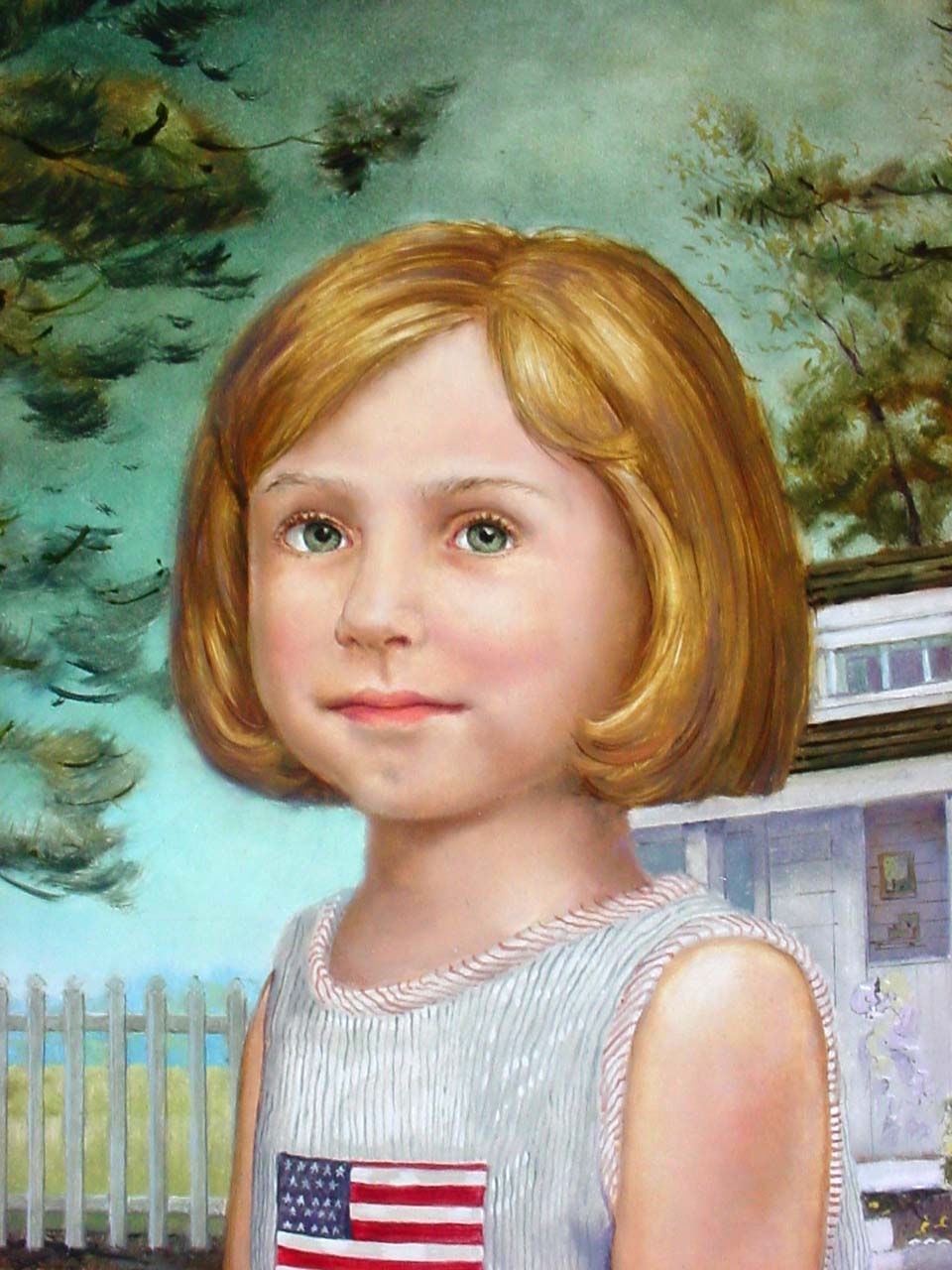
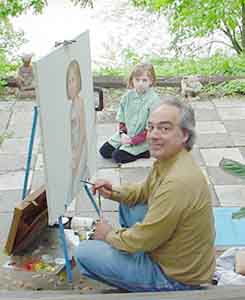
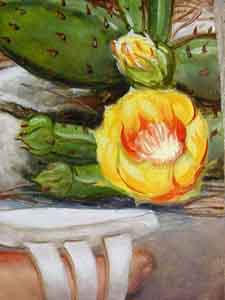
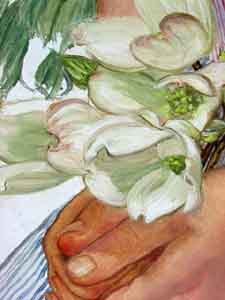
Work in oil on Maggie's portrait was started in November of 2002. The preliminary drawing was given the OK in the fall of 2001.
The canvas was prepared by stretching heavy canvas on 1/2" birch plywood. Then several layers of gesso was applied with a palette knife and when dry, scraped with a razor blade till the surface was smooth.
Tom took over 150 photos of Maggie. One roll of film was shot at each of the 6 photographing visits during the spring & summer of 2002.
The drawing was done in pencil. When painting starts, that section of pencil is removed with alcohol. The painting is done wet on wet. Sections are painted while the paint is wet until it starts to congeal. Then work stops.
Tom started preliminary work on the portrait when he was working on Maggie's sister's portrait in 2002. Tom finished Maggie's face in November 2003. She sat four times for the portrait.
In February he started on the outfit. He dressed up a wire mannequin and worked from life. The fabric was changed to improve the composition and the top was painted.
March was used to completely redraw the background to keep the elements in the background and the figure in the foreground. The playhouse is at Maggie's grandfather's home.
In April he painted the hands and dogwood blossom. Tom was able to paint from direct from several blossoms. In May he finished the lower part of the outfit.
In June he worked on the shoe. Finally in July, Tom started in earnest on the background. He started by bringing into the studio a piece of the cactus. Accidentally, Tom was fairly covered with minute cactus hair with barbs all over his hand face and mouth. The background was to be dark and to achieve this Tom used a limited palette of cerulean blue, sienna & ocher. He expects a August 1st delivery.
It does not take this long to paint such a portrait. If he worked on it, avoiding all else, it may have been done in three of four months. The time drawn out adds a great reward for the painting for, in time, things are revealed that would have not been adjusted properly. Tom feels that time is the one secret weapon the artist has. Once the work is finished and several years old, no one considers the time taken, they see it as a complete work and assume the artist is perfectly satisfied with the finished work. Time allows satisfaction.
Tom has a 3 year-old daughter and a home to take care of. His wife works and together they slowly get things out of the studio. Tom's next painting will be a portrait of his wife and daughter.

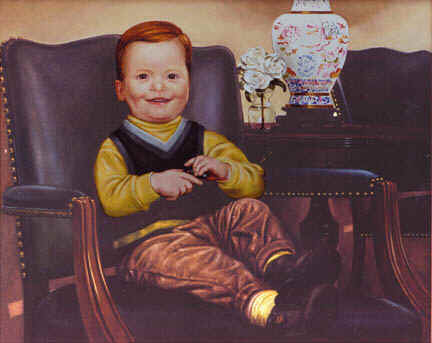
Portrait of Mason, 30" x 24", oil on canvas, 2005
This portrait was begun in the spring of 2004. Tom would visit Mason for one hour each week. He would make sketches, take photographs and just play with Mason. Summer came and went and in the fall Tom started to have an idea of what the composition would be. By the spring of 2005 Tom had the canvas stretched and the drawing begun. The drawing was okay by his patron in the summer and Tom started the face in August.
Tom had collected several images of Mason's look for the portrait and used them plus sittings to finish the face. The face was approved. In the late winter of 2006 Tom started the rest of the canvas.
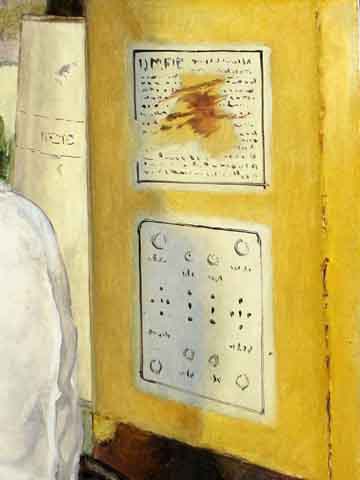
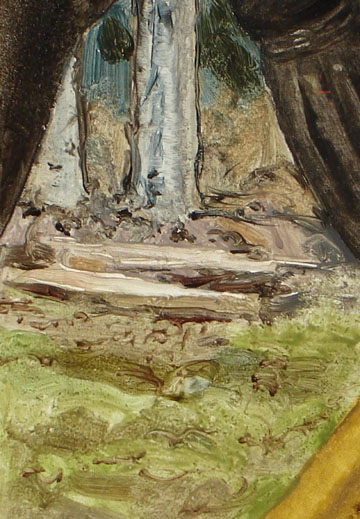
The bulldozer was painted first. Tom was painting this portrait in public and many sophisticated artists took a liking to the painted instructions on the bulldozer. One curator said he would buy such a work if Tom painted it. Tom realized that this type of painting was a modern still life.
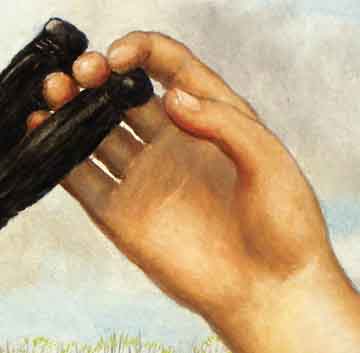
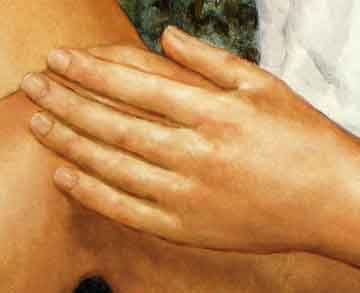
Next the hands were painted then the legs.
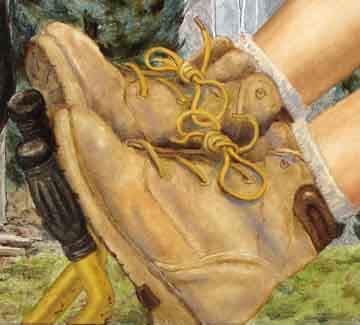
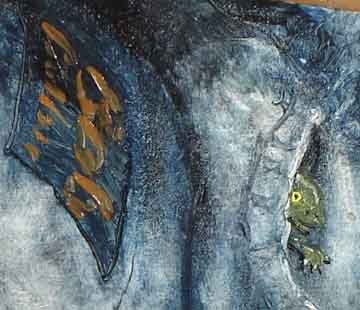
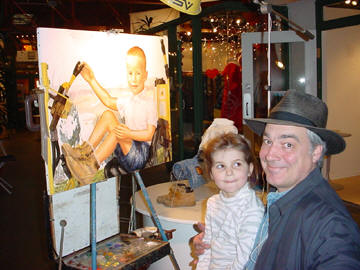
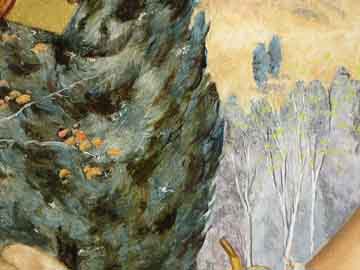
Tom borrows the clothes and puts them on a mannequin. You can see the mannequin just to the left of his daughter, Helen's head. Tom has changed his Modus Operandi. He now paints his formal portraits in public. For many years Tom has painted outdoors but now his formal portraits are painted at the local indoor shopping center. Tom had a show there in the fall of 2005 and has painted there everyday since.
The background was the view around Mason's home. Just to the left of his chin you can see his home. Tom widen the view from the home and used the background to break up the foreground playing lights & dark of the foreground against the lights and dark of the background.
The background is painted all at once to harmonize with the foreground. After almost two years the painting was delivered in the spring of 2006. Paintings like this do not have to take so long. Tom realizes that time is the one thing the artist has on his side. No one asks how long it took to paint something. it is assumed that the artist took as long as he wanted. Tome was also working on Mason's sisters portrait and used the numerous weekly visits to plan both portraits since it took 45 minutes to get there. Tom has Sydney's, Mason's sister, portrait drawing done and the face has been painted he expects it will take two months to complete the work.

Portrait of six-year-old Sydney painted as an "Ice Fairy" in the Nutcracker Ballet. Even though the girl is six-years-old Tom painted her as a Prima Donna Ballerina. The painting took two years to complete. Tom painted the tutu from life from the Cinderella tutu used by the Cincinnati Ballet Company. The portrait shows Sydney in the line of the fairies with the Ice Palace in the background. You may have seen Tom working on the portrait in the winter of 2005 in the entrance to the Ludlow Garage, Clifton, Cincinnati, Ohio. The background was taken from a drawing of Da Vinci.
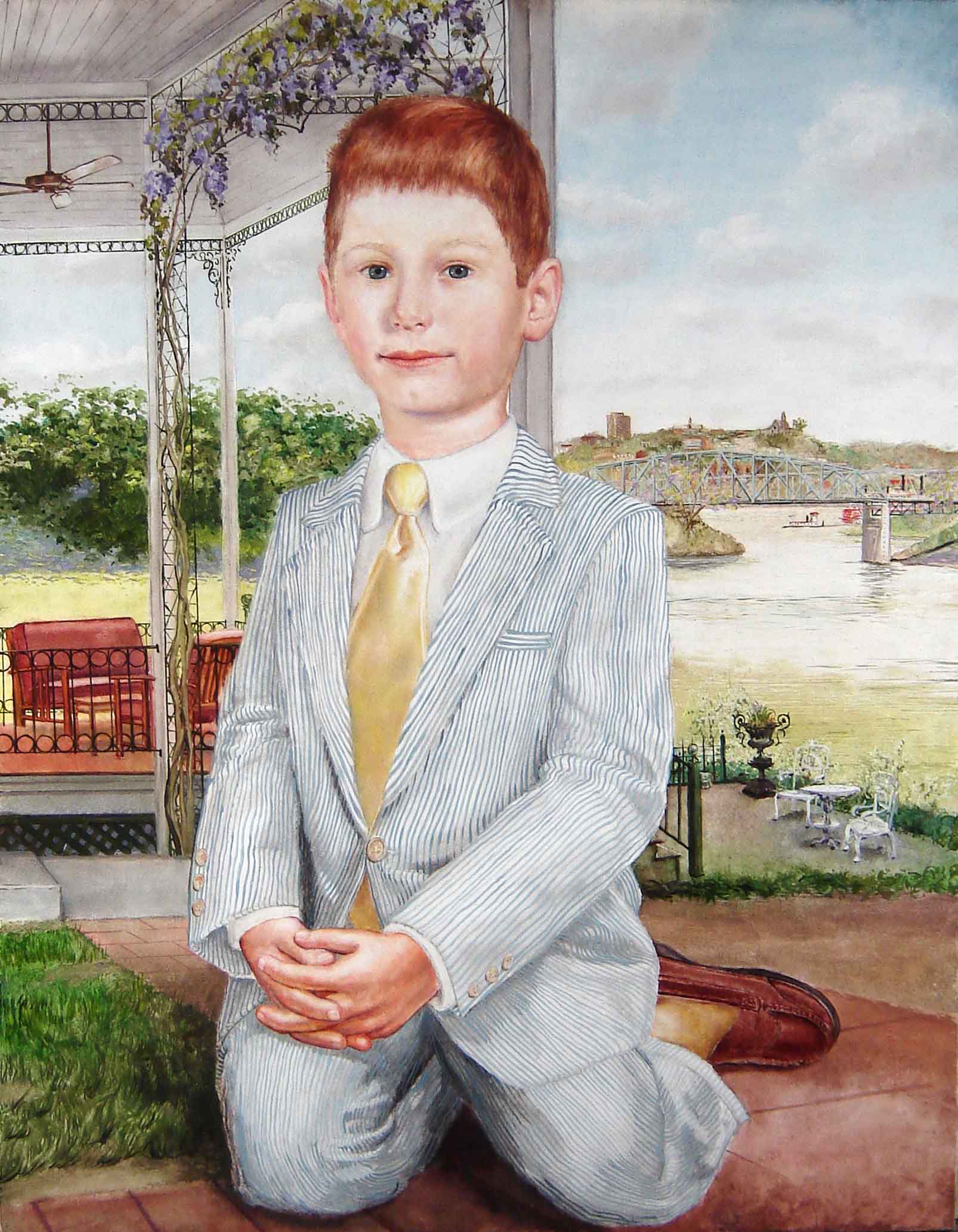
Drew's Portrait 24" x 30", oil on canvas
Started in the fall of 2006. Tom finished the face just after Christmas before his patron went south. Tom made about 20 visits to play and have Drew sit for him. The sitting ended up being several brief poses with digital photography. Tom learned to engage the six-year-old in seeing the snaps right away thereby making him understand what Tom was doing. But for the most part Tom played with Drew. He lives right on a large bank that drops down one hundred feet. They went down there several times. Each home owner has there own way of enjoying the steep river bank, one with tiki touches and another with iron stairways. The local university rowing teams go up and down the peaceful Licking River as it empties into the Ohio River a quarter mile away. They learned that you could not yell at the rowers no matter how loud you hollered. They never looked up.
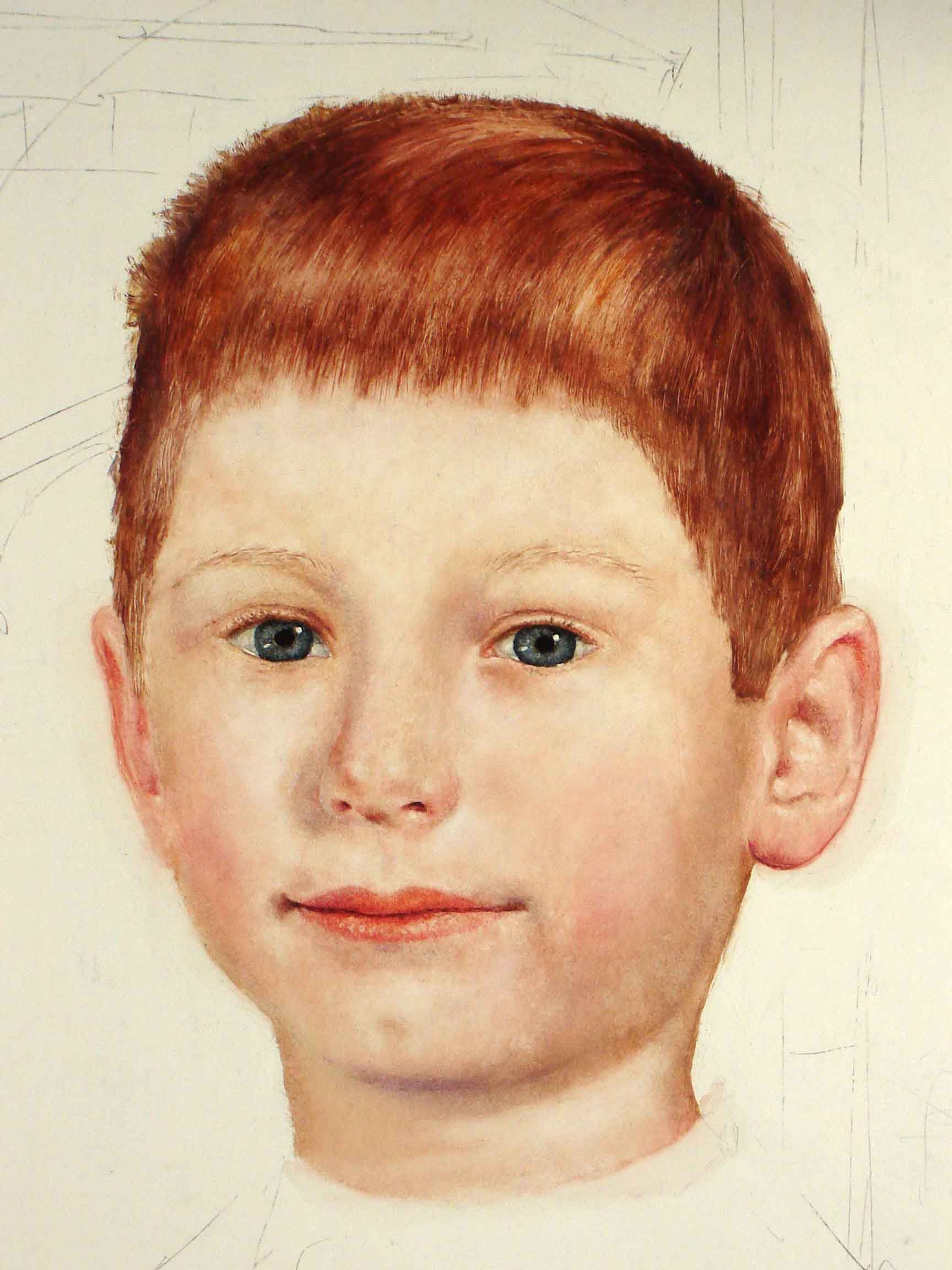
The face is the first thing to be painted in a portrait. This allows the face to be examined at length while the rest of the work is competed for any changes needed.
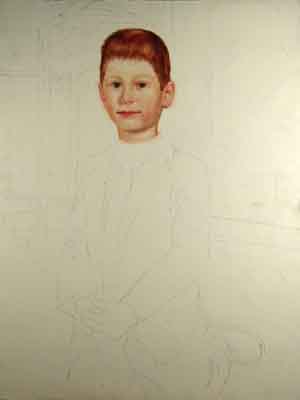
Here you can see the faint outlines of the cartoon on the canvas. Just before painting the pencil is removed until only the faintest lines are left.
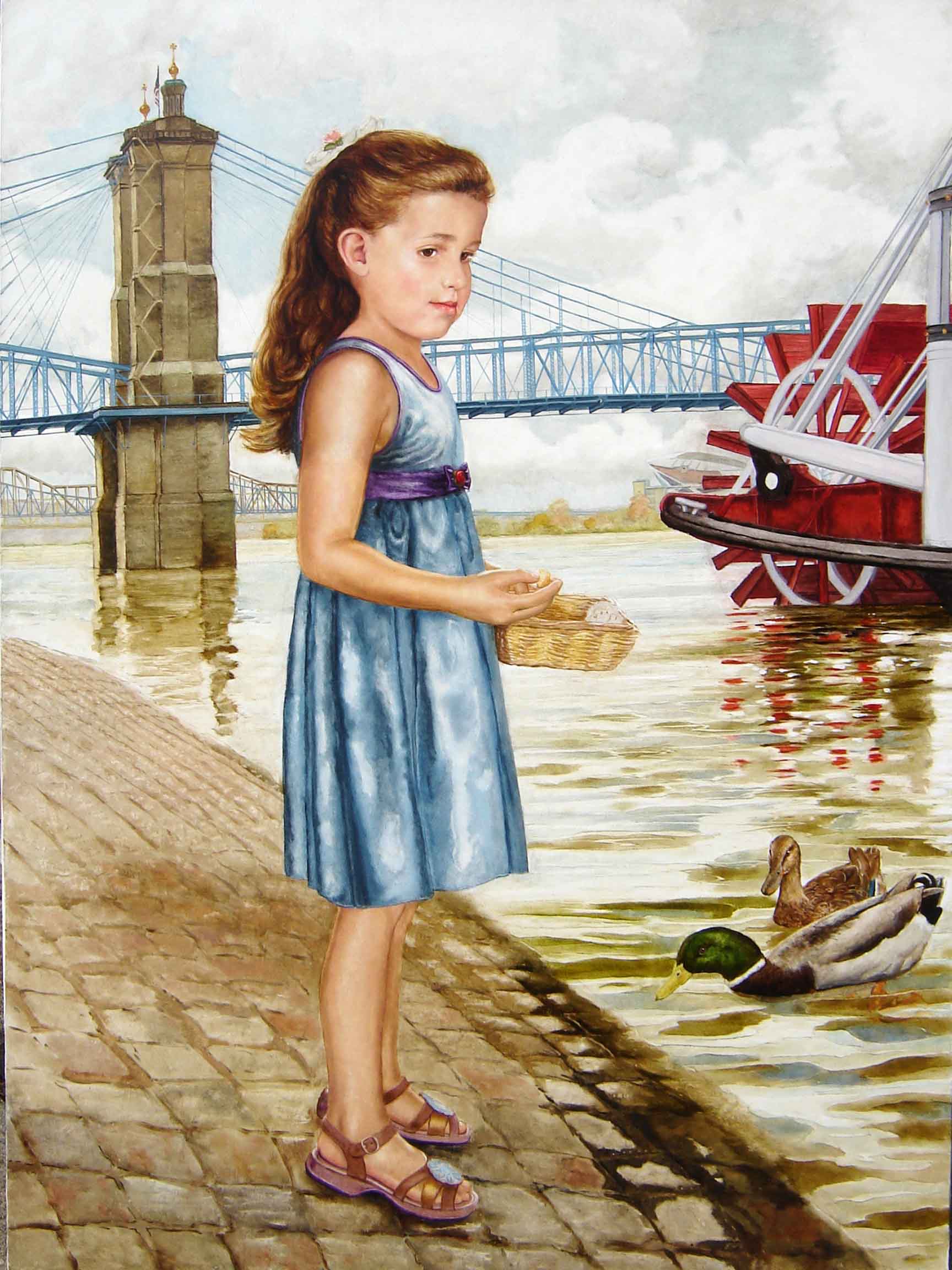

Helen Feeding the Ducks by the Mike Fink Restaurant, oil on canvas, 3' x 4', October 2004
Tom started this work as his Tall Stacks Painting. Every three or four years Cincinnati, Ohio hosts 15 riverboats for four days of boating and music. Tom decided to paint his daughter with the main symbols of Tall Stacks, a paddle wheel and the pier of the Suspension Bridge. Tom grew up on the Ohio River and work on this paddle wheel while in high school. He later worked for Captain Beatty on various salvage jobs on the Ohio. His family had a house boat docked behind the restaurant and he spent many a night studying and fishing off the bow. The singing of the cars driving across the Suspension Bridge played ever in the backgroound. Tom changed the water's edge to the pavers used across the river at the Cincinnati public landing. The background is just as it is in 2004. You cna just barely see Paul Brown Stadium just to the left of the stern wheel. The Mike Fink was moved to dry dock in March of 2008 and if all goes well will return soon.
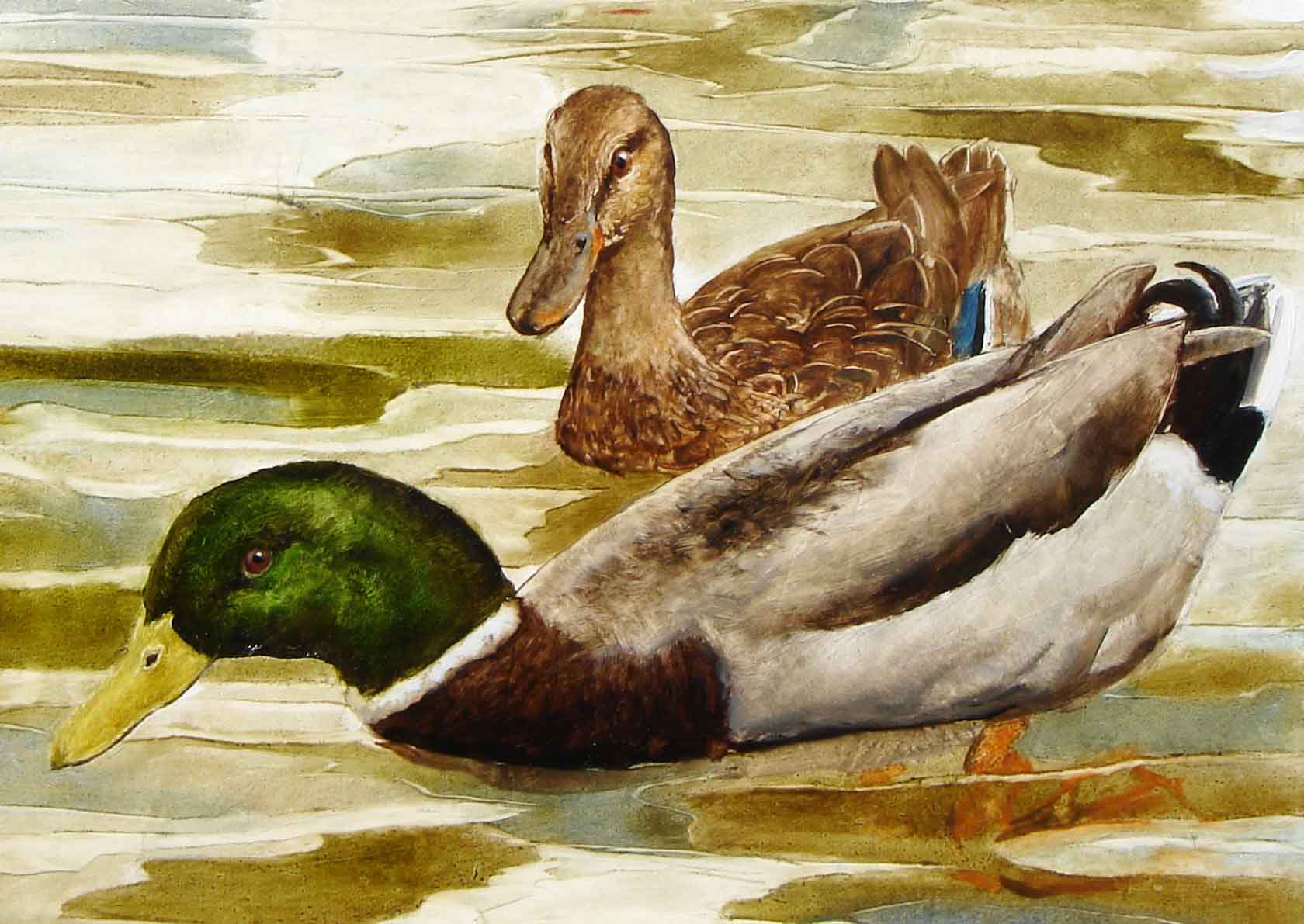
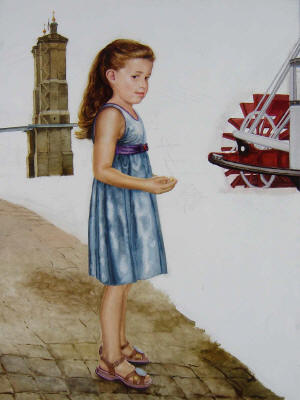
Unfinished
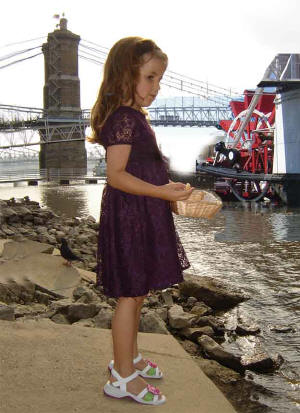
Photo Montage
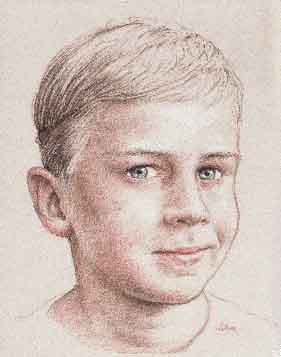
Matt, 8 " x 10", three color charcoal on paper, from photo, 1990, Commission
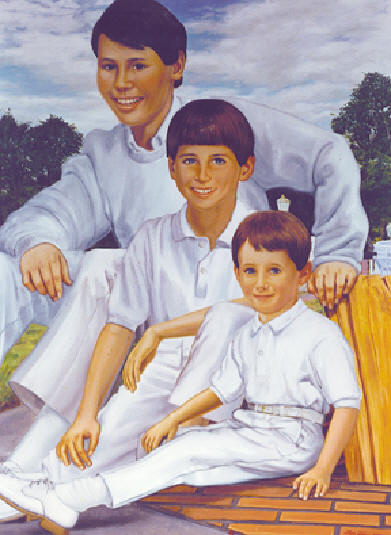
Tom lived with his patron in Greenville South Carolina for one year. While there he painted many works for his patron. This portrait is of the children of one of his patrons law partners. This painting took the regular direction of painting such a portrait.
There were three boys in the family and Tom would visit the home frequently and shoot a roll of film. Slowly the composition came about as he gathered photos and shared them with the family. Tom takes his time while he gets to know the children. The middle one shown here became very close to Tom as he was of the age to spend the most time with the artist as he worked. Once individual images of the boys were okayed by the parents Tom started painting. Once the face was still wet Tom would have the child sit for him so he could put in the fine details and essence of life that is important for a good portrait. The portrait has each of the boys in white pants and shirts. The background was their backyard. To get the three boys into a 30” x 40” canvas Tom placed them in a diagonal composition with the oldest one in the top left and the youngest one in the bottom right. You can see pieces of the other two brothers in this detail of the portrait. Tom entertained the middle son while painting the the background by placing little bugs and other very small details into the painting.
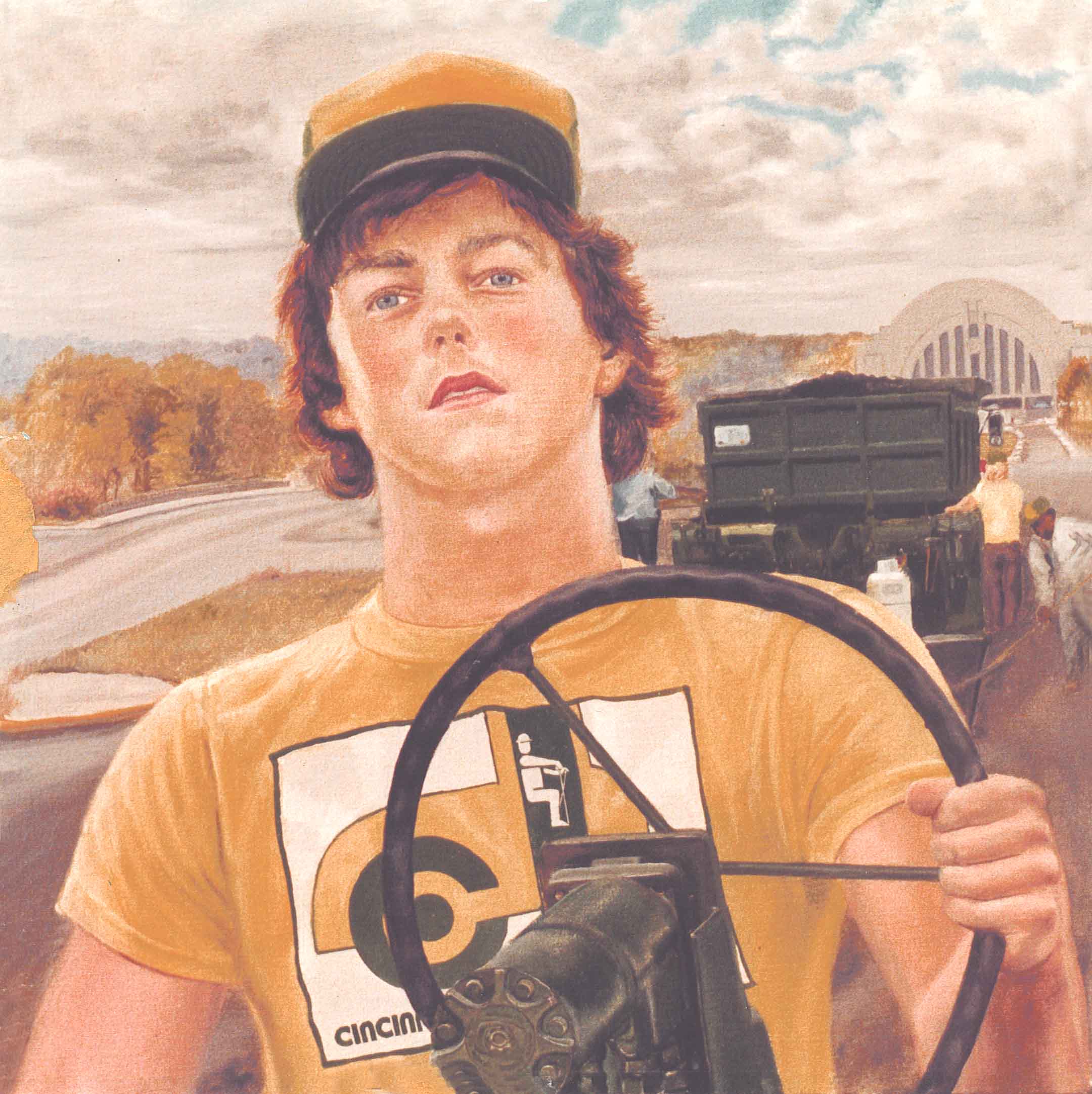
Paul, 30" x30", oil on canvas, 1980, Commission
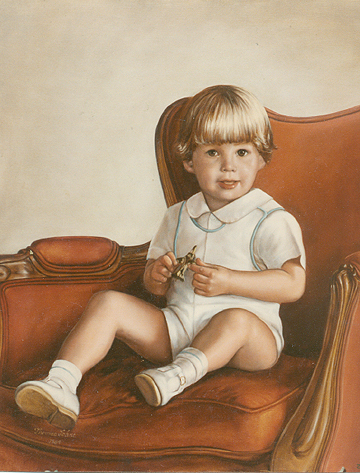
24' x 30", 1980
View Tom
Lohre' locations of paintings painted from life in a larger map. More
additions to come:()
Experience The Warm Feeling of Owning Original Art
Buy on
Auctions on Everything but the House Current works Archived Items
See on
Special Web Sites, Family Tree, Friend's Links
Complete Works, Portraits, Landscapes, Still Lifes, Sculpture, Lego Robot Artist...
Experience the Warm Feeling of Owning Original Art
Sign up for yearly notices by sending an e-mail to newart-subscribe@tomlohre.com
Post your comments on https://www.facebook.com/artisthos/
126A West 14th Street, 2nd Floor Cincinnati, Ohio 45202-7535